 In this area
The Dublin issue
Docklands, Dublin: glass, water and the city’s new edge
A walk through Dublin’s rebuilt waterfront, where the old docklands history still ghosts the quays, the office towers empty at six, and the best of modern Dublin gathers by the water.
By Róisín KavanaghTrad sessions and craft-beer rooms
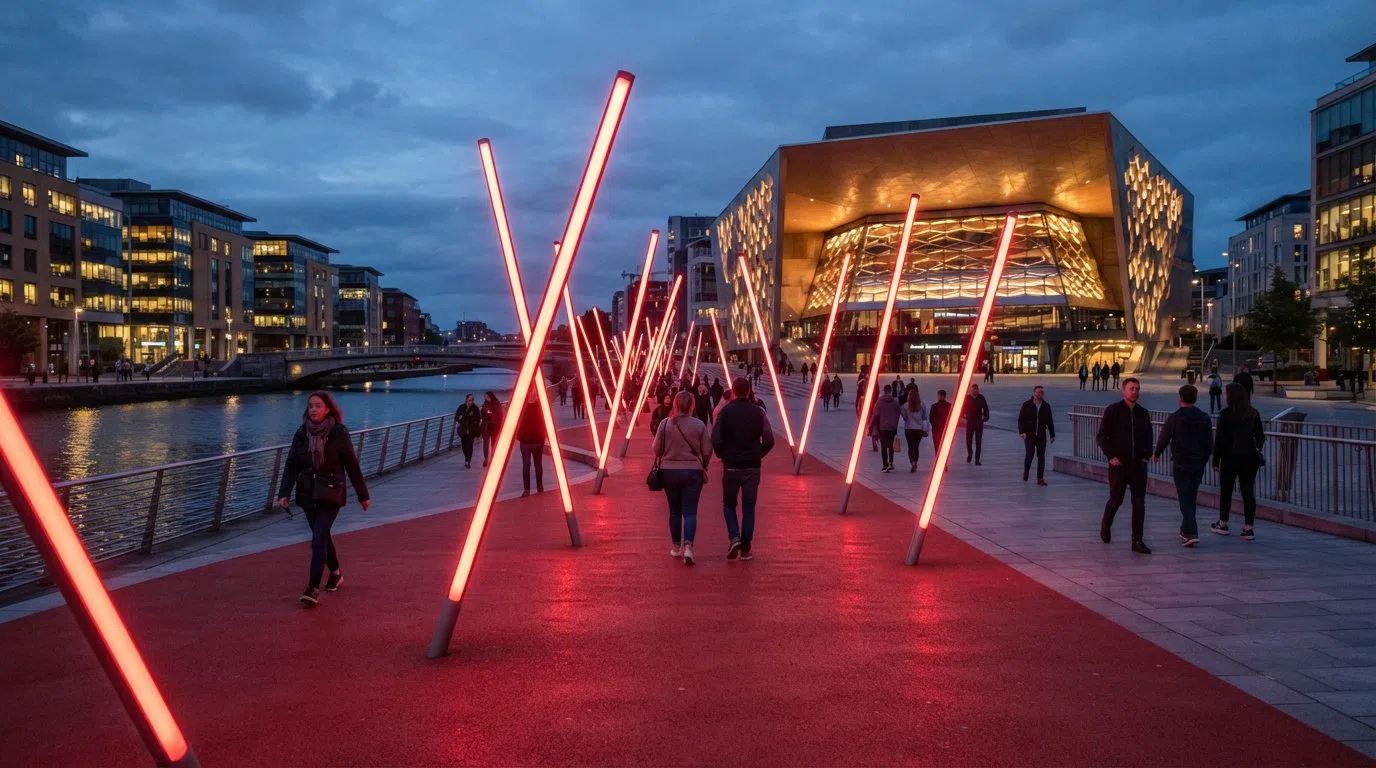
The first thing you notice is the light. At Grand Canal Square it lands on the red resin paving like a stage cue, catches the angled glowing sticks, and throws the whole place into that odd, polished shimmer Dublin does so well when it wants to pretend it’s somewhere shinier. By day the Docklands can look almost too composed, all glass and water and big corporate shoulders; by dusk it loosens up. The office towers empty, the terraces fill, and the place starts to make sense on its own terms.
What the Docklands are known for
This is the Dublin the postcards usually skip, though they should know better. The Docklands are where the city rebuilt itself around the Grand Canal basin and the Liffey, and where the old shipping memory still sits under the new skyline if you bother to look. One minute you are standing among the glass-and-steel sprawl of “Silicon Docks,” the next you are looking at a bridge or a warehouse that reminds you this was once among the busiest docklands in the world. That contrast is the trick here: modern Dublin, yes, but with the old port city still muttering underneath.
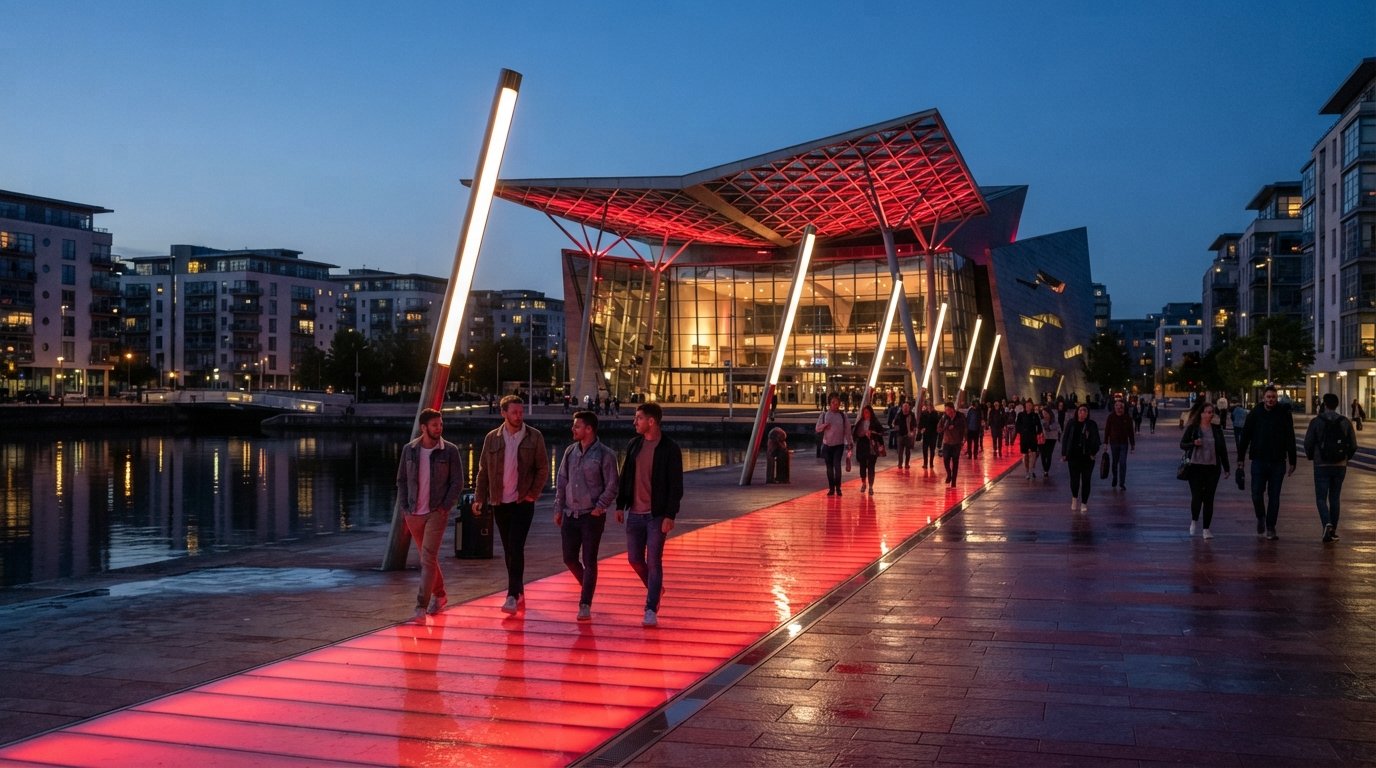
Grand Canal Square is the neighbourhood’s set piece, and it knows it. Martha Schwartz laid out the 10,000 m² plaza with its red carpet of resin-glass paving, about 50 glowing light sticks, and green polygon planters, and the whole thing runs straight to the water’s edge. It is the most photographed spot in the area for a reason: it looks designed for dusk, for reflection, for all the people who want a city to announce itself rather than merely exist. The Bord Gáis Energy Theatre sits over it like a clean angular answer to the square’s theatrics. Daniel Libeskind’s building opened in 2010 as the Grand Canal Theatre and remains Ireland’s largest fixed-seat theatre, built for touring productions on a proper scale, not some half-hearted compromise.
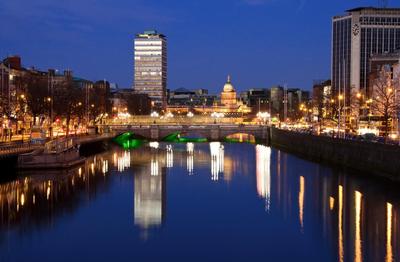
The bridge is the other emblem. Santiago Calatrava’s Samuel Beckett Bridge, shaped like a tilted Irish harp, swings across the water with the sort of confidence only a signature bridge can get away with. It links Sir John Rogerson’s Quay to the north wall and has become shorthand for modern Dublin, for better or worse. On a bright day it can feel almost too neat, like a logo made walkable. At night, though, with the reflections in the Liffey and the office windows going dark, it earns its place.
What gives the Docklands its particular mood is the weekday rhythm. Mornings are all lanyards and flat whites, commuters spilling off the DART at Grand Canal Dock and heading for the towers. By evening the district changes costume. The terraces take over, the waterside bars start to hum, and the place becomes more about looking out than getting in. It is the least Irish-pub part of Dublin and doesn’t pretend otherwise. If you want dark snugs and a trad session on the corner, this is not your patch. If you want wide sky, modern architecture, and a city that feels newly assembled, you are in the right place.
Plan your Dublin trip
Live prices from our booking partners.
Guests & rooms
Free cancellation on many rooms. We may earn a commission when you book.
Where to eat & drink
The Docklands used to be lunch-only terrain, the sort of place where a sandwich and a coffee were considered a plan. That is long gone. The best tables now cluster tightly around Grand Canal Dock, and the neighbourhood has enough ambition on the plate to keep even the sceptics occupied.
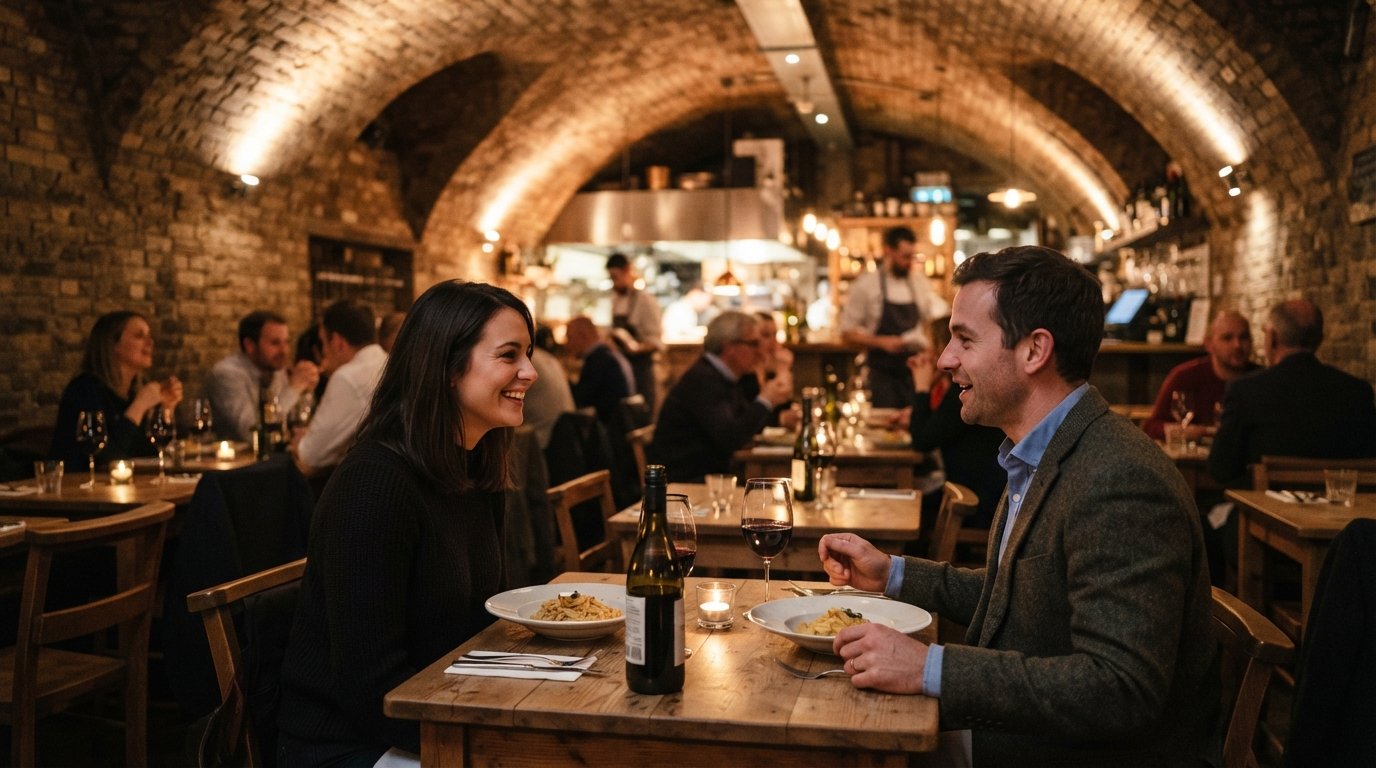
Osteria Lucio is the one that always gets mentioned first, and for once the reputation is deserved. Set in the restored 1860s Malting Tower under the railway arches on Clanwilliam Terrace, off Grand Canal Quay, it feels like the kind of room that understands restraint. Ross Lewis and Luciano Tona have built an Irish-Italian restaurant with a Michelin Plate, and the draw is handmade pasta, an all-Italian wine list, and the suckling pig cooked al forno that has become the signature. It is not trying to be a trattoria by way of a theme park. It is sharper than that, and better for it.
For a table with the water in front of you, Charlotte Quay is the sensible move. The fish-forward, Mediterranean-leaning menu is matched by panoramic first-floor views over Grand Canal Dock, which is the sort of view that can do half the work for a restaurant. Happily, the kitchen holds up its end. Herbstreet, on Hanover Quay, has been around long enough to feel like part of the furniture, in the best sense. It is family-run, open all day, and the heated terrace looks straight onto the water. Blankets are provided, which tells you everything you need to know about the climate and the confidence. It is the dependable place in a district full of places trying to be the next thing.
Nutbutter on Forbes Street brings a different energy: colourful, largely plant-based bowls and tacos, with a brunch crowd that arrives looking half-awake and leaves looking smug. There is nothing wrong with that. Dublin needs places like this, especially in a district where the weekday lunch trade can feel like a conveyor belt of laptops and oat milk. Nutbutter keeps the tone light without collapsing into fuss.
And then there is 3fe on Lower Grand Canal Street, which remains one of the city’s proper coffee stops. It is a three-floor roastery-café founded by Colin Harmon, with house-roasted beans, rotating single origins, and a real brunch rather than the sad plate of obligation some cafés offer and call it a day. If you want to understand the Docklands morning ritual, stand here for ten minutes and watch the flow: commuters, freelancers, hotel guests, people pretending they are not checking emails before the first sip.

Going out
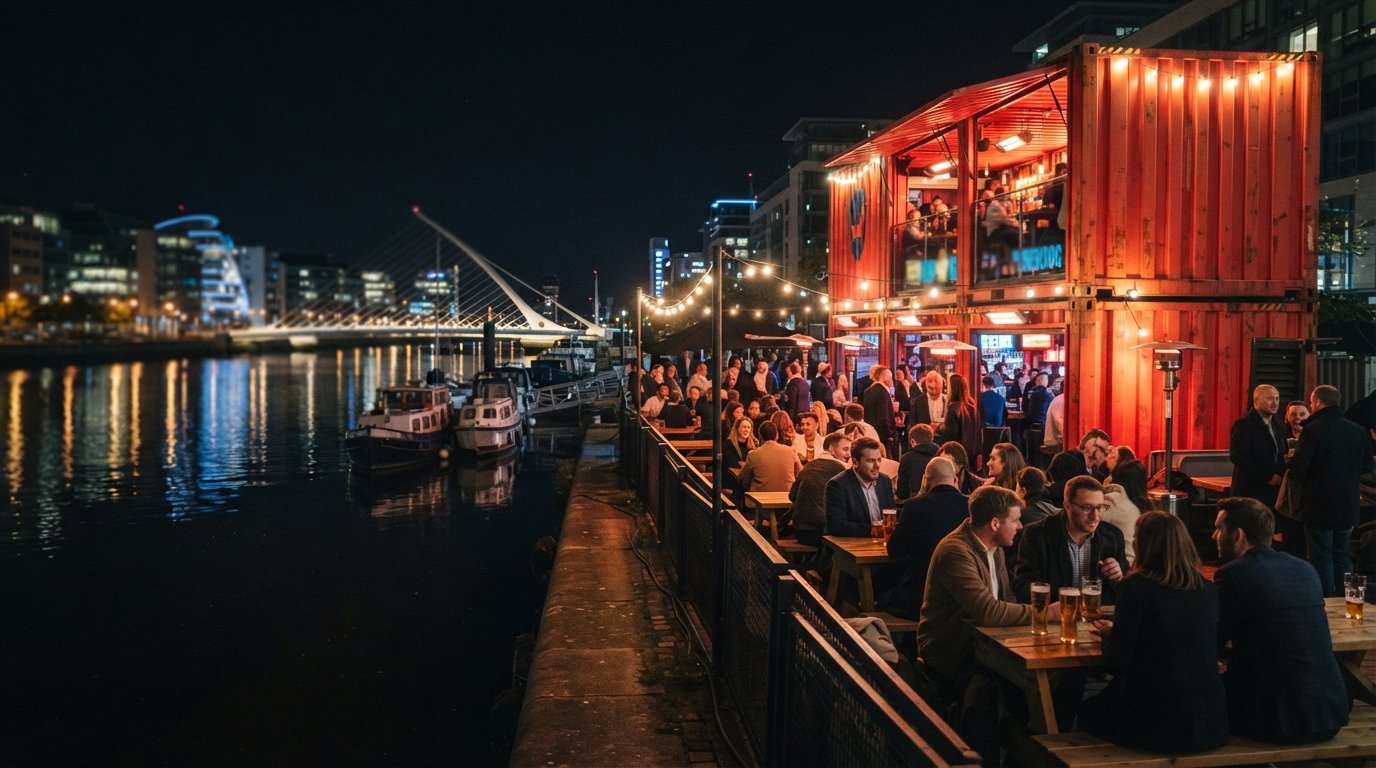
Nightlife here is less about the snug and more about the view. That may sound cold if you like your pubs with low ceilings and a bit of smoke in the walls, but the Docklands are honest about what they are: a place to drink by the water, not under a horse brass. The loudest, most obvious option is BrewDog Dublin at Capital Dock, where the Grand Canal, the Liffey and the Dodder meet. It is a 10,000 sq ft red shipping-container bar over two floors, with dozens of taps, an in-house 5HL brewpub kit turning out Ireland-only exclusives, two outdoor terraces including a heated balcony over the river, shuffleboard and live sport. It is brash, yes, and the fit-out is the sort of thing that makes you wonder if the architect was paid by the corrugated sheet. Still, on a wet evening with a decent pint and the river moving below, it does the job.
For something a touch smarter, the Rooftop Bar & Terrace at Anantara The Marker is the one to book when the weather behaves. It runs seasonally, roughly April to September, and the appeal is the 360-degree view: mountains one way, the Irish Sea the other, with Thai-influenced cocktails and Asian sharing plates in between. Downstairs, the Marker Bar & Lounge stays open year-round and has big windows over Grand Canal Square, which is useful when you want the view without committing to a rooftop and a weather gamble.
On the biggest nights, though, the real action is elsewhere. A show at Bord Gáis Energy Theatre can shape an entire evening around the square, while the 3Arena at the Point is where the big-name concerts land. The Docklands are not trying to be Temple Bar, and that is a mercy. The drinking here is more deliberate, more tied to the water and the architecture, and on a warm evening the truest local move is still the simplest: a takeaway pint and a perch on the boardwalk steps as the red lights come up.
Things to do / what to see
The best thing to do in the Docklands is walk, and if you only do one walk, make it the one that starts at Grand Canal Square and crosses the Samuel Beckett Bridge to the northside quays. The mood changes in a few hundred metres. One side is all tech-park sheen and theatre lighting; the other is older, heavier, more haunted by the city’s working past. That shift is the whole neighbourhood in miniature.
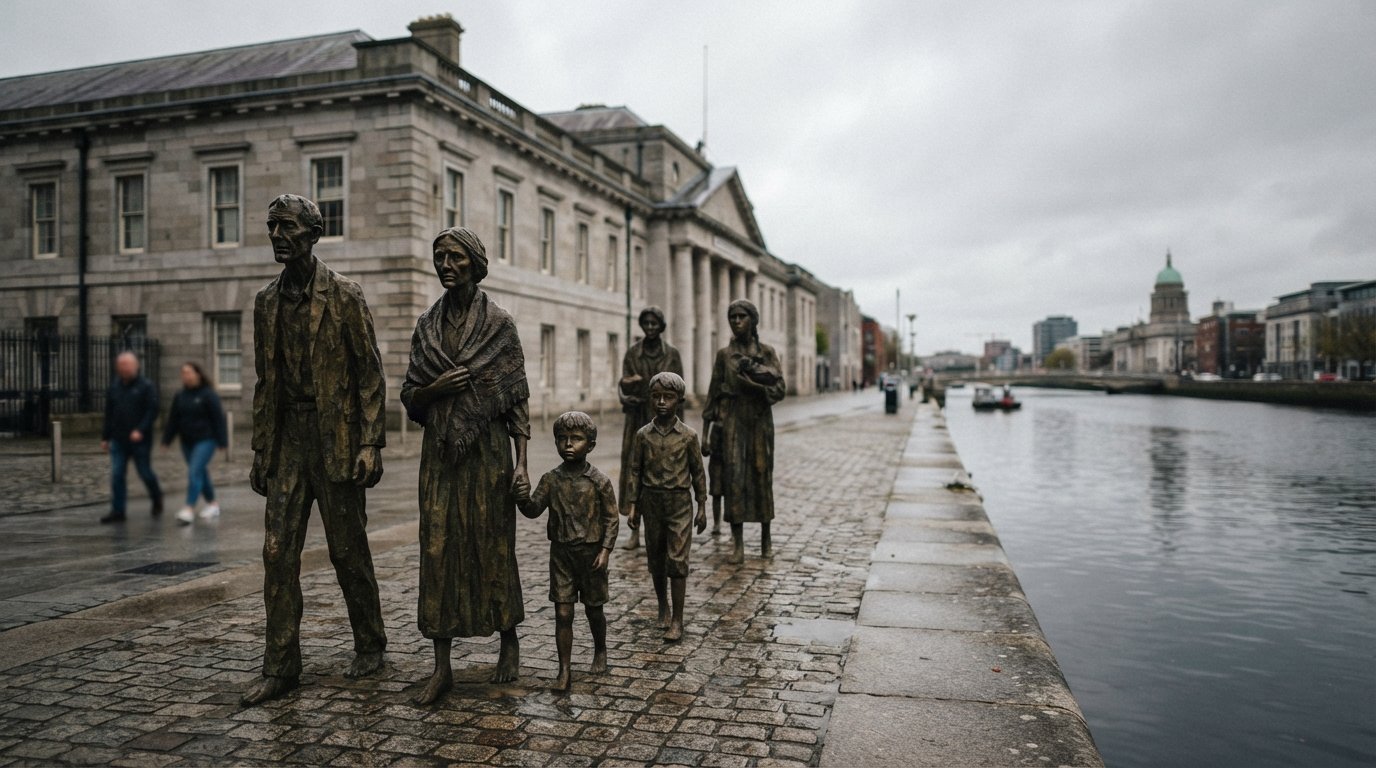
The emotional core of that route is the Famine Memorial on Custom House Quay. Rowan Gillespie’s bronze figures are gaunt, ragged, and impossible to mistake for anything other than the long shadow of departure. They stand opposite the old CHQ building, and you feel the temperature drop a little when you get there, even on a fine day. It is one of the few places in Dublin where the waterfront goes quiet in a meaningful way.
A few steps away, EPIC The Irish Emigration Museum turns that history into something fully digital and interactive inside the 200-year-old stone vaults of the 1820 bonded warehouse. It tells the story of the 10 million people who left Ireland and has been voted Europe’s Leading Tourist Attraction multiple times. The museum is open daily from 10am, with last entry at 5pm, which is the sort of practical detail that saves a sulk later. Across the way, the Jeanie Johnston Tall Ship is a seaworthy replica of a 19th-century famine ship, with 50-minute guided below-deck tours. The original made numerous Atlantic crossings without a single passenger death, which is about as remarkable as maritime history gets.
If you want to see the district from the water rather than merely beside it, Surfdock at Grand Canal Dock is the odd little pleasure you might not expect in a business quarter. It runs paddleboarding, kayaking and windsurfing sessions in the sheltered basin. That sheltered bit matters; nobody is pretending this is the Atlantic. But there is something pleasingly un-Dublin about seeing people in wetsuits beneath the towers, as if the city briefly remembered it was built on water.
Don’t miss in Docklands
The Samuel Beckett Bridge designed by Santiago Calatrava
Grand Canal Square and the Bord Gáis Energy Theatre
The Windmill Lane Recording Studios
Shopping & markets
Shopping is not why you come to the Docklands, and the neighbourhood is wise enough not to fake it. This is offices, apartments and restaurants first, retail second. The main indoor hub is the CHQ building on Custom House Quay, the former Stack A tobacco warehouse, where EPIC sits alongside cafés, bars and occasional food and craft markets under the cast-iron roof. It is one of those buildings that does a lot without shouting about it, which is a relief after some of the more overdesigned waterfront projects elsewhere.
For everyday needs, the ground floors of the Grand Canal Dock towers are threaded with supermarkets and coffee spots serving the weekday working population. Nothing glamorous, just useful. For actual shopping, the plan is simple: walk or take one DART stop into the city centre. Grafton Street and the boutiques of the Creative Quarter around South William and Drury Street are about 15–20 minutes on foot to the west, and the department stores of the northside are a similar distance across the river. The Docklands are a base, not a retail district. Treat them that way and you will be fine.
Where to stay in the Docklands
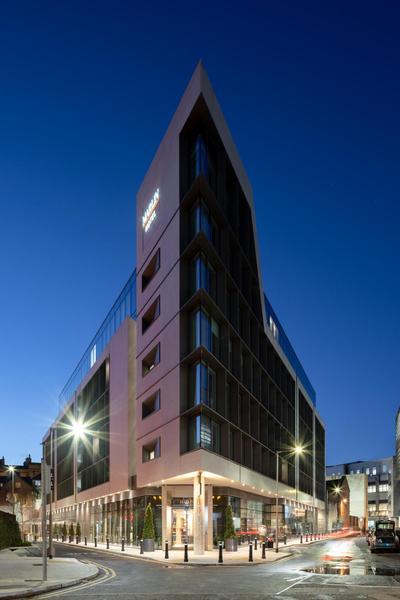
This is design-hotel and business-hotel territory, and the water is the amenity. If you want the neighbourhood at its most polished, Anantara The Marker is the landmark choice: a sleek Manuel Aires Mateus-designed five-star right on Grand Canal Square, with a rooftop bar and terrace, an indoor infinity pool and spa, and Forbes Street by Gareth Mullins for modern Irish cooking. It is the obvious pick if you want the best view and the highest gloss, and there is no shame in that. Sometimes you want the room with the good windows and the short walk to dinner.
The Dean Docklands, formerly The Mayson, is the stylish mid-range answer, sitting right on the Liffey in a converted warehouse-and-townhouse with bold interiors and a rooftop of its own. Clayton Hotel Cardiff Lane is the dependable business-class option a couple of minutes from Grand Canal Dock, handy for the DART and the theatre. Out toward the Point, near the 3Arena, the hotels suit concert-goers who want to be close to the arena and the Luas terminus, even if the restaurant cluster is a longer walk away.
Pick your pocket by priority: Grand Canal Square and Hanover Quay for dining and the plaza; Sir John Rogerson’s Quay for a river-facing base near the bridge; the Point and North Wall if you are here for a concert. The district is quiet and safe at night, if a little corporate and still once the offices empty — which will suit some travellers down to the ground.
Hotels in Docklands
Our best-rated stays in this neighbourhood. Prices are approximate “from” rates — confirmed at the provider when you continue. We may earn a commission if you book through our partners — at no extra cost to you.
In this area In this area
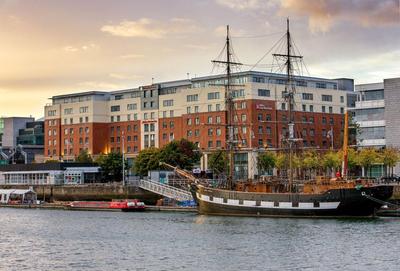 In this area
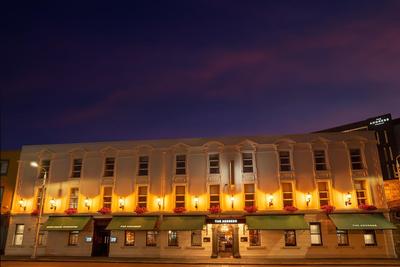 In this area
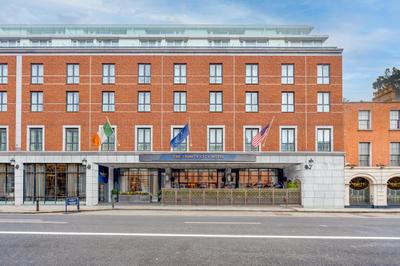 In this area
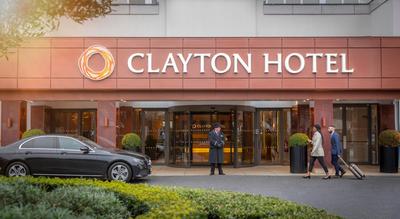 In this area
 In this area
 In this area
 In this area
Docklands
Holiday Inn Express Dublin City Centre by IHG
8.8· 7,828 reviews
approx. from£219 / nightSee prices
 In this area
 In this area
 In this area
Getting around
The Docklands are compact and flat, which is half the battle won. The fastest way around is your own feet. The full walk from Grand Canal Dock to the 3Arena along the quays takes maybe 20–25 minutes, and it is an easy, level stroll with plenty of water and bridge views to keep you company. Grand Canal Dock DART station puts you two stops, under 10 minutes, from Pearse and Tara Street, and on the coastal line down to Dún Laoghaire, Dalkey and Bray if you fancy a half-day by the sea.
On the northside, the Luas Red Line threads the district with stops at George’s Dock, Mayor Square and Spencer Dock, terminating at The Point beside the 3Arena. That is the easy way in and out for a concert, and you will be glad of it when the crowds pour out after the encore. From the centre, Grafton Street and Trinity College are a 15–20 minute walk west, and Temple Bar is about the same.
For the airport, allow around 30–40 minutes by taxi or the Dublin Express / Airlink airport coach depending on traffic. There is no rail link to the airport, so buses and taxis are the options. Dublin Bikes docking stations dot the quays if you would rather cycle the largely flat, cycle-friendly waterfront. On a good day that is the nicest way to move here: no drama, no hills, just the river and the bridges and the city opening out in front of you.
The Docklands are not the Dublin of old pubs and cobbles, and it would be daft to pretend otherwise. They are newer, shinier, more corporate, and often better at dusk than at noon. But they have a proper sense of place all the same. The old port city, the tech city, the theatre city, the waterfront city — they all meet here, sometimes awkwardly, sometimes beautifully. Stand on Grand Canal Square as the lights come up and the water darkens, and you can feel the whole thing holding together for a moment.
Gallery
Docklands in pictures
Docklands — your questions
Is the Docklands a good area to stay in Dublin?
Yes, if you want modern Dublin rather than old Dublin. It is safe, walkable and well connected by DART and Luas, with strong contemporary restaurants and design hotels, and the centre is only a 15–20 minute stroll away. It is less ideal if you want cobbles, trad music and traditional pubs on the doorstep, or if you are travelling on a tight budget.
What is there to do in Dublin’s Docklands?
Walk Grand Canal Square, cross the Samuel Beckett Bridge, visit EPIC The Irish Emigration Museum and the Jeanie Johnston Tall Ship, and take in the Famine Memorial on Custom House Quay. If the timing works, add a show at Bord Gáis Energy Theatre or a concert at the 3Arena, and finish with a drink by the water.
Is the Docklands walkable to the rest of Dublin?
Very. Grafton Street, Trinity College and Temple Bar are all about a 15–20 minute walk west, and the district itself is flat and cycle-friendly. If you do not want to walk, Grand Canal Dock DART station and the Luas Red Line make getting around simple.
What kind of food and nightlife does the Docklands have?
This is a food-led, waterside neighbourhood rather than a trad-pub one. Expect places like Osteria Lucio, Charlotte Quay, Herbstreet, Nutbutter and 3fe, plus cocktail terraces and beer bars such as BrewDog Dublin and the rooftop at The Marker when the weather plays along.