 In this area
Georgian Quarter
The Shelbourne, Autograph Collection
9.0· 1,055 reviews
approx. from£683 / nightSee prices
The Dublin issue
A walk through Dublin’s Georgian Quarter, where museum mile mornings, snug-pub evenings and perfect brick terraces make the city feel properly itself.

By Róisín KavanaghTrad sessions and craft-beer rooms
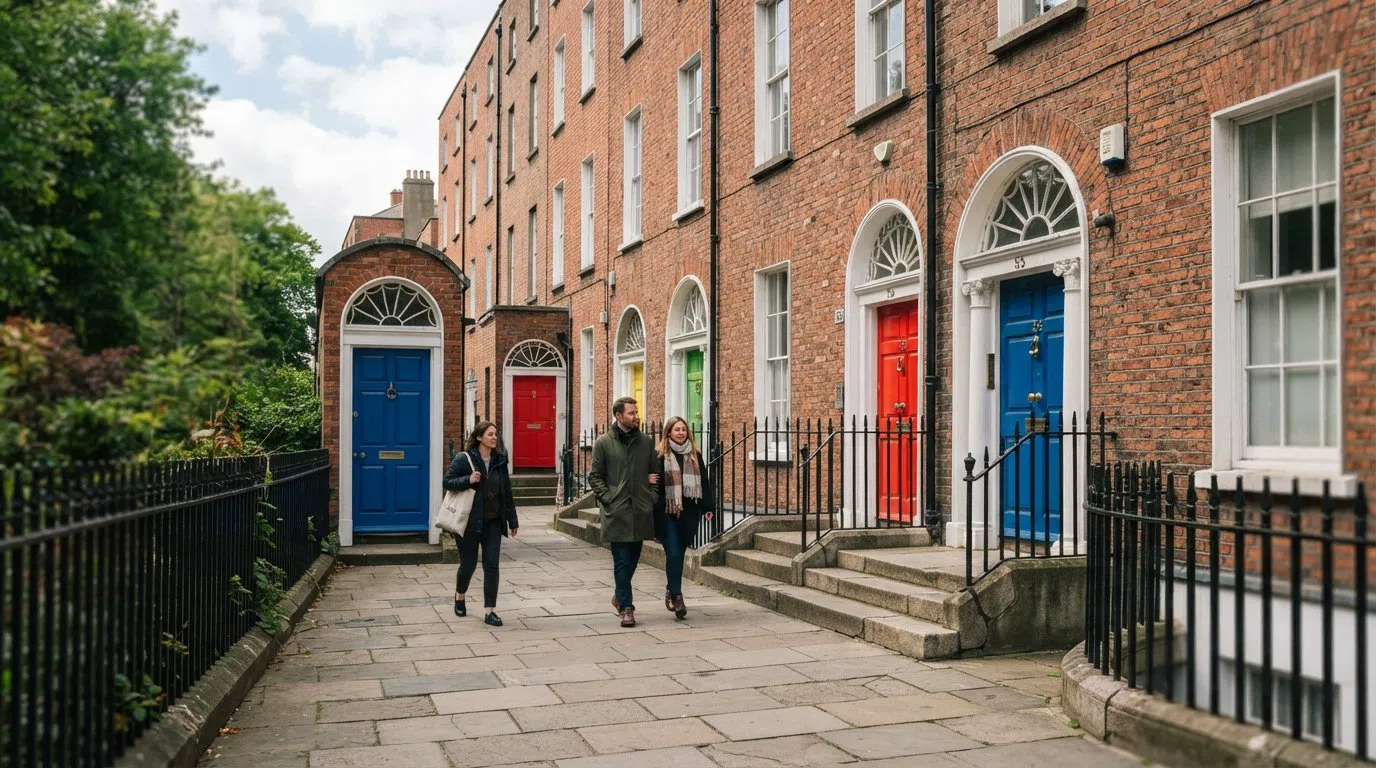
Turn off Grafton Street and the whole city seems to lower its voice. Two blocks in, the terraces go on in long, disciplined rows, doors lacquered in greens, blues and reds, fanlights sitting above them like neat eyebrows. This is the Georgian Quarter: a place of squares and sash windows, of museums you can enter without opening your wallet, of old pubs where the wood is dark enough to swallow the light. It is also one of the few parts of Dublin where you can spend the day looking at paintings, brooches and manuscripts, then end it in a snug with a pint and no great urge to go anywhere else.
The quarter is Dublin’s grand exercise in order. It was laid out in the Georgian era, mostly from the 1760s onward, and the result is a southside triangle that still feels astonishingly intact: Merrion Square, Fitzwilliam Square, the streets between St Stephen’s Green and the Grand Canal, all of it composed from near-identical brick townhouses, tall sash windows and wrought-iron railings. The repetition is the point. It is not flash, exactly; it is restraint with good posture.
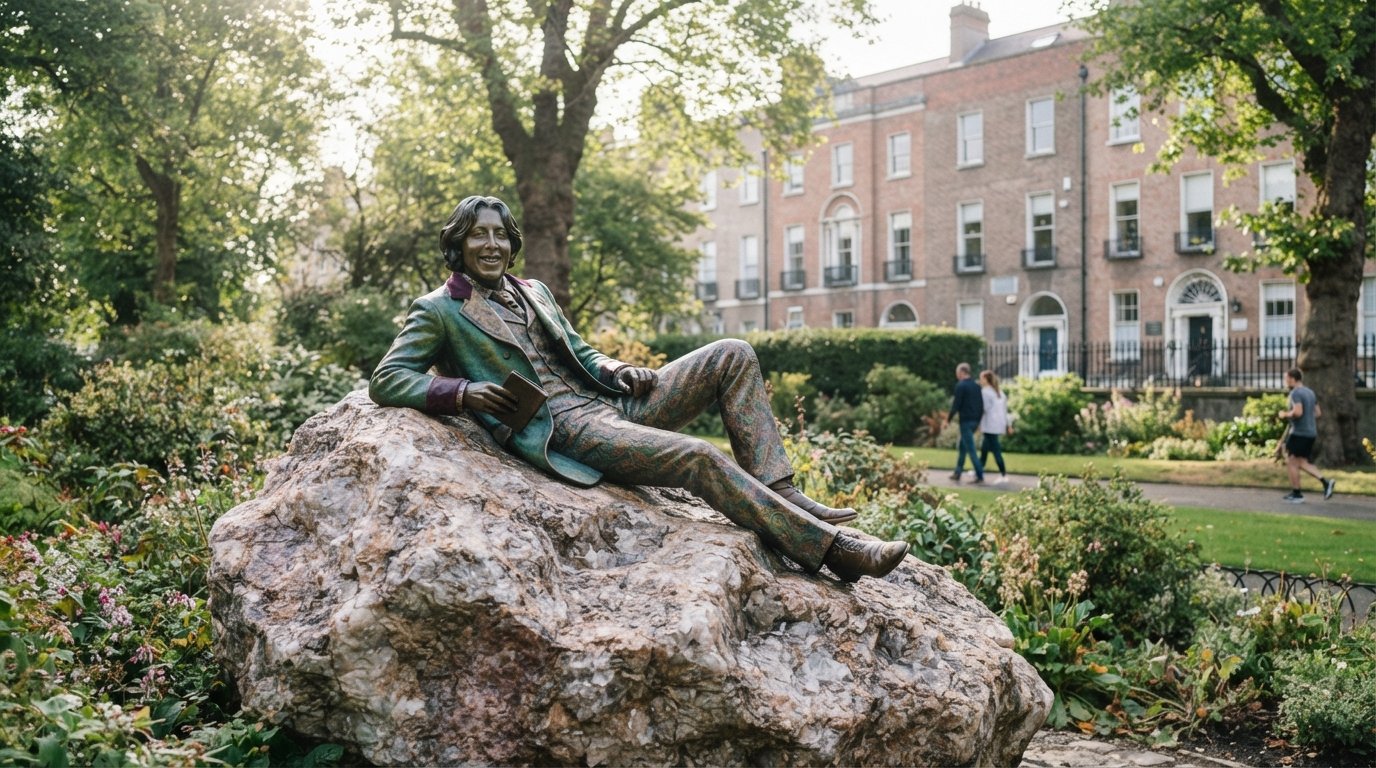
Merrion Square is the showpiece, and it earns the attention. Georgian houses line three sides, the National Gallery and government buildings hold the fourth, and at the northwest corner Oscar Wilde is stretched out on a quartz boulder in a pose that suggests he has been waiting for a better line all his life. The statue sits opposite the Merrion Square childhood home where he grew up, which gives the whole corner a pleasingly mischievous sort of symmetry.
A few streets away, Fitzwilliam Square is smaller and quieter, and that is part of its charm. It is the last of the five Georgian garden squares and still has a private central garden opened only to keyholders, mostly the residents of its 69 houses. The lawns and railings look as if they have been ironed into place. Fitzwilliam Street, running off it, was long celebrated as one of the longest intact Georgian vistas in the city, which is the sort of thing Dublin does well: a street that knows exactly what it is and has no interest in reinventing itself for the weekend crowd.
What the quarter is really known for, though, is culture. This is Dublin’s museum mile, where the national collections bunch together within a few hundred metres of each other. You can spend an entire day here without once feeling you have gone out of your way. That is the trick of the place. It looks formal, but it is easy to use.
Live prices from our booking partners.
Free cancellation on many rooms. We may earn a commission when you book.
The quarter’s food and drink range from the very polished to the plain decent, and there is no shame in preferring the latter after a morning of galleries. At the top of the pile sits Restaurant Patrick Guilbaud on Upper Merrion Street, tucked into a Georgian townhouse beside The Merrion. It was the first restaurant in Ireland to win two Michelin stars and still holds them, serving contemporary Irish cooking with French classical roots under a gilded barrel-vaulted ceiling. This is the sort of room where the linen behaves itself. The food, by all accounts, does too.
Next door, The Merrion offers a different kind of indulgence. Its Art Tea is served in the drawing rooms, with miniature pastries modelled on the paintings hung around you, and the Cellar Bar is set in the original 18th-century wine vaults. That is a lovely sentence in a brochure, and in fairness it is a lovely room in real life too. Art Tea runs around €75, or €95 with champagne, which is not a casual lunch, but then this part of Dublin has never been casual about its addresses.
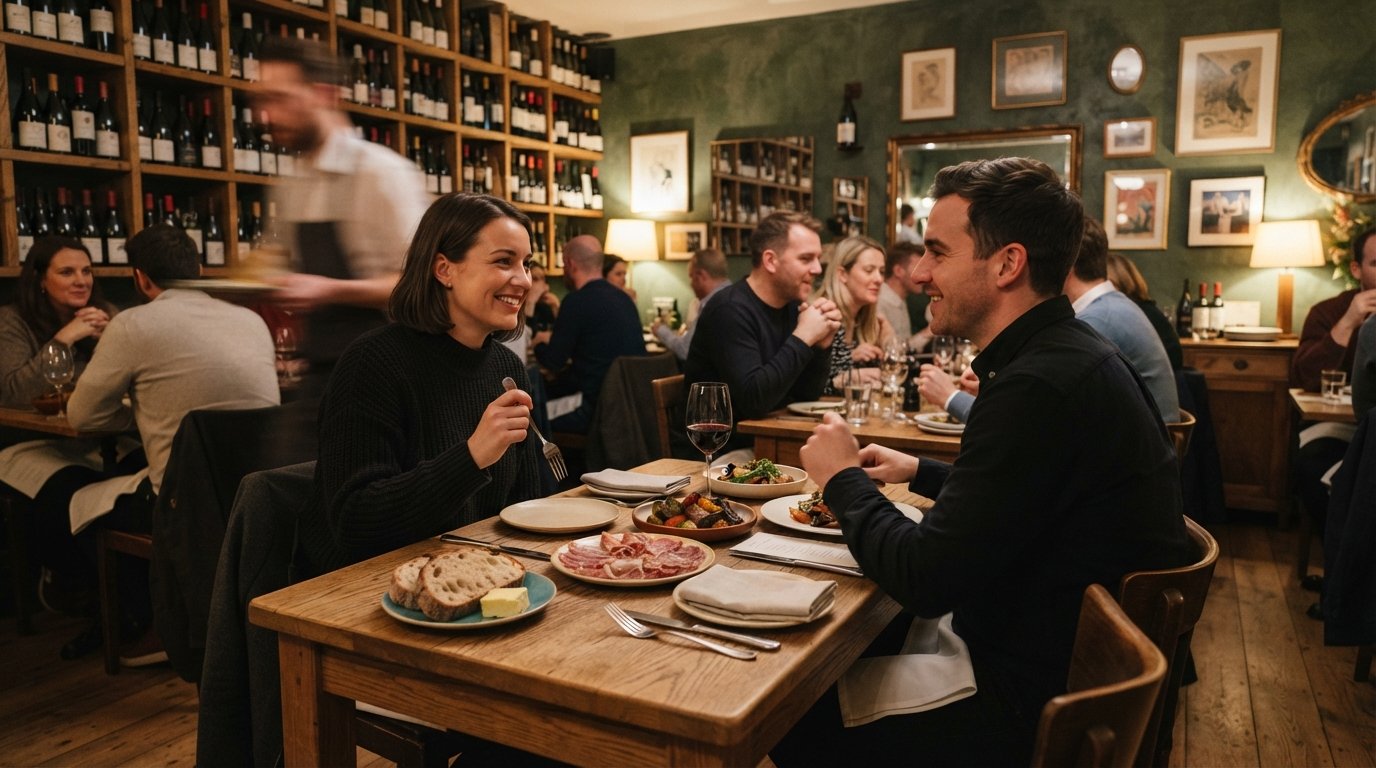
For something more relaxed, Etto on Merrion Row is the sort of place regulars defend with a bit of heat. It is small, wine-shelf-lined and usually busy in that reassuring way that suggests the room is doing exactly what it should. The plates change daily and lean Italian, the wine list is serious by the glass, and the whole thing has the easy confidence of a place that does not need to shout. That is rarer than it should be.
Around the corner on Ely Place, Ely Wine Bar occupies the cellar and drawing rooms of a 1768 townhouse, which gives it a little bit of old-Dublin texture before the first glass is poured. It lists more than a thousand wines and serves honest cooking built on beef, pork and lamb from the family’s own Burren farm. That combination — serious cellar, no nonsense on the plate — suits the quarter well. It is not trying to be a scene. It is trying to be useful to people who like to eat and drink properly.
At the northern edge of the district, Bread 41 on Pearse Street is the bakery to know. It does some of the city’s best sourdough and pastries, and if you are in the area early, it is an excellent place to start before the museums open and the pavements fill with office workers and gallery-goers. A good loaf has a way of making a city feel less ceremonial.
Nightlife here is not about chasing the small hours. Georgian Quarter nights are for pints, conversation and maybe one more round than you meant to have. The pub culture is old and proud, and the word to remember is snug: the little wood-panelled booth the historic pubs kept for private conversation. In this part of Dublin, the snug is practically a civic institution.
Toner’s on Lower Baggot Street is the classic snug-lover’s pub, tracing its roots back to the 18th century. It has a dark stone-flagged bar and a back snug that writers have long favoured; W.B. Yeats is said to have drunk here. It is the sort of place where the room seems to be doing half the work for you. If you want a pub that feels properly old without putting on airs about it, Toner’s has the measure of that balance.
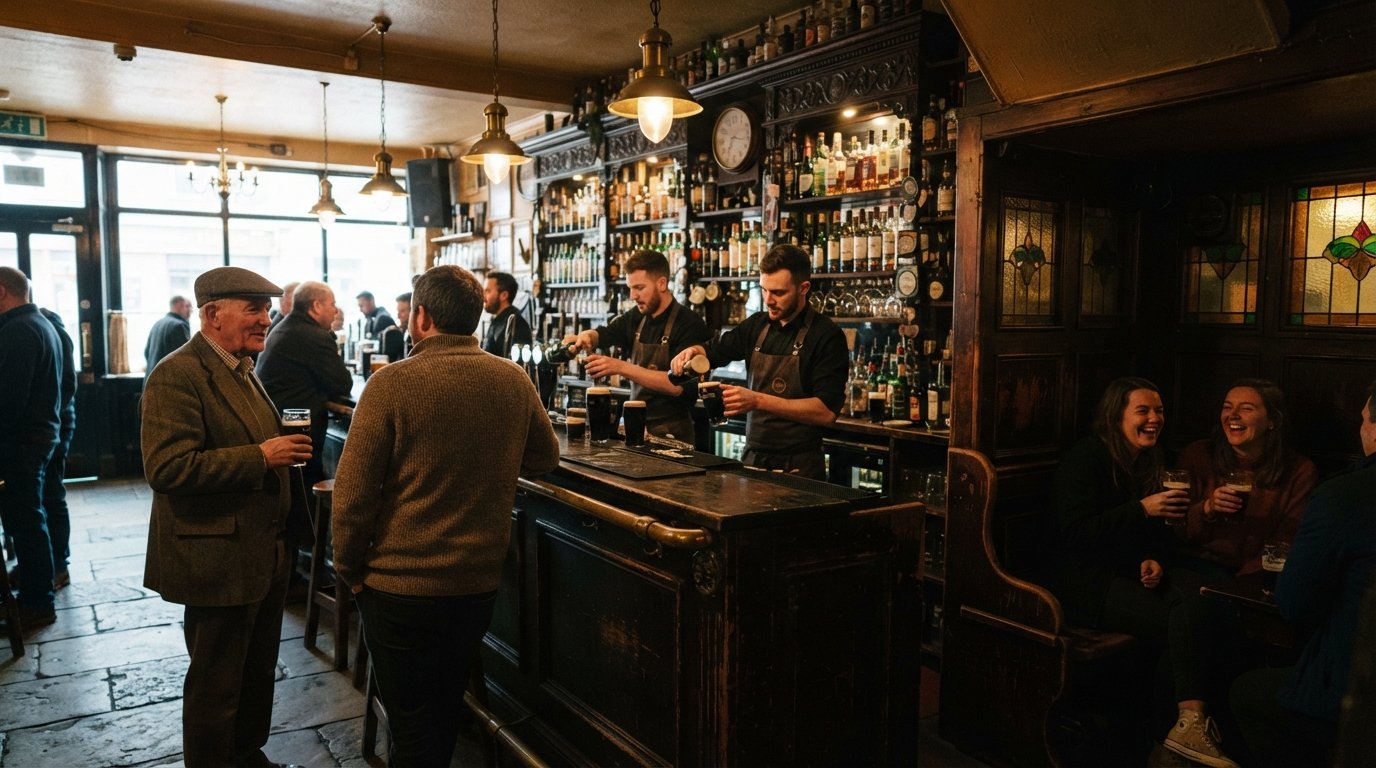
A few doors along, Doheny & Nesbitt is one of those beautifully preserved Victorian pubs that makes you lower your voice on the way in. All mahogany and mirrors, it has long been a haunt of politicians and journalists from nearby Leinster House, which is why the place earned its nickname, the Doheny & Nesbitt School of Economics. There is no need to over-interpret that. It means people come here to talk, argue and have a pint while pretending they are not doing either too loudly.
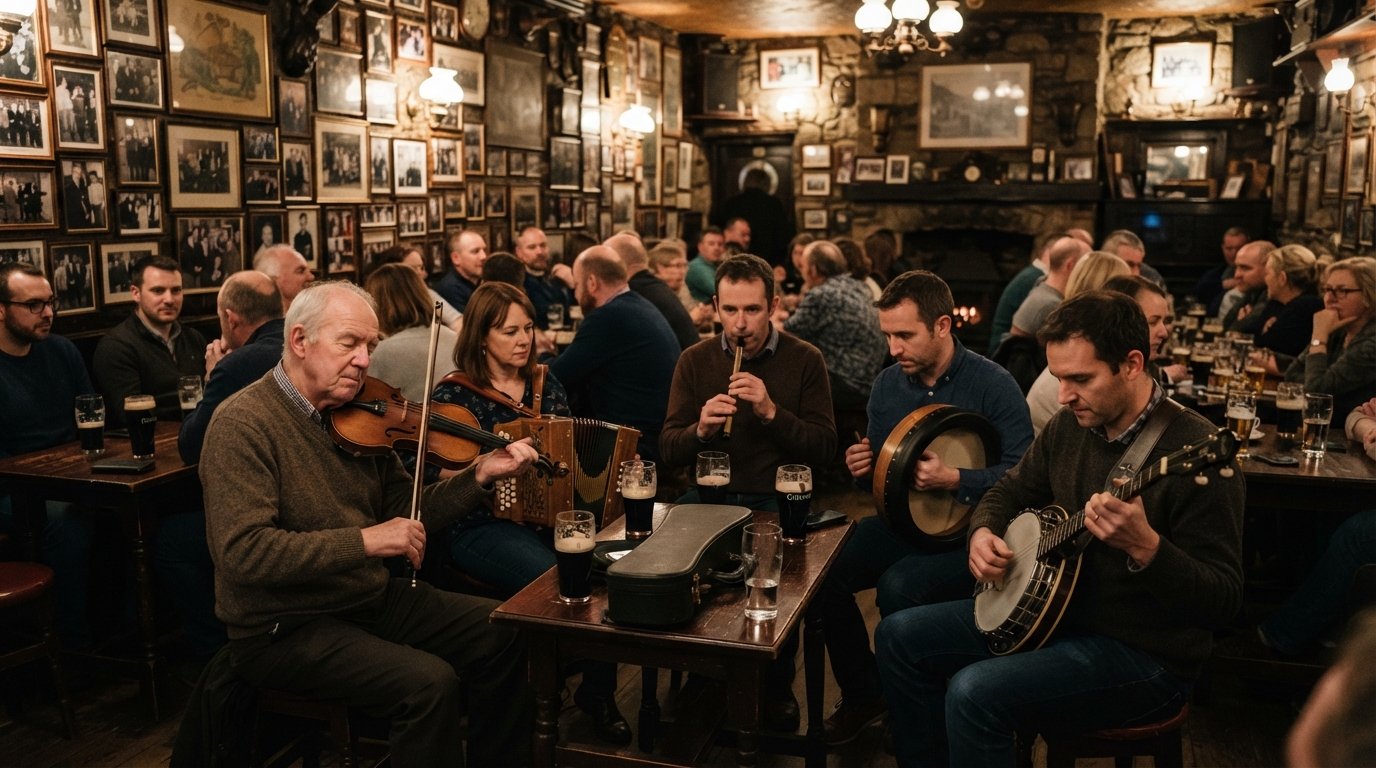
Round on Merrion Row, O’Donoghue’s is the trad-music institution where The Dubliners got their start in the early 1960s. Live traditional sessions run seven nights a week from around 9pm, and from 5pm on Saturdays, with the walls covered in photos of the folk legends who have played there. This is the real thing, not a bar that has hung a fiddle on the wall and called it heritage. The music comes first, and the room knows it.
None of these is a late-night proposition. They wind down around closing time rather than kicking on, which may disappoint the bar-hoppers but suits the quarter’s temperament. After dark, it grows quiet in a way that feels deliberate. You can hear your own footsteps again. In Dublin, that is sometimes the best luxury on offer.
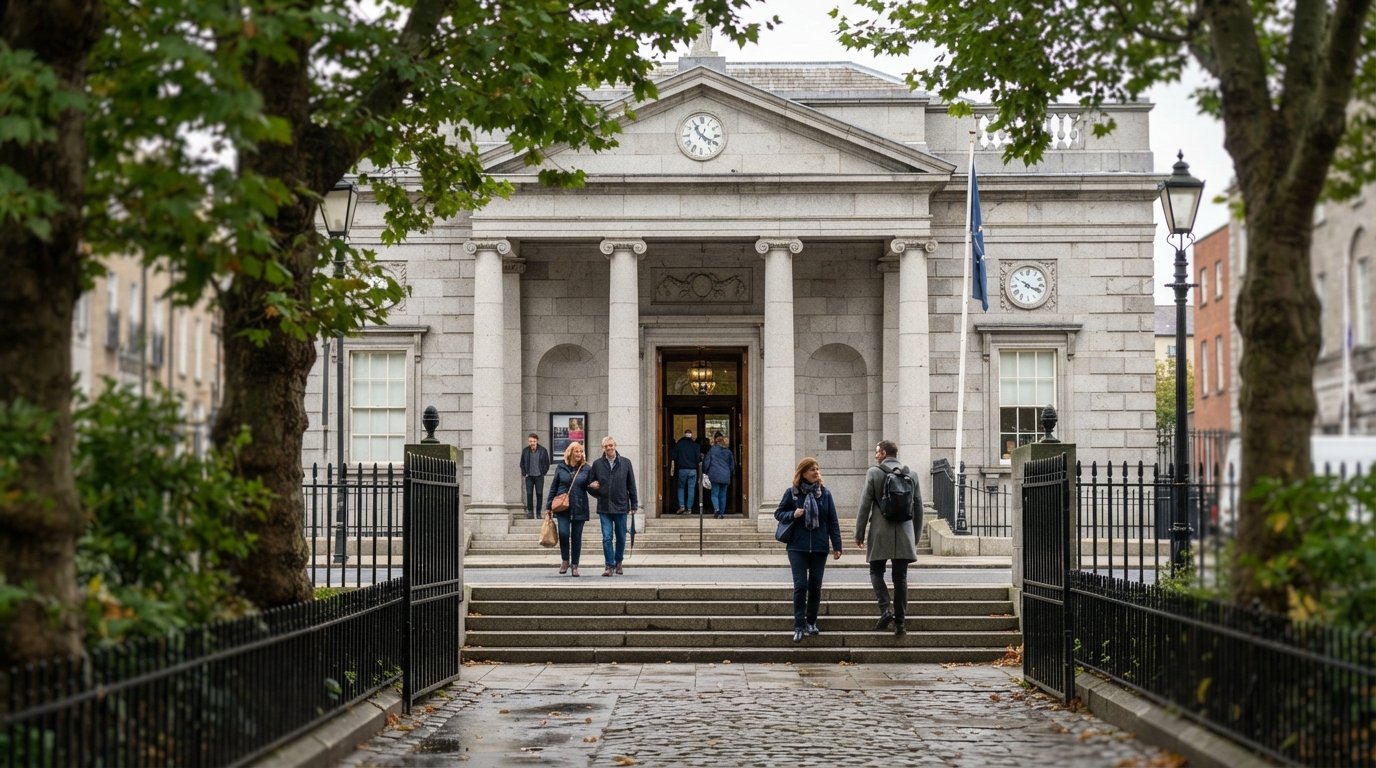
This is where the Georgian Quarter earns its keep for first-timers and repeat visitors alike. The museums are close, free and genuinely worth the time, not the sort of places you “do” because a guidebook told you to. Start at the National Gallery of Ireland on Merrion Square West, where the national art collection includes Vermeer, Caravaggio and the country’s finest gathering of Jack B. Yeats. Entry to the permanent galleries is free, and the building keeps sensible hours: Tue–Sat 9:15am–5:30pm, late until 8:30pm on Thursday, and from 11am on Sun–Mon. That makes it easy to fit into a wandering day, or to use as a refuge when the weather goes the usual Dublin direction.
Two minutes away on Kildare Street, the National Museum of Ireland – Archaeology is the star of the national museums. It is free, and it holds the Ardagh Chalice, the Tara Brooch and the eerily preserved Iron Age bog bodies. Last admission is around 4:30pm, which is the sort of practical detail that saves you from an annoying door-shut moment. If you only have one museum stop to make, this is the one that will stay with you longest.
Just off the square, Oscar Wilde House at 1 Merrion Square runs guided tours through the family’s Georgian rooms. It is worth going for the context alone: the square outside, the childhood home, the statue nearby, all of it folding into one literary corner of the city. Then there is Museum of Literature Ireland, or MoLI, in Newman House on St Stephen’s Green. James Joyce studied there, and the museum holds Copy No. 1 of the first edition of Ulysses. That is a proper pilgrim’s object, the sort of thing literary Dubliners will happily stand and stare at for longer than they planned.
For the simplest pleasure, sit in Merrion Square Park. It is a manicured Georgian garden square with lawns, flowerbeds and the Oscar Wilde statue, and it is free to enter. On a decent day, it is one of the best places in the city to do nothing at all and feel entirely justified in it. On summer Sundays, the open-air art market turns the railings into an impromptu gallery, with painters hanging their canvases along the fence around the park. It is a small tradition, but a good one. Dublin could do with more things that look as if they happened because people simply liked the idea.
One note for planners: the Natural History Museum, the old Dead Zoo on Merrion Street, is closed for a multi-year refurbishment, with a temporary Dead Zoo Lab running across the river at Collins Barracks instead. Worth knowing before you trek over with expectations and a raincoat.
Merrion Square Park with its statue of Oscar Wilde
The National Gallery of Ireland
The historic doors of Fitzwilliam Street
The Georgian Quarter is light on shopping by design, and that is part of its appeal. These are residential terraces, government offices and hotels rather than retail streets, so the urge to browse is usually satisfied a few minutes away. Grafton Street, the city’s main pedestrian shopping spine, and the boutique-heavy Creative Quarter around South William Street are both a five-minute walk to the west. The wider centre takes care of the rest.
Within the quarter itself, the pleasures are more modest and more Dublin for it: art books and prints from the excellent shop at the National Gallery of Ireland, the odd art or antiques dealer along the Georgian streets, and the open-air art market on summer Sundays where painters hang their canvases on the railings around Merrion Square Park. That market is less about retail than habit. It feels like a city keeping a promise to itself.
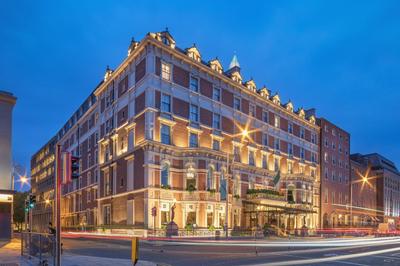
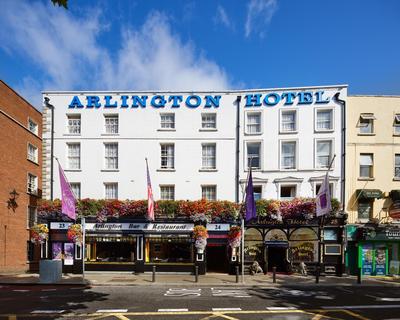
This is one of Dublin’s most prestigious places to sleep, and the prices tend to remind you of that before the key card even reaches your hand. The two landmark five-stars set the tone. The Merrion spans four immaculately restored Georgian townhouses on Upper Merrion Street opposite Government Buildings, and The Shelbourne sits on St Stephen’s Green, a Dublin institution since 1824. The Shelbourne is in the middle of a major, phased renovation, so check which rooms are open when you book.
What you are paying for here is location and calm in equal measure. You are a flat, walkable ten minutes from Grafton Street, Trinity College and the museums, yet the streets themselves are quiet and residential after dark. That suits couples, culture travellers and anyone who prefers a peaceful night to having bars on the doorstep. Smaller townhouse hotels and elegant guesthouses are scattered through the area too, along with some reliable mid-range and business options toward Baggot Street and the canal, but genuine budget beds are scarce. If you want cheap, look elsewhere. If you want handsome and central and are willing to pay for the privilege, this is the patch.
Our best-rated stays in this neighbourhood. Prices are approximate “from” rates — confirmed at the provider when you continue. We may earn a commission if you book through our partners — at no extra cost to you.
In this area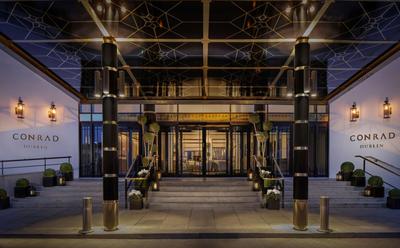 In this area
 In this area
 In this area
 In this area
 In this area
 In this area
 In this area
 In this area
 In this area
 In this area
 In this area
The Georgian Quarter is flat, compact and made for walking. You can cross it end to end in about fifteen minutes, and Grafton Street, Trinity College and St Stephen’s Green all sit right on its edge. That is half the reason people like staying here: the city’s main sights are close enough to make transport feel optional.
For trains, Pearse Station on Westland Row is a two-minute walk from the top of Merrion Square and is served by the DART as well as commuter and intercity services, handy for day trips out to Howth or Dún Laoghaire along the bay. The Luas Green Line tram stops at St Stephen’s Green and Dawson Street on the western edge, linking you south to the suburbs and north across the river. Numerous city bus routes run along Baggot Street, Merrion Row and Nassau Street.
If you are heading to Dublin Airport, there is no rail link from the city centre. The reliable route is the Airlink or Aircoach airport bus, boarded nearby, and it takes roughly 30–45 minutes depending on traffic. Within the quarter itself, though, you will rarely need any of it. Most of what matters is a short stroll away, and in a neighbourhood like this, that is the point.
Gallery
Yes — if you want central, handsome and calm, it is a very good base. You are within a ten-minute walk of Trinity College, Grafton Street, St Stephen’s Green and the main museums, but the streets themselves are quiet at night. It suits couples, culture travellers and first-timers who want classic Dublin rather than late bars on the doorstep. The catch is price: this is one of the most expensive parts of the city.
Plenty, and most of it is on foot. This is Dublin’s museum mile: the National Gallery of Ireland, the National Museum of Ireland – Archaeology, the Museum of Literature Ireland and the Oscar Wilde House are all close together. Add Merrion Square, Fitzwilliam Square, a sit in Merrion Square Park and a pint in a historic snug pub, and you have a full day without rushing.
The area was laid out in the Georgian era, mostly from the 1760s onward, when the streets and squares of near-identical brick townhouses were built. The famous colourful doors, with their arched fanlights, are best seen around Merrion Square, Fitzwilliam Square and Fitzwilliam Street.
Not especially. It is a cultured, central and unhurried part of Dublin, but it is not a nightlife district. The pubs on Baggot Street and Merrion Row are excellent for a slow pint or trad session, then they wind down rather than carry on into the small hours.