 In this area
Phibsborough
Hilton Garden Inn Dublin City Centre
8.6· 4,435 reviews
approx. from£267 / nightSee prices
The Dublin issue
A northside Dublin neighbourhood where the Gravediggers still pours a slow Guinness, Bohs still owns the mood on match nights, and the coffee crowd has learned to behave itself.

By Róisín KavanaghTrad sessions and craft-beer rooms
By eleven on a Saturday, the maritozzi at Elliot's are already gone, the Brunch Burger queue at Bang Bang is starting to snake along Leinster Street North, and somewhere up by Glasnevin a barman at the Gravediggers is still doing things the old way: two-part pour, no music, no telly, no hurry. That is Phibsborough for you — or Phibsboro, if you ask anyone who has actually lived here long enough to stop posing about it. It is a northside district that has managed the rare trick of being talked up by the papers and yet staying completely itself: red-brick, lived-in, a touch scruffy in the right places, and much more interested in the next pint or pastry than in being fashionable on command.
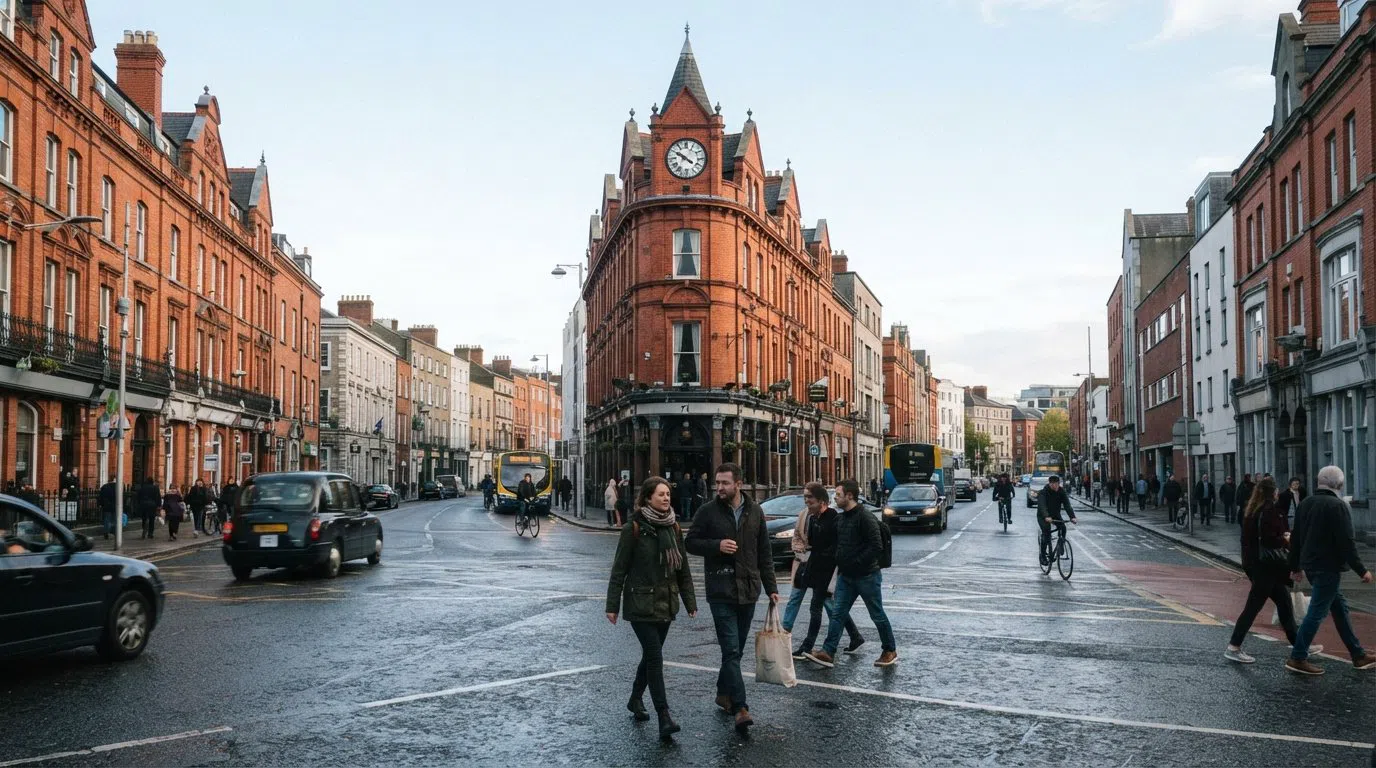
Phibsborough’s reputation rests on two things that do not always travel together: proper pubs and a food-and-coffee scene with enough conviction to make the area feel busier than its postcode suggests. Time Out has ranked it among the world’s coolest neighbourhoods more than once, but the locals seem to have taken that as a minor administrative error and carried on as before. The place still feels like a real Dublin grid, not a stage set: Victorian and Edwardian terraces running out from Doyle’s Corner, the five-way junction where Phibsborough Road meets the North Circular, and where the whole neighbourhood seems to turn in on itself like a conversation that has been going for decades.
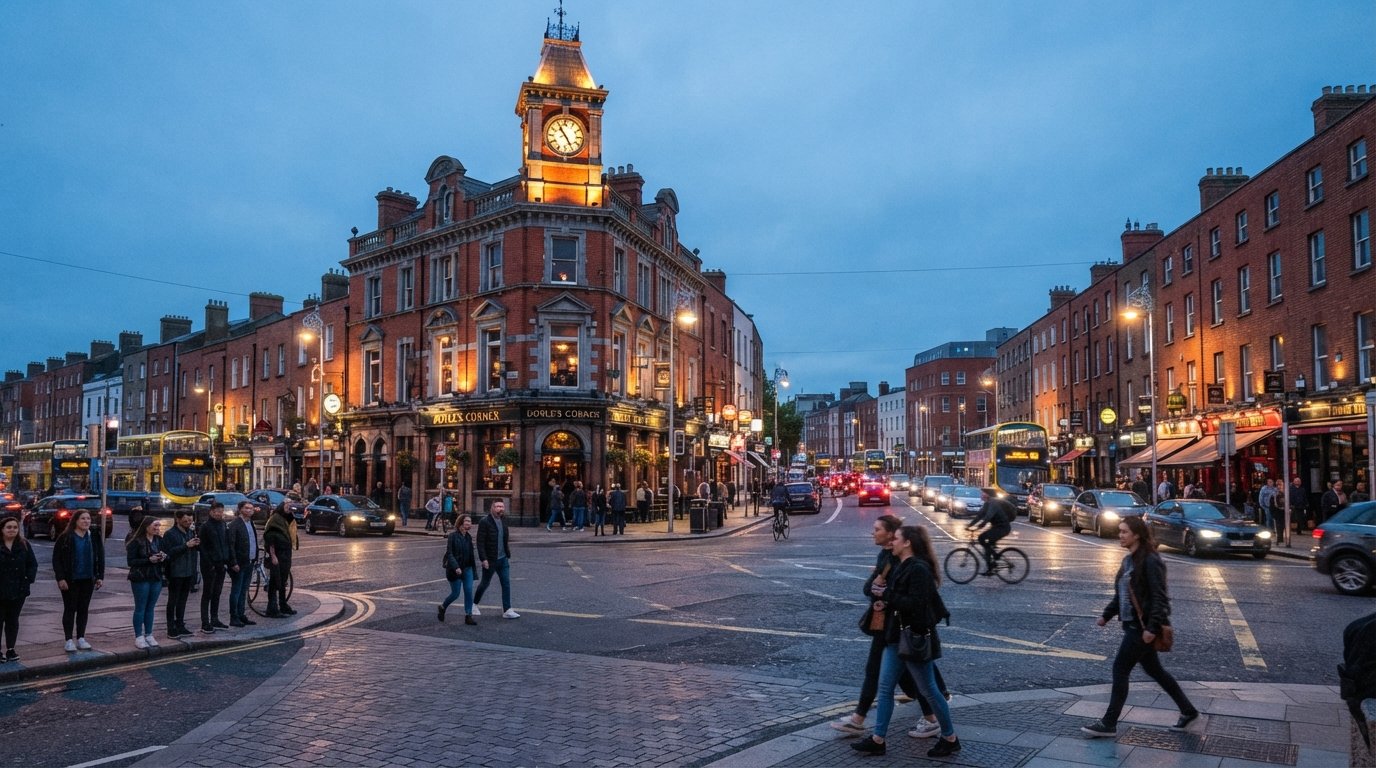
Doyle’s Corner is the sort of junction that tells you everything at once. There are pubs, a chipper or two, thrift shops, and the daily commerce that city centres usually price out and then pretend not to miss. It was once known as Dunphy’s Corner before taking the name of publican John Doyle in the 1890s, which feels about right for a place where the public house still has more civic authority than any glossy redevelopment pitch. A short distance away, Dalymount Park sits in the middle of it all, home to Bohemian FC since 1901 and long billed as the spiritual home of Irish soccer. Match nights send a roar down the streets. Even if you are not there for the football, you will feel the weather of it.
The other great marker of the area is that it does not belong to one crowd. Lifelong locals share the footpaths with Bohs diehards, students from the Mater and TU Dublin’s Grangegorman campus, young families in the artisan cottages, and a newer wave of coffee people and micro-bakery obsessives who have decided this is where they will make their stand. The result is not polished. Thank God. It is a neighbourhood that knows the difference between character and branding.
Live prices from our booking partners.
Free cancellation on many rooms. We may earn a commission when you book.
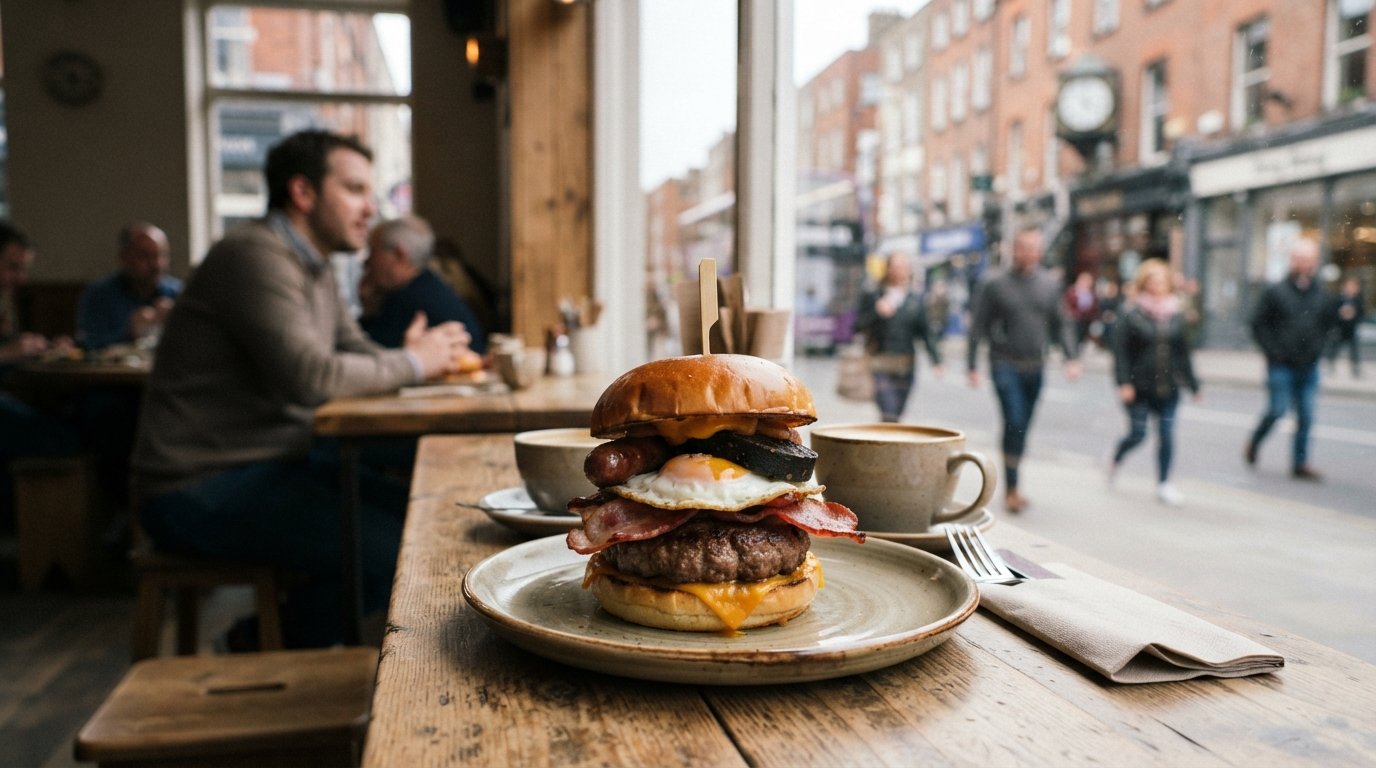
If you want to understand Phibsborough, start with breakfast and keep going until the night turns mean enough to ask for another stout. The local food scene is not about fine-dining theatre; it is about places that have become part of the daily weather. Bang Bang on Leinster Street North is the cult one, the maximalist coffee-and-deli opened in 2015 by siblings Daniel and Grace. Its Brunch Burger has acquired the sort of reputation that causes queues without anyone sounding silly about it: black pudding, sausage, rashers and egg, with cheese, lettuce, mayo and house relish, served all day. It is the kind of plate that makes perfect sense after a late one and slightly less sense if you are trying to be virtuous. The room itself is all energy and intent, with Arun bakery bread in the sandwiches and Silverskin coffee roasted up the road in Glasnevin.
A few minutes away on the North Circular Road, Two Boys Brew is the specialty-coffee anchor, opened by Kevin Roche and Taurean Coughlan after stints in London and Melbourne. It is the sort of place that could have become unbearably self-regarding and, to its credit, did not. The coffee is serious — 3fe and rotating guest roasters — but the mood stays local. There are brunch plates too, including wild mushrooms on grilled sourdough with poached egg, pecorino and hazelnuts, which sounds like the kind of thing people say in cities where they have learned to pronounce brunch with a straight face. Here it just works.
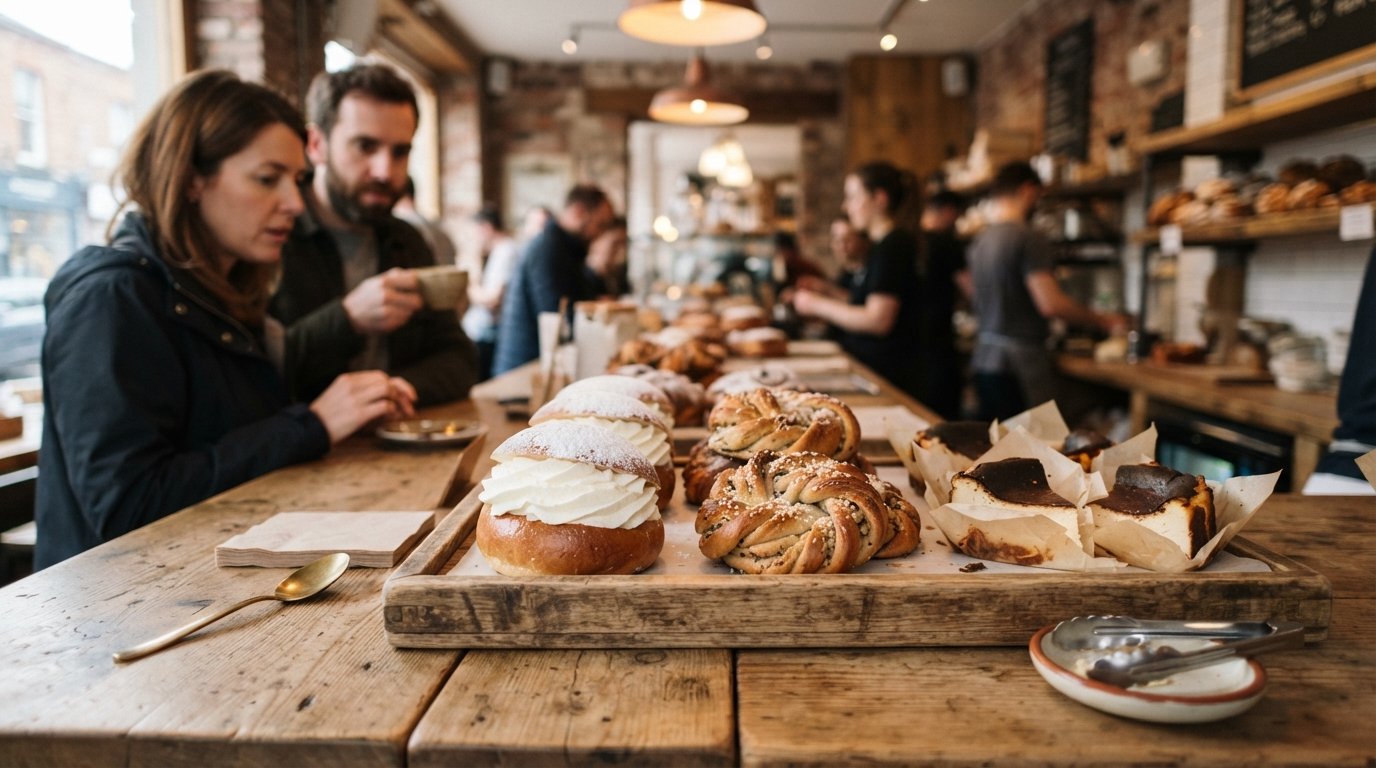
Then there is Elliot's, the Oxmantown micro-bakery on North Circular Road, where the day is ruled by what is still left in the cabinet. The maritozzi are the thing people cross town for, and they do not always get there in time. Basque burnt cheesecake, cardamom knots and organic-flour bread round things out, but the real thrill is the early-doors panic of buying before everything sells out. A bakery that can make you slightly anxious before lunch is doing something right.
For a pub meal that knows its job, The Botanic on Botanic Road is the floral-decked Edwardian gastropub that the Irish Times called a good restaurant disguised as a pub. That is the sort of description that can be either praise or a warning, but here it lands properly. Angus burgers, beer-battered cod and chips, and live music at weekends give it the right mix of comfort and looseness. It sits on the Glasnevin edge, which makes it a fine place to start or end a wander that has taken in the gardens or cemetery.
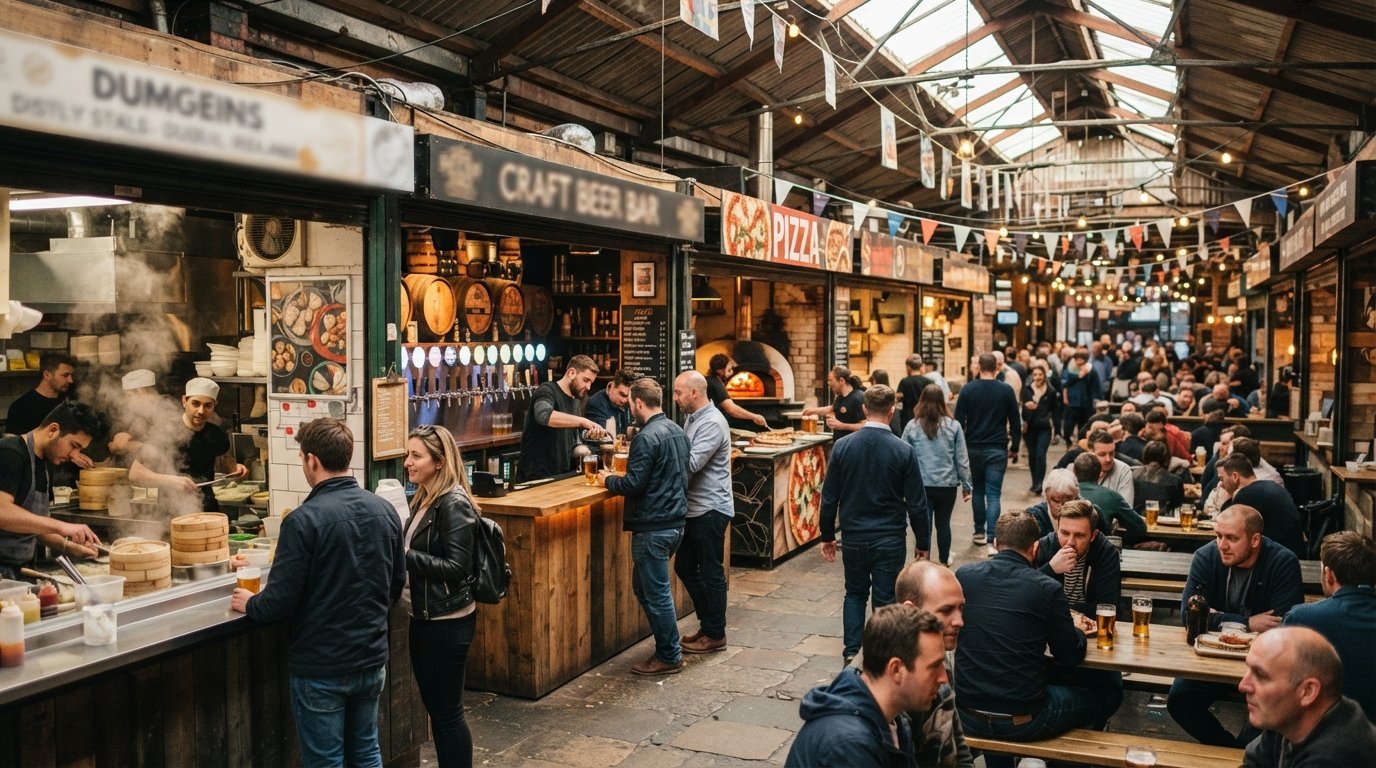
If you want something more casual, The Back Page on Phibsborough Road does a genuinely good handmade pizza alongside its beer and ping-pong. That matters. Too many sports bars think atmosphere is achieved by shouting at walls and hanging up neon. This one actually feeds you. And if you are wandering with a small crowd and no fixed plan, Eat Yard is the move: a covered street-food market with dumpling, pasta and pizza vendors, plus Irish craft beer on tap. It is not trying to be grand. It is trying to be useful, which is much rarer.
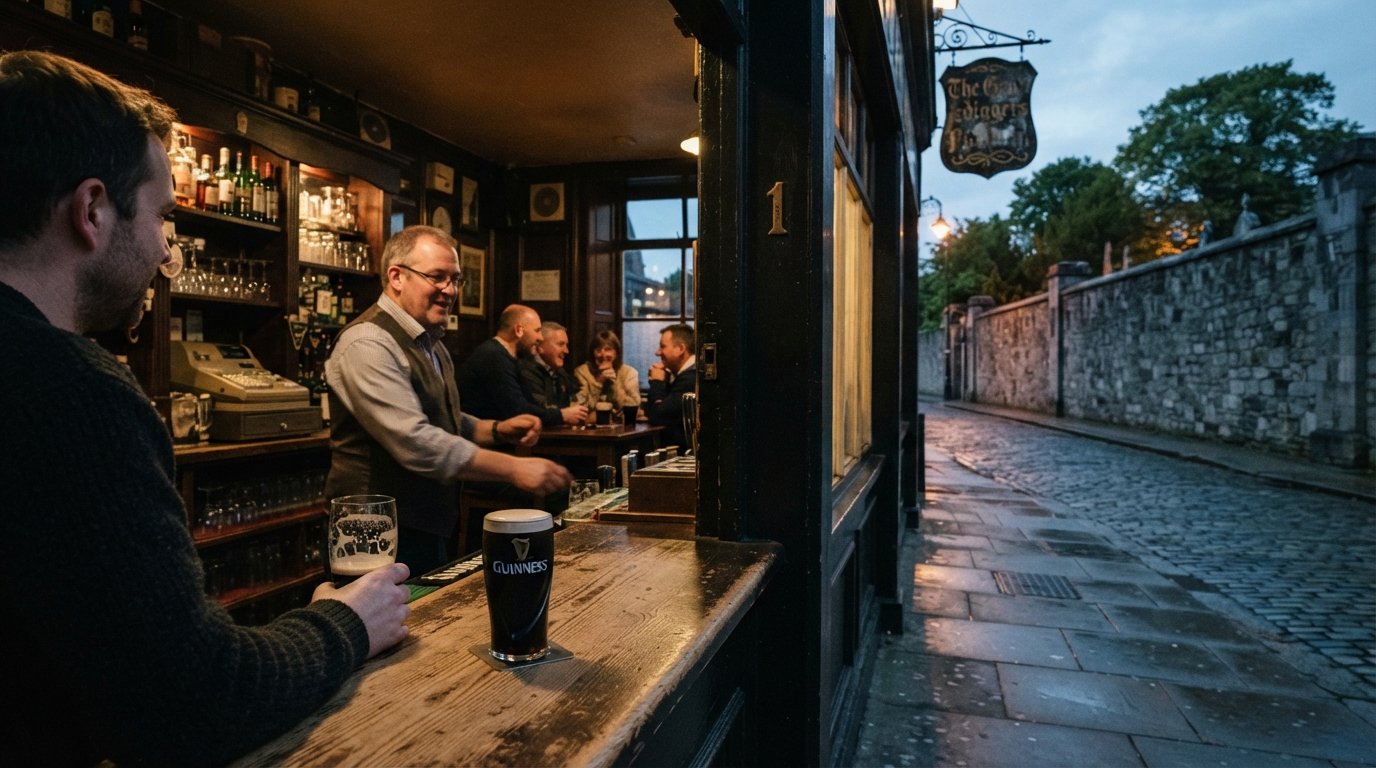
A night in Phibsborough is not a club night. Thank the heavens. It is a pub crawl with a bit of stamina and a sense of where to stand when the room gets warm. The crown jewel is John Kavanagh’s, better known as The Gravediggers, at 1 Prospect Square, wedged into the wall of Glasnevin Cemetery and run by the same family since 1833. It is now the eighth generation behind the bar, which is the sort of continuity that makes modern hospitality look like a temporary hobby. There is no music, no television and no fuss. Just conversation and one of the most talked-about pints of Guinness in the country, poured slow. If you want a Dublin pub that has not been tidied up for export, this is it.
Closer to Doyle’s Corner, the traditional bars line up with a kind of unforced confidence. The Hut on Phibsborough Road is a beautifully preserved Victorian pub, all tiled floors, mirrors and converted gaslights, with Guinness that has long undercut city-centre prices. It has the look of a place that has resisted every attempt to become more “interesting” than it already is. That is a compliment, by the way.
The Bohemian — McGeough’s at No. 66 — is the high-Victorian bar beloved of Bohs fans, with an Indian restaurant upstairs. On match nights it feels like the neighbourhood’s bloodstream has pooled there. McGowan’s, at 16–18 Phibsborough Road, is the sprawling late-night option, a huge U-shaped bar that has been going since the 1840s and gives you covered outdoor space when the evening decides to turn damp and awkward, as it often does.
For a different sort of crowd, The Bald Eagle at 114–115 Phibsborough Road pours Irish independents like Hope, Rascals and Trouble amid pop-culture décor and a beer garden. It is family-friendly without being dull, which is a harder balance than it sounds. And then there is Doyle’s Corner itself at 160/161, with its fireplace-warmed snug and upstairs sports bar. It is old-school and new-school on the same short street, and it does not really care which side you prefer.
The obvious pairing on the Glasnevin edge is the one you should do first, because it gives the neighbourhood its rarest gift: a proper half-day that costs very little and feels like a full answer. The National Botanic Gardens on Botanic Road are free to enter and spread over roughly 50 acres, with Victorian curvilinear glasshouses, herbaceous borders and a rose garden. They are open daily, with free guided tours on Sundays. On a bright day, the glasshouses throw enough light around to make the whole place feel gently overexposed in the best way.
Directly beside them, Glasnevin Cemetery & Museum holds much of modern Irish history in its ground: Michael Collins, Daniel O’Connell, Éamon de Valera, Countess Markievicz, Maud Gonne and Charles Stewart Parnell among them. The daily guided history tours leave several times a day, and the O’Connell Tower climb gives you 360-degree views that make the city look both larger and more manageable than it does from the street. Do the gardens and the cemetery together and you will understand why this edge of Phibsborough has such a strange, calm gravity.
The Royal Canal walk
Phibsboro Library, a historic building
The local pubs and cafes on Phibsborough Road
A short stroll south brings you to Blessington Street Basin, one of Dublin’s best-kept green secrets. It was once a reservoir from 1810, feeding the Jameson and Powers distilleries, and is now a walled secret garden where swans glide across the water and a picture-perfect keeper’s cottage sits like the last surviving prop from a quieter city. It is the kind of place you stumble into and then immediately wonder why more people are not already there. Probably because they are all somewhere else making a fuss.
Football, naturally, is part of the sightseeing here. Dalymount Park is the historic home of Bohemian FC and a great League of Ireland match-night experience, the sort that reminds you sport can still feel local and loud without needing a corporate script. Walk east and the skyline changes again: Croke Park rises up with the GAA Museum, stadium tour and Skyline walk, all only a short walk from Phibsborough. It is a useful reminder that this neighbourhood sits close to the centre of the city while still feeling like it has its own pulse.
The Royal Canal towpath meets the neighbourhood at Cross Guns Bridge and gives you a flat, quiet route for walking or cycling out of the city. On a fine day it is one of the easiest ways to see Dublin without having to perform for it.
Phibsborough does shopping the way it does most things: small-scale, practical and a little bit sideways. There are thrift and charity shops around Doyle’s Corner and along the Phibsborough Road, plus the sort of independent traders that make a neighbourhood feel inhabited rather than curated — greengrocers, butchers, off-licences and everyday grocers that have mostly vanished from the city core. You come here to browse, not to be dazzled.
The best shopping is edible. At Two Boys Brew, you can carry out coffee beans — Silverskin or guest roasters — and TBB granola. At Elliot’s, you buy a loaf and a box of pastries before they disappear. At Bang Bang, the deli shelves offer artisanal groceries, cheese and pantry goods worth taking home. Eat Yard doubles as a market too, with a wine-and-cheese stall alongside the street-food vendors. It is useful in the way good neighbourhoods are useful: you can solve dinner, breakfast and a present in one loop.
The Phibsborough Shopping Centre covers everyday needs, and the future of the place is tied to the Dalymount redevelopment, having changed hands in 2025. For bigger retail, Henry Street and Grafton Street are only a short bus ride or a 20-minute walk away. But really, this is not a district for designer labels. It is for the charity rail, the pint of milk, the loaf, the packet of biscuits and the bag of beans.
Be clear-eyed before you book: Phibsborough is a residential village, not a hotel district, and that is part of the appeal. There is no dense cluster of international hotels here. Accommodation runs to guesthouses, B&Bs, serviced apartments and short-term rentals threaded through the red-brick terraces, with a handful of larger hotels on the fringes — the Croke Park Hotel by the stadium to the east, and options toward Drumcondra and the airport road to the north. That makes it a strong-value base if you want to live like a local rather than sleep inside a lobby.
Our best-rated stays in this neighbourhood. Prices are approximate “from” rates — confirmed at the provider when you continue. We may earn a commission if you book through our partners — at no extra cost to you.
In this area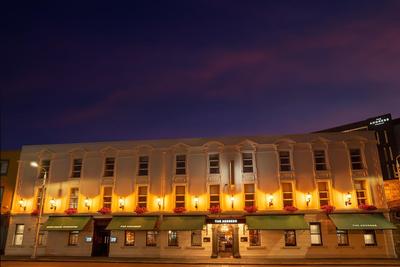 In this area
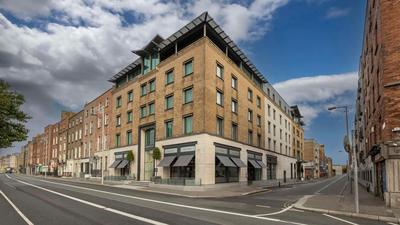 In this area
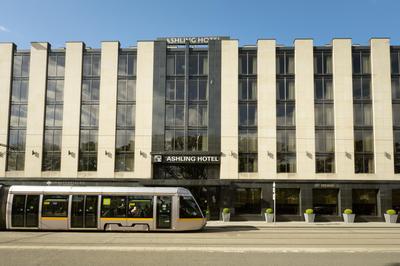 In this area
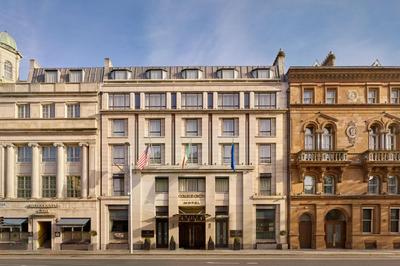 In this area
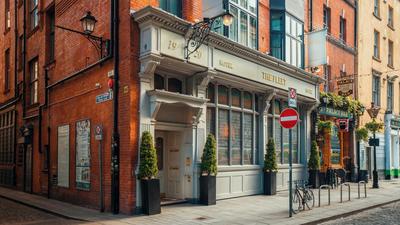 In this area
 In this area
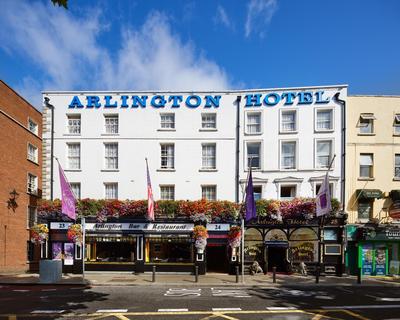 In this area
 In this area
 In this area
 In this area
 In this area
The best pockets are the Victorian streets radiating off Doyle’s Corner and the quieter terraces toward the Royal Canal and Glasnevin. Price feel is mid-range and generally kinder than the tourist core, because you are paying northside rates rather than city-centre ones. If your idea of a good trip is brunch on the North Circular Road, a match at Dalymount, and a slow Guinness in a real neighbourhood pub, this is the sort of base that makes sense. If you need a five-star concierge to tell you where the city is, you are in the wrong postcode.
Phibsborough is compact and flat, which is half the battle won before you start. The city centre is close — roughly a 20–25 minute walk, or about 10 minutes by bike, from Doyle’s Corner down through Broadstone to the top of O’Connell Street. You can feel the centre pulling at you, but not in an annoying way.
Public transport is plentiful. The Luas Green Line runs along the western edge, with Phibsborough, Grangegorman and Broadstone stops — part of the Cross City extension opened in 2017 — putting you in the middle of town in minutes. A dense web of Dublin Bus routes, including the 4, 9, 38/38a/38b, 46A, 83, 120, 122, 140 and the E1/E2, funnels through Doyle’s Corner and along the North Circular Road day and night. For the Glasnevin attractions, the Gravediggers, Botanic Gardens and cemetery are all walkable or a short hop on buses like the 4, 9, 40, 122 or 140.
Dublin Airport is another quiet advantage. From here it is a straightforward taxi — typically 20 to 30 minutes off-peak — or the Airlink, airport coach and city buses, with the airport comfortably under half an hour by road in normal traffic. That matters more than people think. It means Phibsborough can feel properly local without making you pay for the privilege of being stranded.
The real trick of the neighbourhood is simple enough: spend the morning in a bakery queue, the afternoon among graves and glasshouses, and the evening in a pub where the Guinness is still being poured with a bit of respect. Phibsborough does not need to shout. It has Doyle’s Corner, Dalymount, the Gravediggers and a dozen places in between, and that is more than enough.
Gallery
Yes — especially if you want a more local, good-value base rather than a hotel-heavy tourist district. You get proper pubs, excellent coffee and brunch, Dalymount and Croke Park within walking distance, and the centre is only a short bus, tram or 20–25 minute walk away. The trade-off is simple: there are very few big full-service hotels, so it suits guesthouses, apartments and independent travellers best.
It’s known for being one of Dublin’s more authentic northside neighbourhoods, with a mix of old pubs and a serious coffee-and-food scene around Doyle’s Corner. It’s also a football area: Dalymount Park, the historic home of Bohemian FC, sits right in the middle, and Croke Park is a short walk east. Glasnevin adds the Gravediggers, the Botanic Gardens and Glasnevin Cemetery.
Yes. It’s a settled, well-populated residential neighbourhood and is generally comfortable to walk around by day and at night with normal city awareness. As ever in a capital, keep an eye on your belongings in busy pubs and on public transport, and expect things to be livelier around Doyle’s Corner on Bohs match nights.
Start with the National Botanic Gardens and Glasnevin Cemetery & Museum on the Glasnevin edge, then head back through Doyle’s Corner for a coffee or pint. If you’ve time, add a stop at Blessington Street Basin or a match at Dalymount Park, depending on whether your idea of culture comes with flowers or football.