
The queue for the Book of Kells used to be the first thing you saw of Trinity College: a line of damp coats bending back from the Old Library door, across the cobbles, towards the front gate on College Green. It has largely gone, though not because demand fell away. Every ticket is now a timed slot, so the only people standing outside in the rain are the ones who arrived without one. Understanding that single fact is most of what you need to see Ireland's most famous manuscript calmly, dry, and in under an hour.
What you see in the Treasury
The Book of Kells Experience at Trinity College Old Library (College Green, straight through the front arch and right across the cobbled square) is built around four volumes of a gospel book made by Columban monks around the year 800, carried to the monastery at Kells in County Meath, and in Trinity's keeping since the seventeenth century. Two volumes are on display at a time in a darkened room, one opened at a page of decoration, one at a page of text. The pages are turned periodically, so nobody can promise you a particular image on a particular day.
The honest shock for most visitors is scale. It is a book you could carry under one arm, not a wall-sized object, and the detail that makes it extraordinary is detail you have to lean in for: interlace a few millimetres wide, animals folded into initials, the blues and yellows still carrying after twelve centuries. You get a few minutes at the case with people behind you, which is why the exhibition galleries leading into it matter more than people expect. They give you the scriptorium, the pigments, the island monasteries and the Viking-age disruption that moved the book inland, so that when you finally reach the case you know what you are looking at rather than just confirming you have seen it.
From the Treasury you climb to the Long Room, the barrel-vaulted hall that everyone has seen in photographs. The shelves are bare except for the first four bays. The books have been moved out bay by bay for a vast conservation project, the building closes in 2027 and is not due to reopen until 2030. The architecture is still magnificent, the marble busts are still there, and the emptiness has a strange dignity to it, but if you are coming purely for the wall-of-books photograph, you should know before you pay rather than after. Photography is forbidden in the Treasury itself, and the staff enforce it.
How long it takes and what it costs
There are four ways in, and the difference between them is time rather than access to the manuscript. The entry-level Book of Kells and Old Library ticket starts at €19 and is built as a 45-minute visit: the galleries, the manuscript, the Long Room, out. The self-guided Experience at €25 is the longer route through the building and realistically takes 75 to 90 minutes if you read the panels. A guided version runs at €65 and is capped at 16 people per group, small enough that you can ask the guide a question and hear the answer. There is also a Low Sensory Hour ticket at €21.50, with reduced sound and light and fewer bodies in the room, which is worth knowing about whether or not you are the obvious audience for it.
Budget an hour for the €19 ticket including the walk in from the gate, and most of two hours if you take the guided option and then stand in the Long Room properly. Groups should note that the self-guided slots will take any size if you pre-book them, so a party of thirty is fine as long as it is booked; the guided product is the one with the hard ceiling of 16.
Why there is still a line and how to avoid being in it
The timed-entry system is mandatory, and that is the whole trick. If you book a slot, you walk up at your time and go in. Arriving without one puts you in a queue to find out whether a later slot exists, which on a wet Saturday in a city with a lot of indoor-only options may mean being sent away or handed a time three hours from now. The door is not a reliable plan. Book the slot before you leave your accommodation, ideally the night before, and plan the rest of the day around it rather than the other way round.
If you would rather have the context delivered out loud, guided walking options that include the manuscript and a stretch of the surrounding city run seven days a week, and they are being booked steadily: reviews for the leading one are landing at roughly 3.4 a day. The mid-morning slots go first. The guided route suits people who want a single decision rather than an itinerary, and it suits a first day in the city, when you have not yet worked out that Trinity, Grafton Street and Kildare Street are all within a few hundred metres of each other.
Access, rules and the things nobody warns you about
There is no bag storage anywhere in the building. If you are visiting between a checkout and a train, you need to have solved that problem elsewhere first, because arriving with a suitcase is a wasted slot. The campus is cobbled, which matters for wheels of every kind, and the Old Library is a historic structure rather than a purpose-built museum. If you have specific access needs, contact them ahead of the visit instead of hoping at the door. No photography in the Treasury, as above. Phones away entirely is the easier rule to follow, and it makes the room better for everyone.
Best time to go
The first slot of the day is the best one in the building, and the last 90 minutes is the second best. The crush is late morning to early afternoon, when city-tour traffic, school parties and everyone who woke up to rain and reached for the same indoor option all arrive together. Midweek beats the weekend; Wednesday to Friday is noticeably easier than Saturday. Winter afternoons are quieter than summer ones, but the Long Room is at its best in flat northern daylight rather than in the dark, so an early slot in January can be more rewarding than a late one in July.
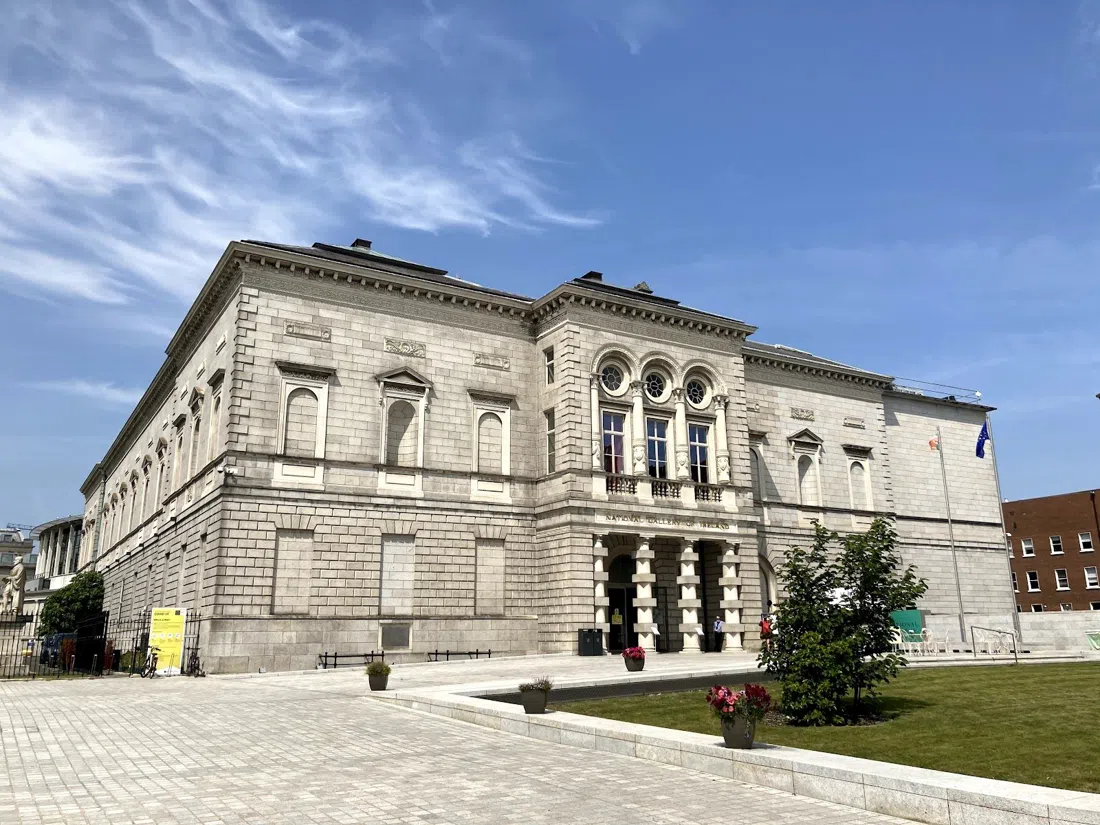
If you are planning a full dry day, build it backwards from a 9.30 or 10am Kells slot. You are then out by eleven with the whole Kildare Street cluster ahead of you and the crowds arriving behind you. The National Gallery of Ireland (Merrion Square West, under ten minutes from Trinity's Nassau Street side) opens late on Thursdays until 20:30, and those evening hours are the calmest in the week to walk a free collection. A Thursday morning slot at Trinity and a Thursday evening at the gallery is the single best-shaped day in this part of the city.
Ninety seconds from the gate when the rain starts
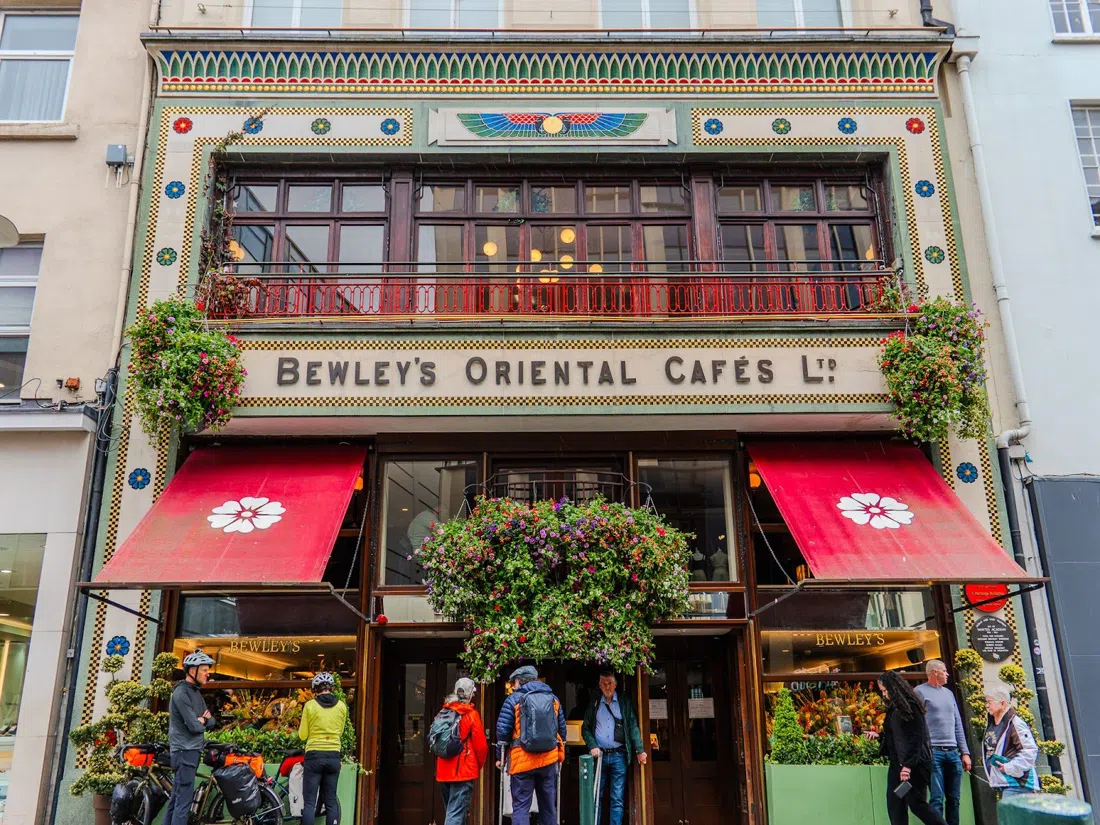
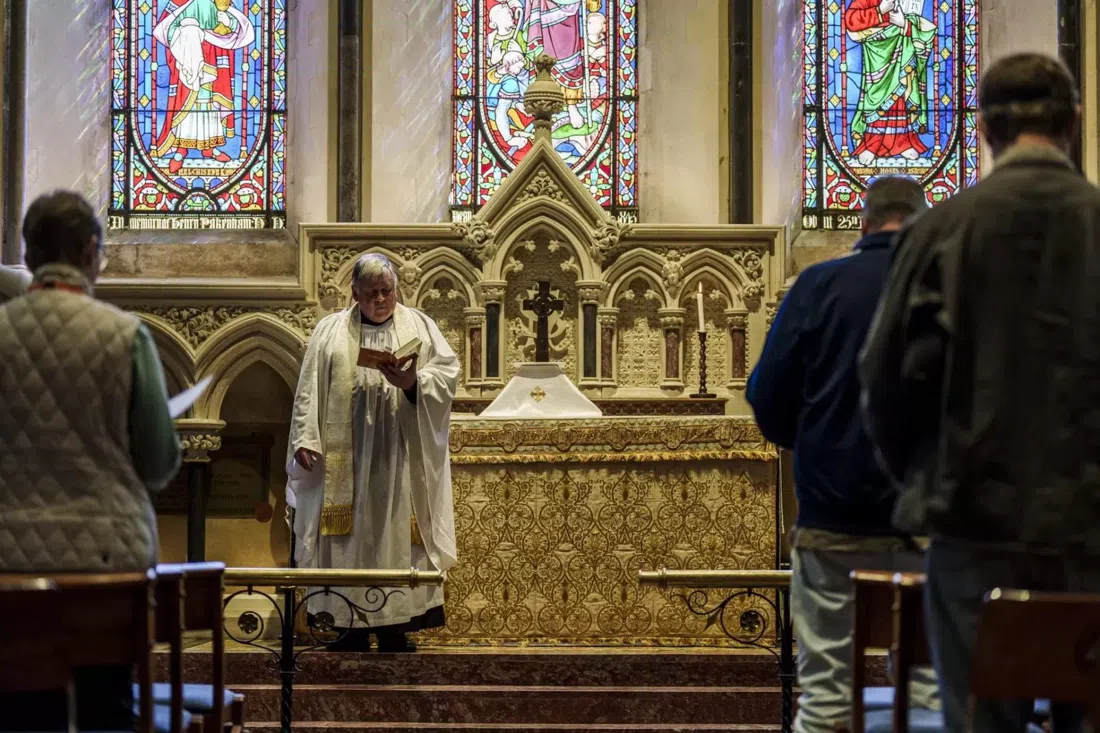
Timed entry creates its own small problem: the 40 minutes you now have to spend somewhere before your slot. Bewley's Café Grafton Street (Grafton Street, 90 seconds from the front gate) is the obvious answer and the good one, with several floors, large rooms, and the Harry Clarke stained-glass windows, finished just before his death in 1931, which make it a sight in its own right rather than a place to sit. Expect mid-range prices for coffee, patisserie or a full menu, and bring a big group outside lunchtime if you want to sit together.
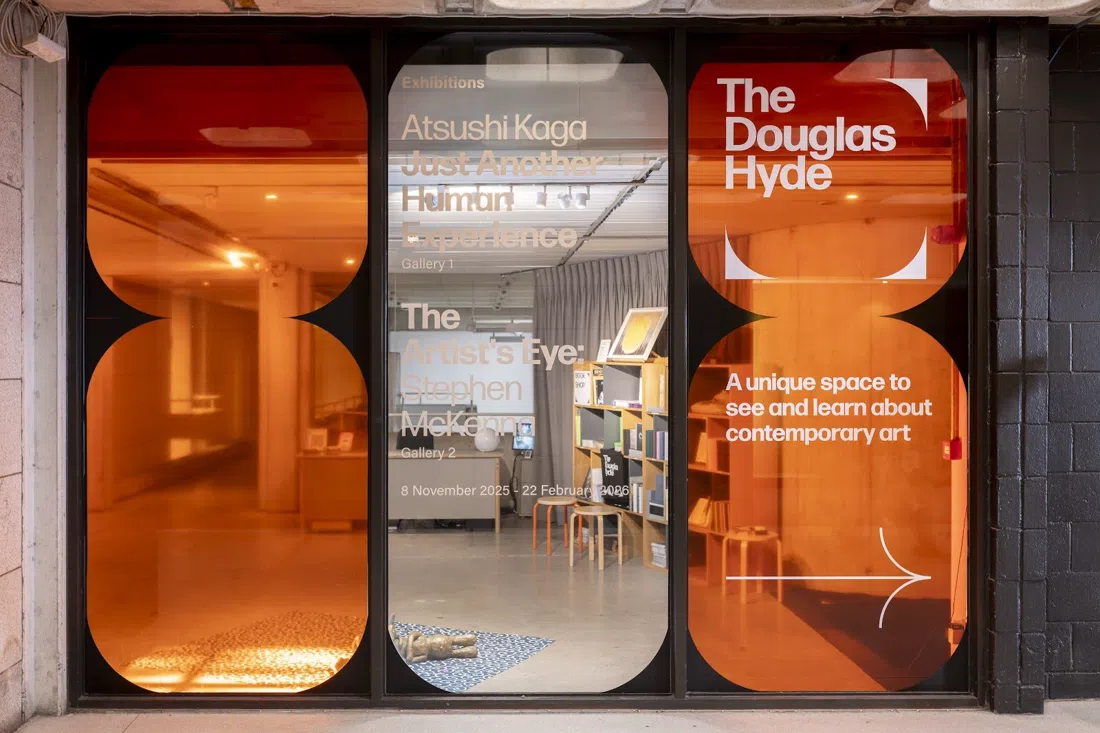
For better coffee in a much smaller room, The Pepper Pot (Powerscourt Townhouse, off South William Street, about seven minutes away) does soup, sandwiches and scones at low single-figure prices, and the covered Georgian courtyard it sits above is a weather-proof wander by itself. It is a room for pairs and fours, not for groups, it closes on Sundays and it shuts at five. On the same campus as the Old Library, The Douglas Hyde Gallery of Contemporary Art (Trinity College, two minutes from the Library door) is free, needs no booking, and is the cheapest possible way to fill 20 minutes indoors, but it opens Wednesday to Sunday only and closes on bank holidays, so check before you rely on it. Large tours should split rather than pile in.

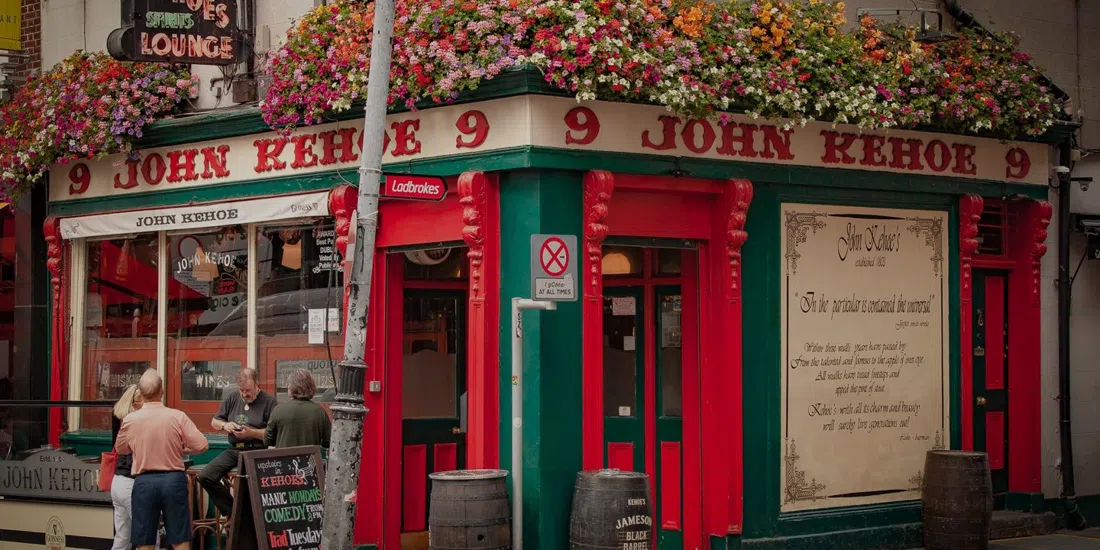
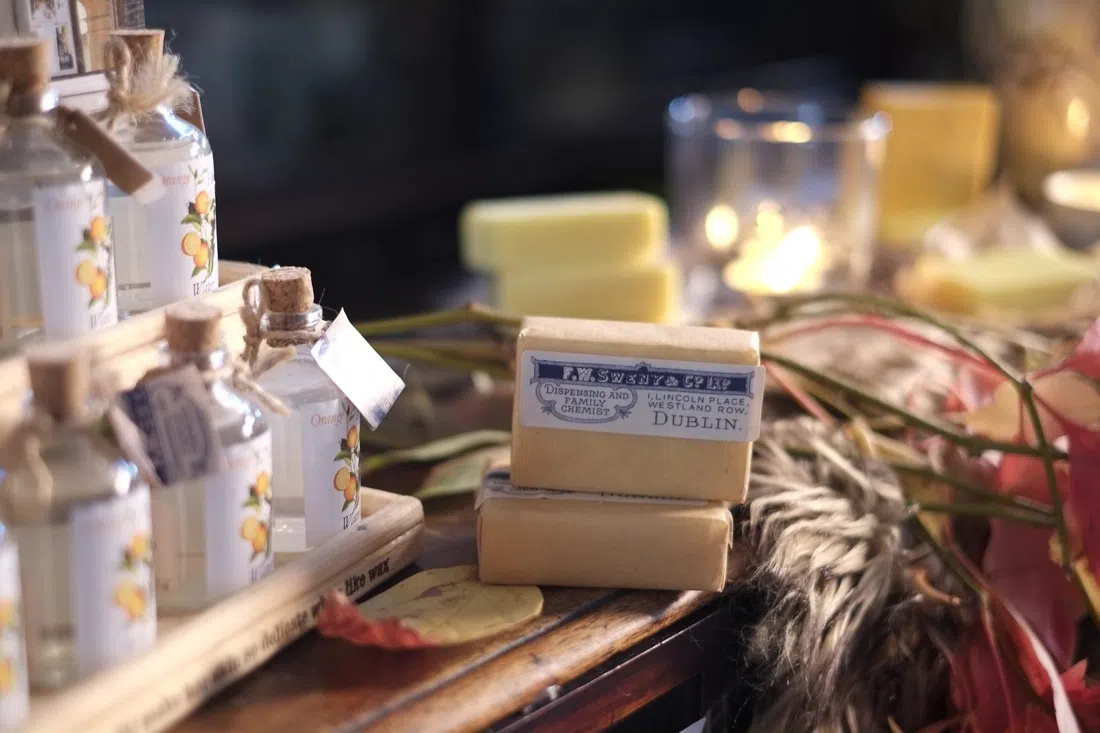
Three minutes from Trinity's Lincoln Place gate, Sweny's Pharmacy (Lincoln Place, Westland Row corner) is the chemist James Joyce put into Ulysses, kept alive by around two dozen volunteers who hold free readings and sell lemon soap and second-hand books for a few euro. It is free, it is dry, and it is genuinely one small room: a handful of people at a time, never a coach. Kehoe's (South Anne Street, five minutes off Grafton Street) was first licensed in 1803 and is the nearest intact heritage pub to Trinity for sitting out a downpour; no bookings, first come, and the snug goes early in the evening. If you have a full hour and no interest in another church, the Irish Whiskey Museum (College Green, literally across the road from the front gate) runs a one-hour Classic tour with three tastings from about €23, departing every 30 minutes from 10:30 in groups of around ten. It is over-18s in practice, so not a family filler.

The six-minute walk that finishes the story
The strongest pairing in the city is free. The National Museum of Ireland – Archaeology (Kildare Street, six minutes from the front gate) holds the metalwork made by the same early-Christian culture that produced the manuscript: chalices, brooches, reliquaries, the same vocabulary of interlace worked in silver and gold instead of ink. Seeing it after Kells rather than before is the right order, because you arrive already able to read the patterns. It costs nothing, it takes groups easily as long as larger parties and guided visits are arranged in advance, and it opens Tuesday to Saturday 10 to 5 and Sunday and Monday 1 to 5. That late Monday opening catches a lot of people out.
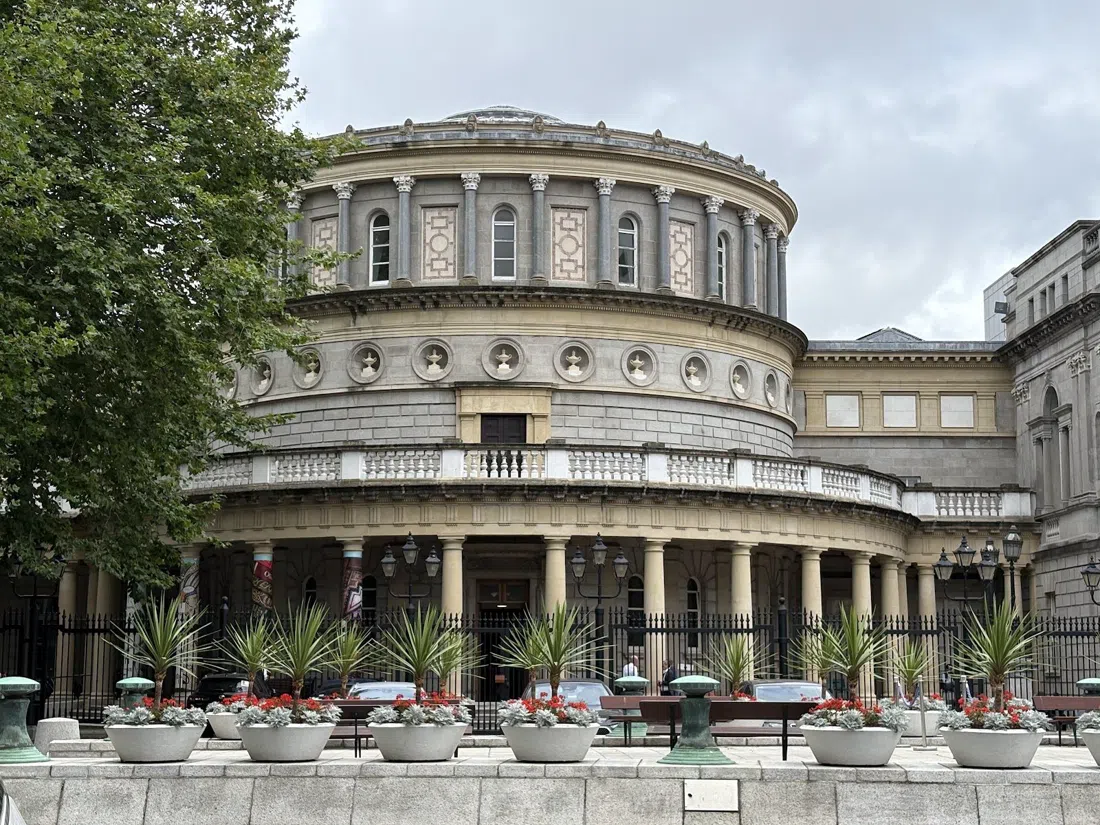
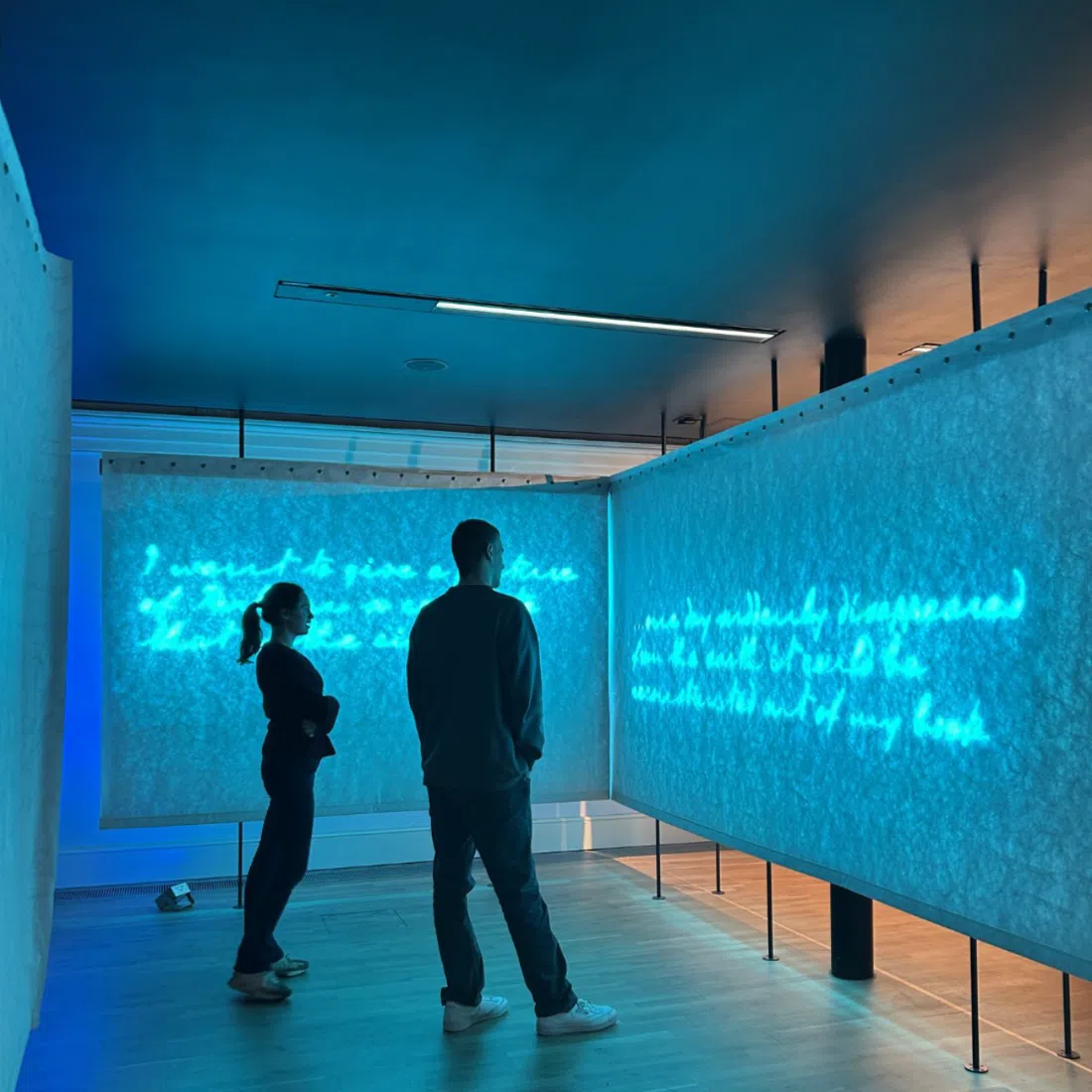
Five minutes from Trinity's gate on the same street, the National Library of Ireland (Kildare Street) runs free exhibitions and free guided tours, bookable for groups. The Yeats and Seamus Heaney shows are manuscript-and-notebook exhibitions (drafts, crossings-out, handwriting), the natural next step if what grabbed you at Trinity was the act of writing rather than the gold. The National Gallery, mentioned above for its Thursday late, is the largest free weather-proof space within walking distance and will absorb a group without strain; the permanent collection is free, some temporary exhibitions are ticketed, and guided group visits should be pre-booked.
Shelves that are still full
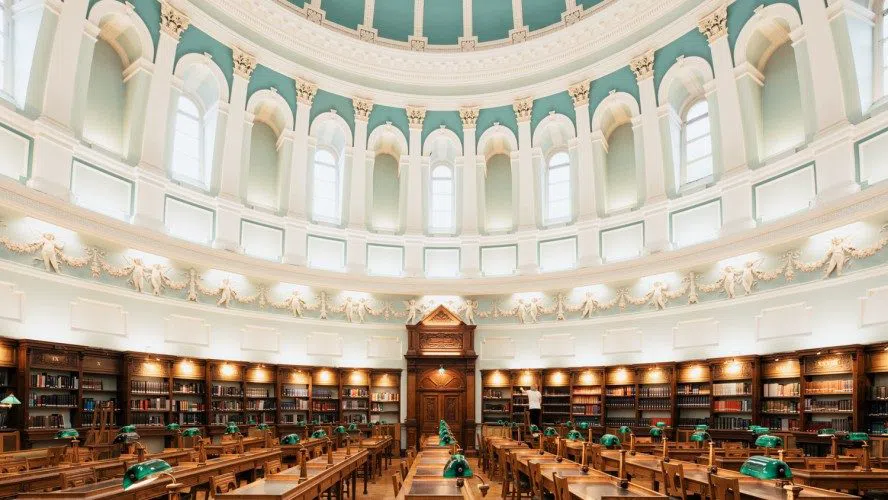
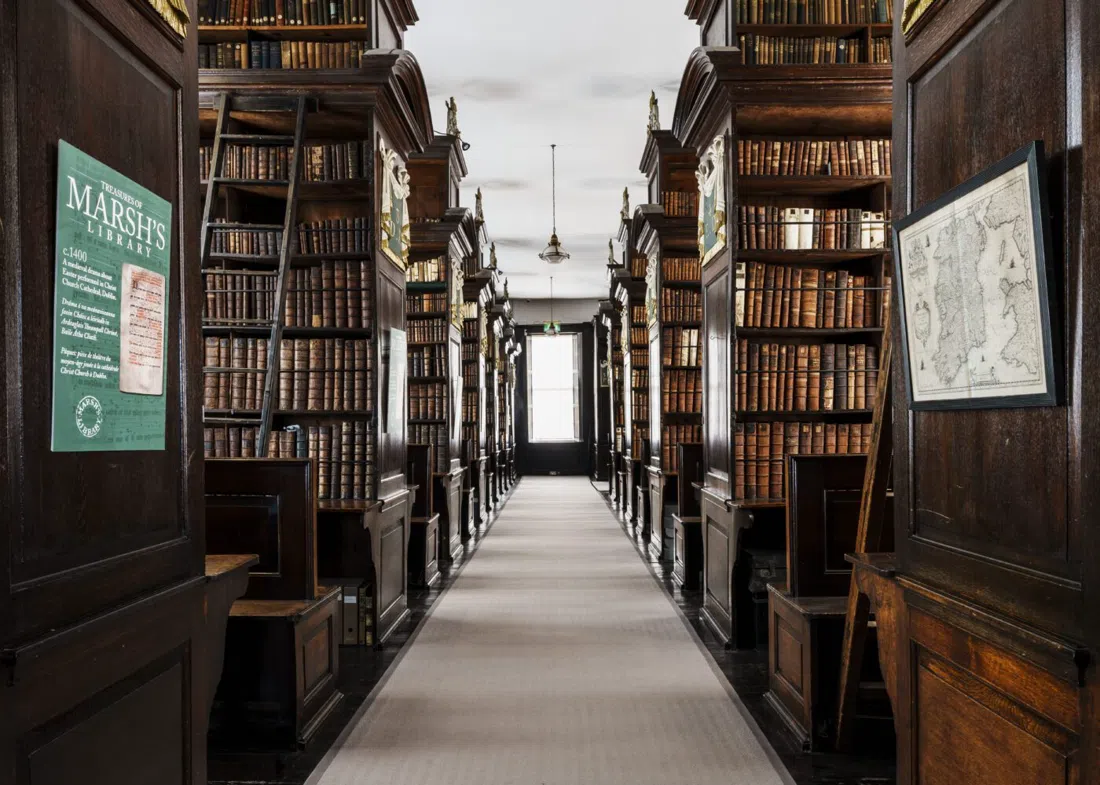
If the bare Long Room is the one thing that disappoints you, there is a direct answer twelve minutes' walk south-west. Marsh's Library (St Patrick's Close, the Liberties) has been open since 1707 and is Ireland's oldest public library, and its shelves are still full: dark oak galleries, chained cages, reading desks, the smell of old paper. It costs €8 for adults, €6 for students and seniors, free for under-18s, and opens Tuesday to Friday 9.30 to 5 and Saturday 10 to 5, closed Sunday, Monday and bank holidays. The two galleries are narrow, so pairs and small groups are fine and anything larger must arrange a time ahead.
It stands beside Saint Patrick's Cathedral (St Patrick's Close, the Liberties), where Jonathan Swift was dean, so the two make one complete dry afternoon on a single corner. Entry is €11.50 adult, €10 student or senior, €5.50 child and €31 family, and free guided tours are included Monday to Saturday at 10:30 and 14:30. Take one, because the building's six-hundred-year argument with the city is not self-explanatory. Groups of ten or more must book online in advance. Sunday hours are split around services, so Sunday is the day to go elsewhere.
Dublin's other famous book
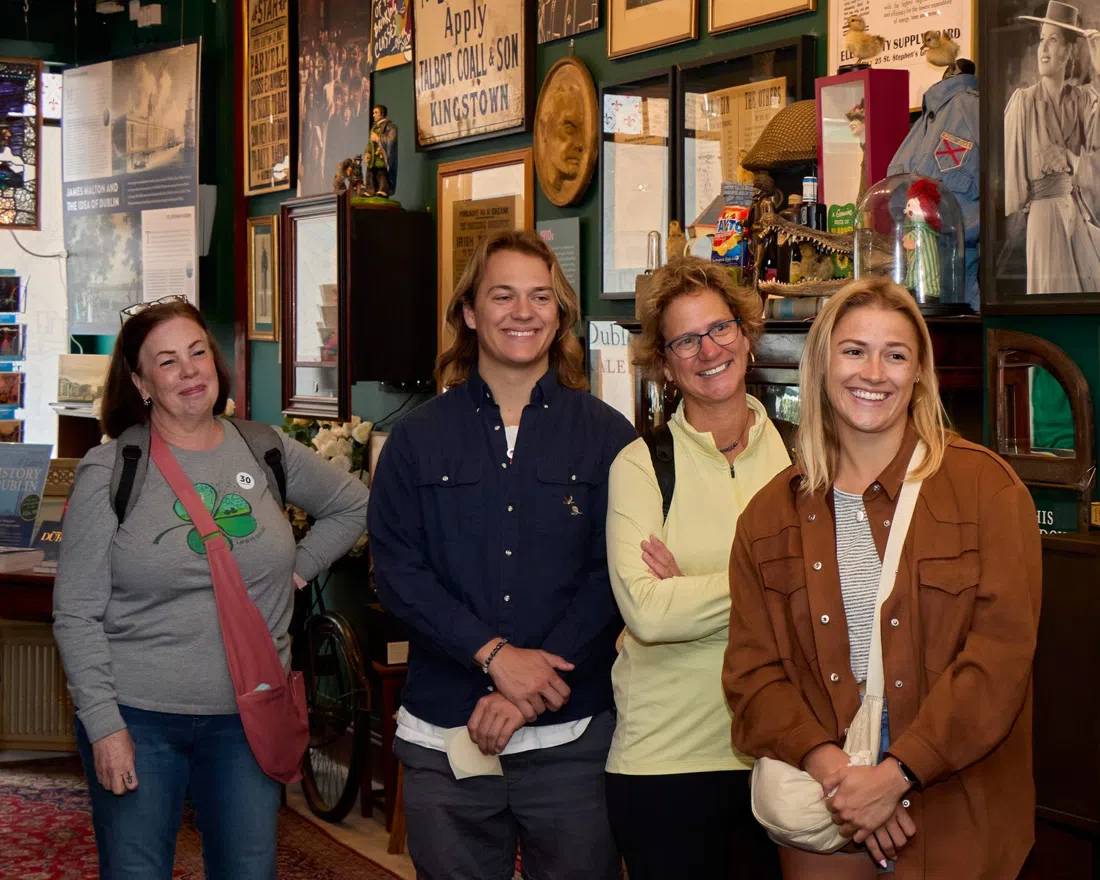
Trinity is not the only manuscript in the city worth a timed slot. The Museum of Literature Ireland (St Stephen's Green, about ten minutes from the front gate) holds the first copy of Ulysses ever printed, in a warm Georgian house with a café and a garden, and it is markedly less crowded than the Old Library. Admission starts at €16.50, a guided or historic-house tour is €18, group visits take discounted rates and should be booked, and it opens daily 10 to 5 with last admission at 4. Also on the Green, The Little Museum of Dublin has reopened after a multi-million refurbishment with new exhibits and its K1 kiosk, and entry is by 29-minute guided tour only, departing every 45 minutes between 9.30 and 5. You cannot drift in off the street, so book the slot; group bookings are accommodated but must be reserved.
Is it worth it
Yes, with one condition. Across the guided options here there are 12,838 traveller reviews, and the leading one holds 4.7 out of 5 from 4,293 of them, which is a strong number for an attraction that mainly consists of looking at one small object through glass. That holds up because the object is genuinely singular and the exhibition around it does its job. But go for the manuscript, not for the Long Room photograph: until 2030 that room is mostly empty shelves, and pretending otherwise is how people come out feeling short-changed. If you want full shelves, pay the €8 at Marsh's as well and treat the two as one visit.
It suits almost everyone for an hour: solo travellers, couples, teenagers who like detail, pre-booked groups of any size. It suits restless small children less well, because the Treasury is dark, quiet and strictly no-photo. And it is the single most reliable thing in this Dublin guide to put at the top of a wet day, because nothing about it depends on the sky.
Practical notes
Everything above sits inside a 15-minute walking radius, which is why this works as a rainy-day plan. Trinity's front gate is on College Green, two minutes from the Luas Green Line stops at Trinity and Dawson. Pearse Station, on the DART coastal line, is a three-minute walk from the Lincoln Place gate at the back of campus, which makes the Experience an easy morning out of Howth, Dún Laoghaire or Bray. City buses all converge within a couple of blocks. Use a Leap Card or contactless on buses, Luas and DART: single cash fares are dearer and bus drivers do not give change.
Cards work everywhere that matters, but carry a little cash for lemon soap at Sweny's and a round at Kehoe's. On timing, book the Kells slot first and let it anchor the day: early slot, archaeology next door, lunch on Grafton Street, the Liberties in the afternoon. On budget, a €19 or €25 ticket plus three free national institutions is a full day indoors for well under €30 a head; adding Marsh's at €8 and the cathedral at €11.50 still keeps a serious day of history under €50. If you want to do all of it on foot in one go, stay south of the river between Trinity and St Stephen's Green. Compare rates with a Dublin hotel search and you will usually find the ten-minute-walk addresses cost little more than the ones that commit you to a bus in the rain.