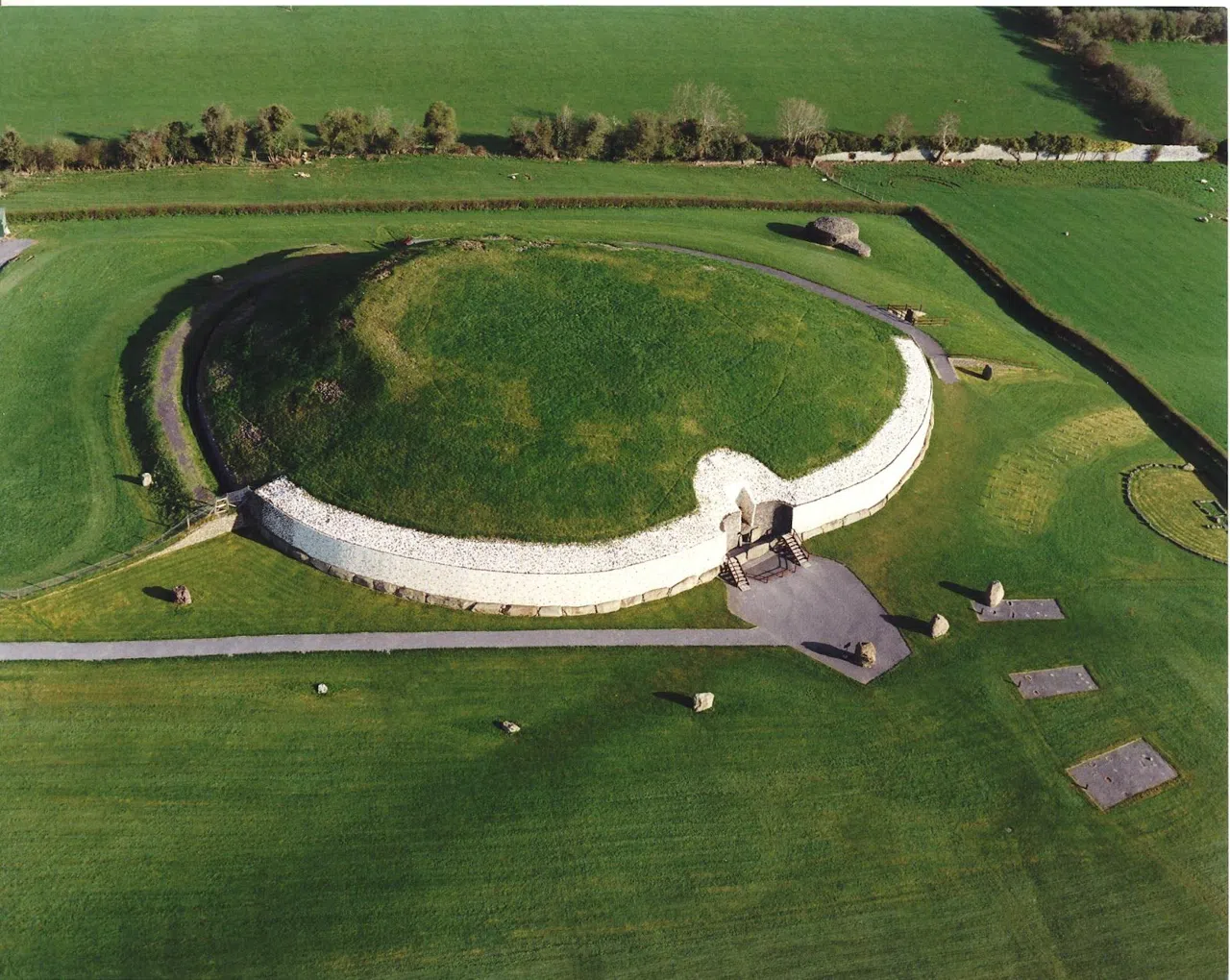

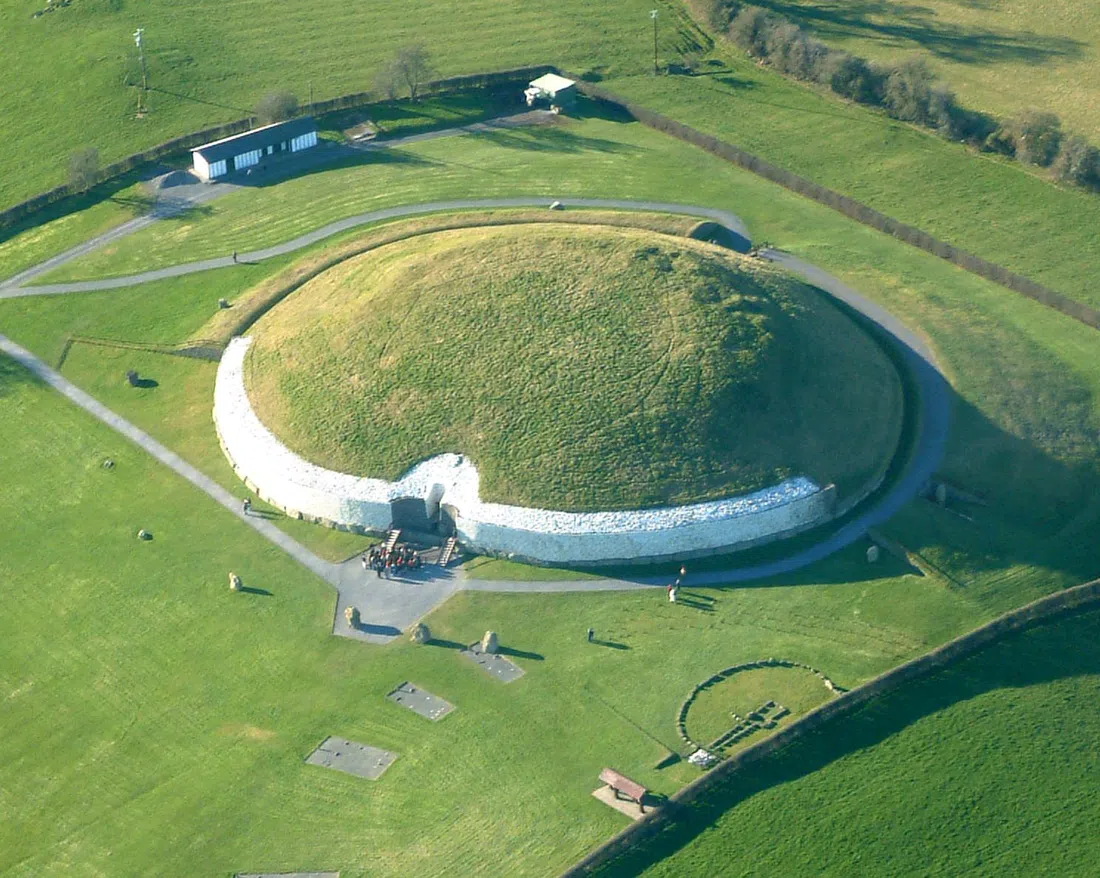
For seventeen minutes on the shortest morning of the year, a beam of low winter sun slides down a nineteen-metre passage in County Meath and lights up a chamber that has waited for it since before the pyramids existed. The Boyne Valley, an hour's drive north-west of Dublin, holds the densest concentration of Neolithic passage tombs in Europe — and Newgrange, the most famous of them, was engineered with a solar precision that still humbles archaeologists five thousand years on. This is a guide to seeing the valley properly: which tombs you can walk into, which you can only stand outside and imagine, and how to build a day — or a solstice week — around them from Dublin.
Newgrange: the anchor, and why you book months ahead
Newgrange (Brú na Bóinne Visitor Centre, on the Boyne about 8km west of Slane) is the icon of the whole valley and, for most visitors, the reason the trip exists at all. It is also the one venue in this guide where you have zero choice about how you see it: every visit starts at the Brú na Bóinne Visitor Centre and is guided, in groups of roughly twenty to twenty-four, on a timed ticket. There is no independent walk-up entry to the mound itself — you buy a slot at the centre (or, if you're on a coach, your operator has pre-booked through Heritage Ireland), cross the Boyne by shuttle bus, and a guide takes you through the 5,200-year-old passage into the corbelled chamber where the roof has kept the rain out since Neolithic farmers built it. The adult ticket, guided tour plus the visitor centre exhibition, runs roughly €18–22, with family and child rates on top. It's open daily year-round, closed only 24–27 December.
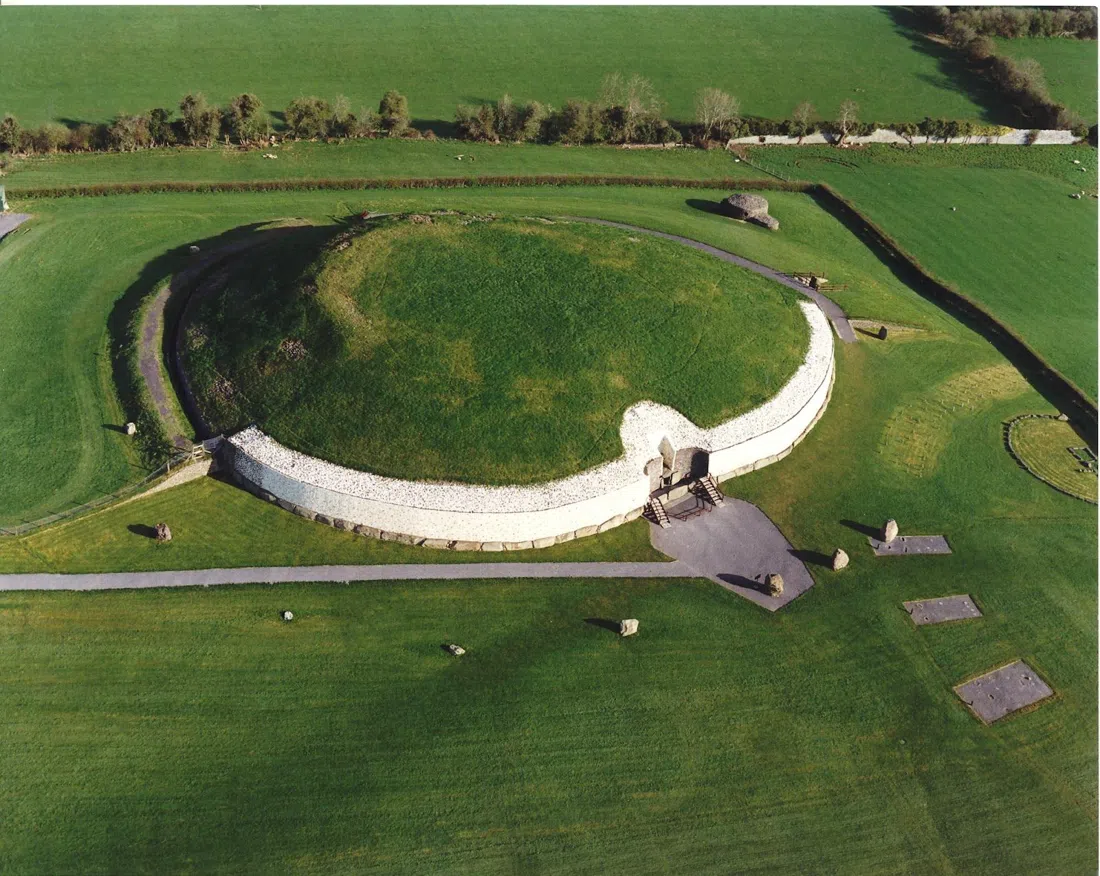
The solstice itself is the complicating factor and the reason people plan a year ahead. Chamber access on the mornings around 21 December — when, weather permitting, the sun aligns through the roof-box above the entrance and lights the passage — is free, but it's allocated purely by lottery, run by Heritage Ireland each autumn for the following winter, with no way to buy or guarantee a place. Even without the lottery, hundreds of people gather outside the mound at dawn on the days either side of the solstice (roughly 19–23 December) for the atmosphere alone, since the alignment window is generous even if you're not one of the lucky names drawn.
Knowth: the art gallery next door
Knowth, a short drive from Newgrange within the same Brú na Bóinne complex, is the site to pair with it rather than skip. It holds the largest collection of megalithic art in Western Europe — more than two hundred decorated kerbstones and structural stones, spirals and lozenges carved with the same tools that built the passages next door — and it has its own solar alignments, distinct from Newgrange's. What it doesn't have is a chamber you can enter: the passages and interior are closed to protect the art, so this is a walk-around-the-mound-and-look-closely visit rather than a duck-into-the-dark one. Think of it as the gallery counterpart to Newgrange's theatre — you're here for the carving, not the beam of light. From March to early November, a combined Newgrange-and-Knowth ticket covers both sites for roughly €25–28, and it's the sensible way to do it if you're only making the trip once; outside that window Knowth's own visitor access is more limited, so check before you build a winter itinerary around both.
Dowth: honest about what you'll actually see
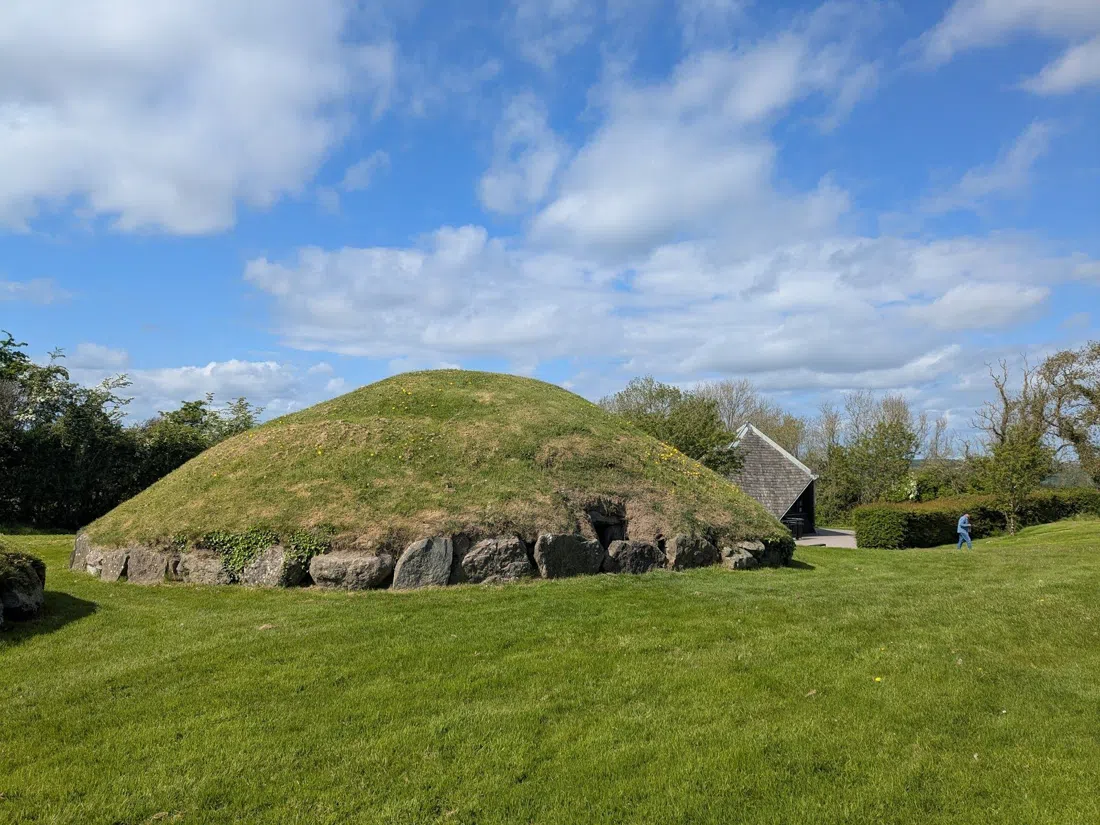
Dowth, a few kilometres further along the Boyne from Newgrange and Knowth, is the tomb this guide has to be straight with you about: there's no public entry to the interior, full stop. It isn't undersold or under-marketed — the chamber is genuinely closed to visitors, with the rare exception of occasional OPW-permitted sunset openings around the solstice, which aren't a standard tour stop and aren't something you can book on demand. What you get, and it's not nothing, is a free look at the mound from the roadside or the surrounding field, which is atmospheric precisely because it isn't managed for tourism — no visitor centre, no queue, no shuttle bus, just a five-thousand-year-old earthwork sitting in a farmer's field the way it has for most of its existence. Include Dowth in your day for the contrast and, if you happen to be in the valley on one of the rare solstice-sunset opening dates, for the detail; don't build a visit around getting inside, because you won't.
Loughcrew Cairns: the equinox counterpart, and a hill worth the climb
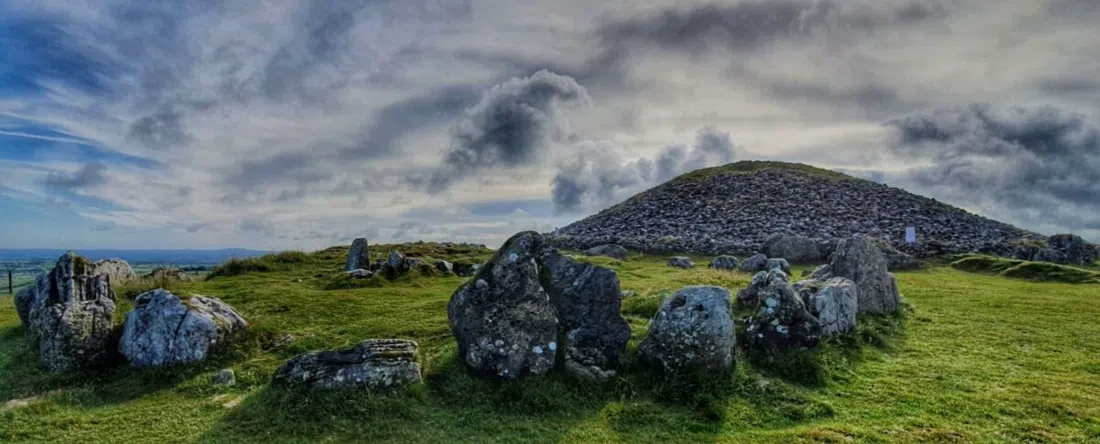
If Newgrange is the solstice story, Loughcrew Cairns (near Oldcastle, in the west of County Meath, about 50 minutes further from Newgrange than Newgrange is from Dublin) is the equinox one — Cairn T's passage is aligned to sunrise on the spring and autumn equinoxes rather than the winter solstice, and the hilltop setting gives it a completely different feel from the managed, visitor-centre experience at Brú na Bóinne. Access to the hill is free and OPW guides are on site daily in season for small groups, but there's a genuine physical component here: you walk up from the car park to reach the cairns, and there's no coach access to the summit, so this isn't a stop for anyone expecting a level path from a bus door. One honest flag before you make the detour: Cairn T's interior is currently closed for conservation work, so you won't get the equinox chamber experience right now — but the wider hilltop and the other cairns remain open, and the view alone, out over the Loughcrew Lakes and much of the midlands, is worth the walk even without going inside anything.
Hill of Tara: a third alignment, free, year-round
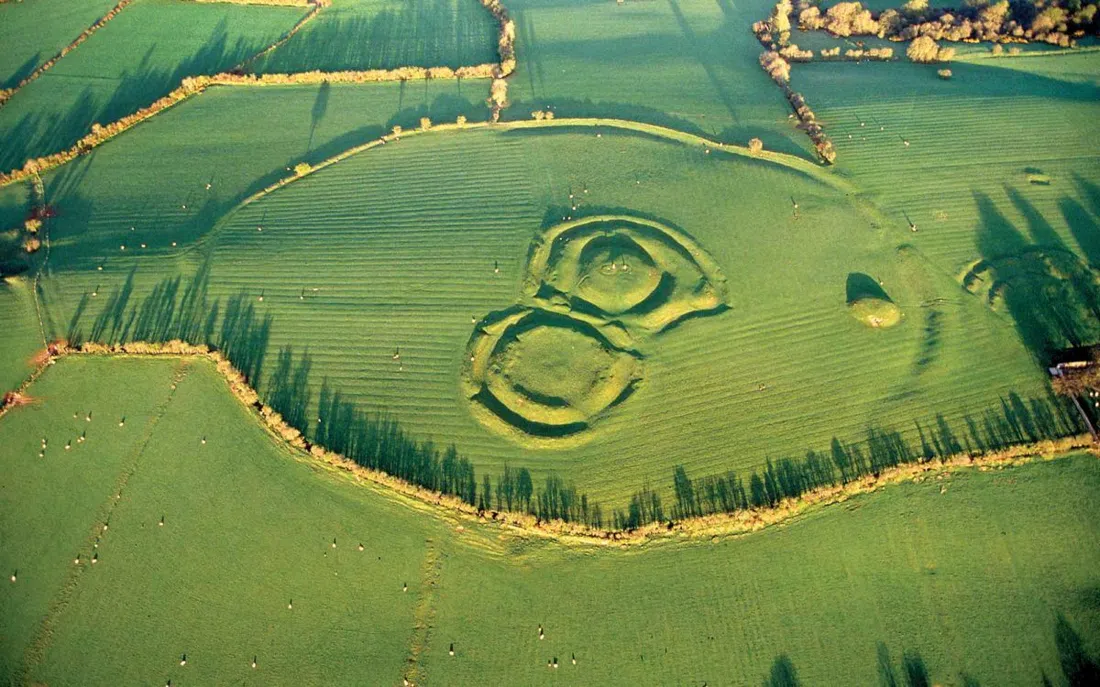
Hill of Tara — specifically the Mound of the Hostages, a passage tomb built around 3000 BC and the oldest visible monument on the hill — sits near Navan and gives the valley a third solar story: it's aligned not to the winter solstice like Newgrange, but to sunrise at Samhain and Imbolc, the old quarter-year festivals either side of winter. Tara is also the one site here you can genuinely just turn up to. The hill itself is open access and self-guided, free, year-round, no ticket, no timed slot — you walk the ceremonial landscape (the ancient seat of Ireland's high kings, not just the tomb) at your own pace. A Visitor Centre and guided tours run seasonally, from 1 May to 30 September 2026, for a small charge if you want the deeper interpretation; outside that window you're on your own with the earthworks and the view, which for a lot of visitors is exactly the point. It's a good site to save for the afternoon after a morning of timed-ticket tours elsewhere, precisely because it doesn't ask you to be anywhere at a specific hour.
Before or after: see the actual gold in Dublin
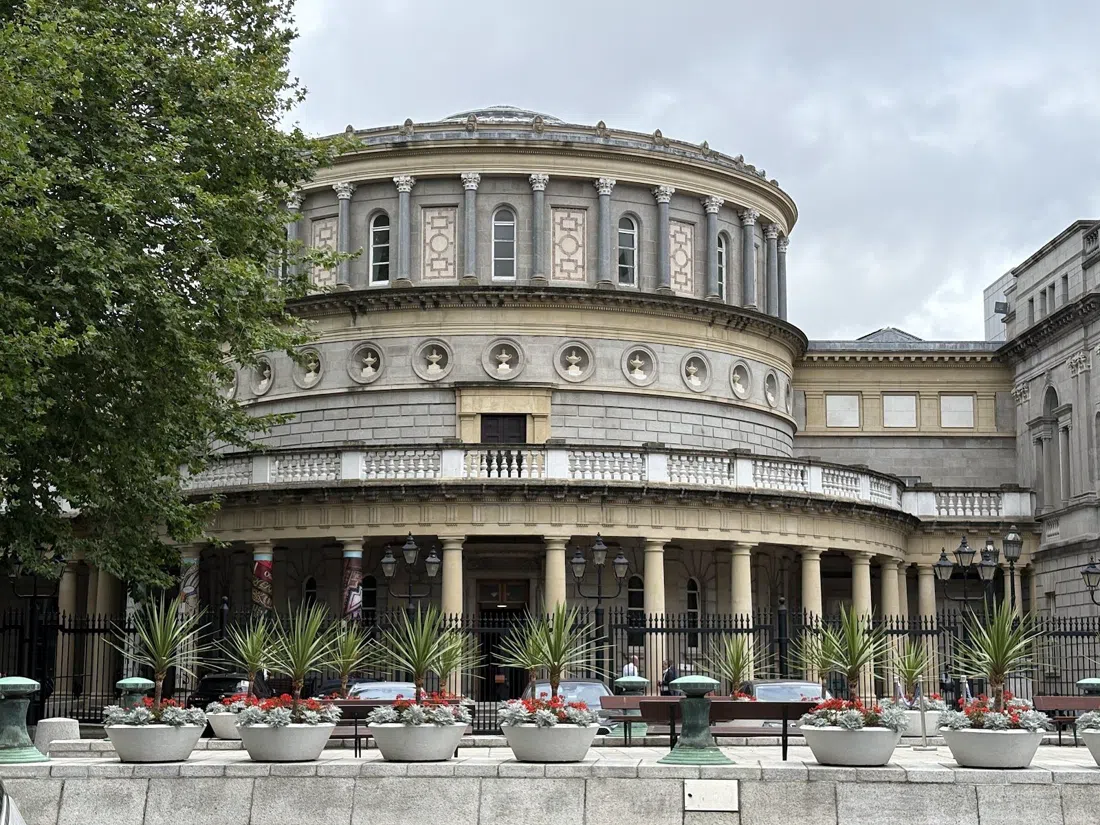
Before you drive out, or after you're back, the National Museum of Ireland – Archaeology on Kildare Street is the city-centre bookend to the whole day. Its Ór exhibition holds the gold and grave-goods excavated from Boyne Valley tombs and elsewhere — the objects that were actually found inside the passages you've either walked through or stood outside — and seeing them close-up, in a case, at eye level, does something a mound in a field can't. Entry is free, no booking required, and it comfortably takes large groups, which makes it an easy add either as a rainy-day alternative or as the first stop that gives context to everything you see afterwards. If you're staying in the city for the trip, it's worth checking the Dublin guide for how the museum sits alongside the rest of a longer city stay.
Getting there: coach tours, private guides, or driving yourself
Because Newgrange access is entirely guided and ticketed through Heritage Ireland, most visitors reach the valley by tour rather than by self-drive, and the two ends of that market are worth knowing apart. Paddywagon Tours – Boyne Valley runs the budget end: larger group coach tours, open booking with no group turned away, built for backpackers and value-conscious travellers, at roughly €45–55 per person for an eight-hour day that covers the core circuit. Boyne Valley Tours sits at the other end — private tours for couples, families or small groups, with hotel or airport pickup and a pace you control rather than a fixed coach schedule, priced per group at roughly €400–600-plus for a full day, depending on group size. Neither operator changes what you can see once you're inside Newgrange — that's fixed by Heritage Ireland's own timed ticketing regardless of who drove you there — but they change how the rest of the day feels: shared bus with strangers versus your own car and driver. If you'd rather self-drive, the sites are close enough together (Newgrange to Knowth is minutes, Dowth and Monasterboice not much further, Tara and Loughcrew a bit further out) that a rental car gives you the most flexible version of the day, provided you've already secured your Newgrange slot before you leave Dublin.
Sleeping inside the World Heritage site
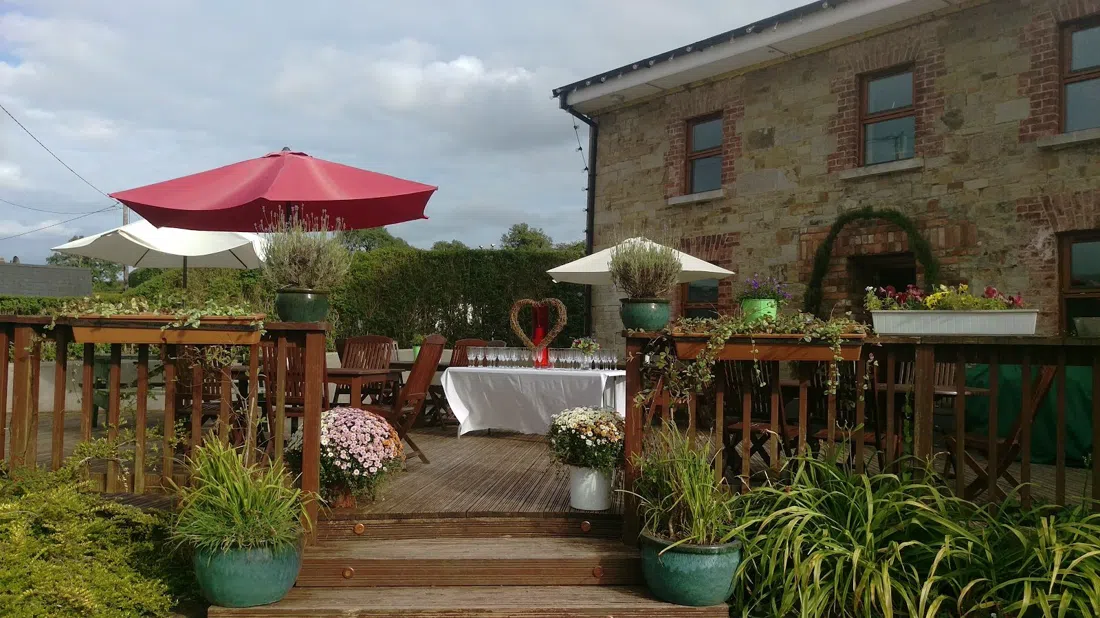
If you're chasing the solstice dawn — whether you've won the lottery or you just want to be one of the crowd outside the mound before sunrise — the practical problem is that driving out from Dublin at 5am in December, on icy country roads, in the dark, to be there for a specific narrow window, is a bad plan. Newgrange Lodge, inside the Brú na Bóinne parkland itself, solves that: it's the only accommodation actually inside the World Heritage site, with everything from budget dorm beds to family en-suite rooms (roughly €30–140 depending on room type), free parking, and a self-catering kitchen. It's built for groups as much as couples — large multi-bed rooms alongside twin, double and family en-suites — so it works whether you're travelling solo to try your luck at the solstice or bringing extended family for the whole circuit. For anyone not staying at the Lodge itself, it's worth comparing options through a Dublin hotel search and weighing a Dublin base against the earlier start it requires.
One more thing: Monasterboice's high crosses
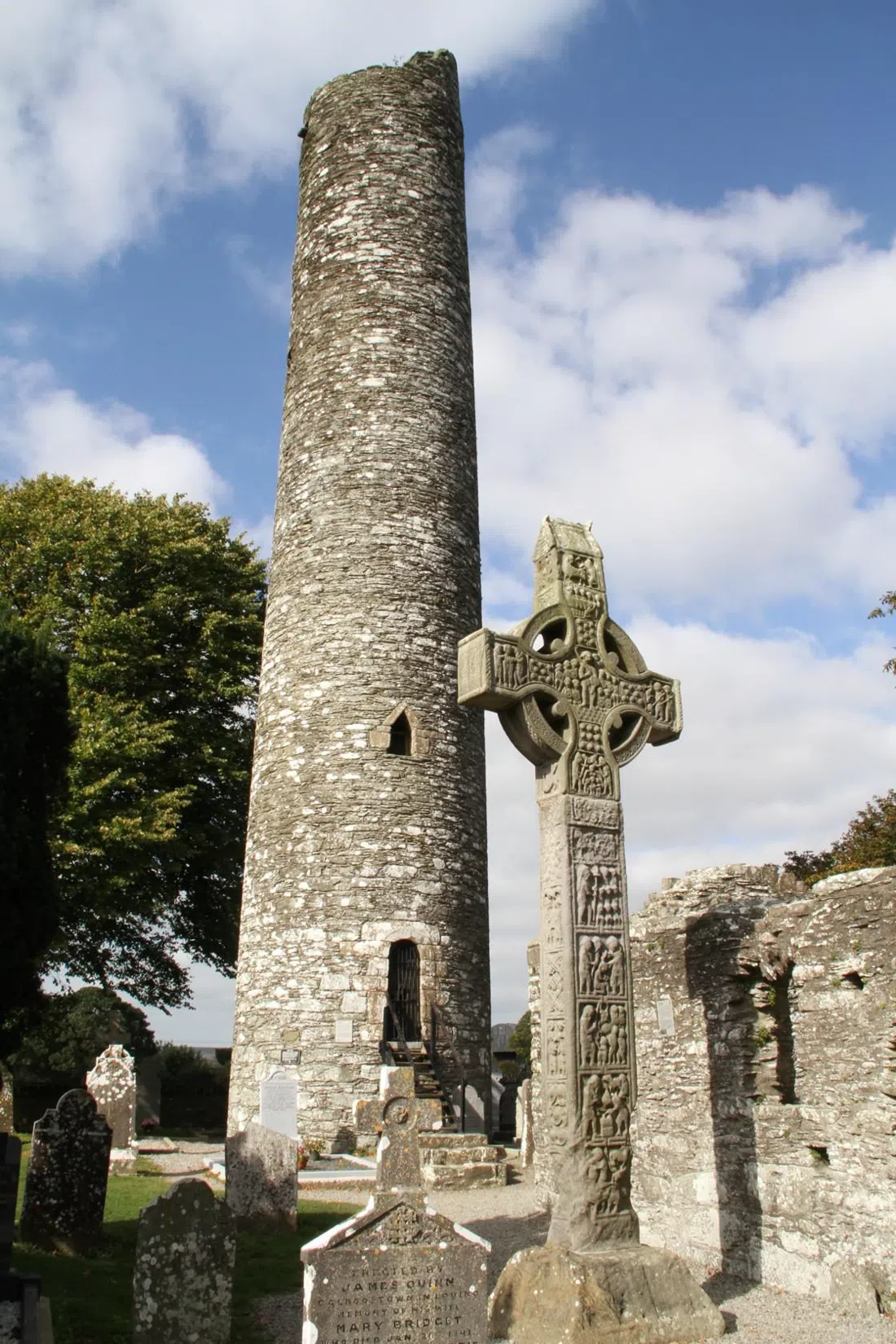
It isn't a passage tomb, but Monasterboice, an early Christian monastic site a short drive from the Brú na Bóinne cluster, is the standard second stop on almost every Boyne Valley itinerary for a reason: it holds the best-preserved high crosses in Ireland, carved with biblical scenes in a level of detail that survives remarkably well for their age. It's a free, unbooked, open site — dawn to dusk, year-round, with a large car park that takes coaches without issue — so there's no ticketing logic to plan around, unlike almost everywhere else on this list. If your day has a gap between a timed Newgrange slot and a later stop at Tara or Loughcrew, this is where it goes.
The practical bit
Transport. Self-drive is the most flexible option and the sites cluster reasonably well around the Boyne, but a rental car only helps once you already have a Newgrange ticket — Heritage Ireland's booking system is the actual constraint on your day, not the roads. If you're not driving, both the budget coach tours and private operators depart from Dublin and handle the transfers; there's no useful public bus route that strings the sites together on your own.
Cash. Card is accepted at the main visitor centres (Brú na Bóinne, the museum), but Loughcrew's on-site guiding is free or donation-based, so it's worth carrying a little cash for that and for any roadside stops at Dowth or Monasterboice where there's no till at all.
Timing. Book Newgrange before you book anything else — flights, hotel, tour — because the timed tickets are the genuine bottleneck, especially around the solstice window in December when demand spikes hard. The solstice lottery itself is run by Heritage Ireland the previous autumn; if you want to be in with a chance for December 2026, register when the lottery opens rather than assuming you can turn up. Outside solstice season, spring and early autumn give you Knowth's combined ticket window and generally calmer light for photography.
Budget. A no-frills version — self-drive or Paddywagon coach, Newgrange-and-Knowth combined ticket, free entry everywhere else — comes in comfortably under €100 per person for the day including the tour. A private, fully guided version with Boyne Valley Tours and a night at Newgrange Lodge either side of the solstice pushes well past that, but buys you a pace, and a dawn, that a shared coach can't.