The Dublin issue
Dublin's Parliament, Living Room and Confessional: The Real Pubs Behind the Pint
From sacrosanct session tables to grocer's snugs and a rooftop rite of passage - where a Dubliner actually drinks, and how to do it right in 2026.

By Rui TeixeiraDublin after dark, one last round at a time
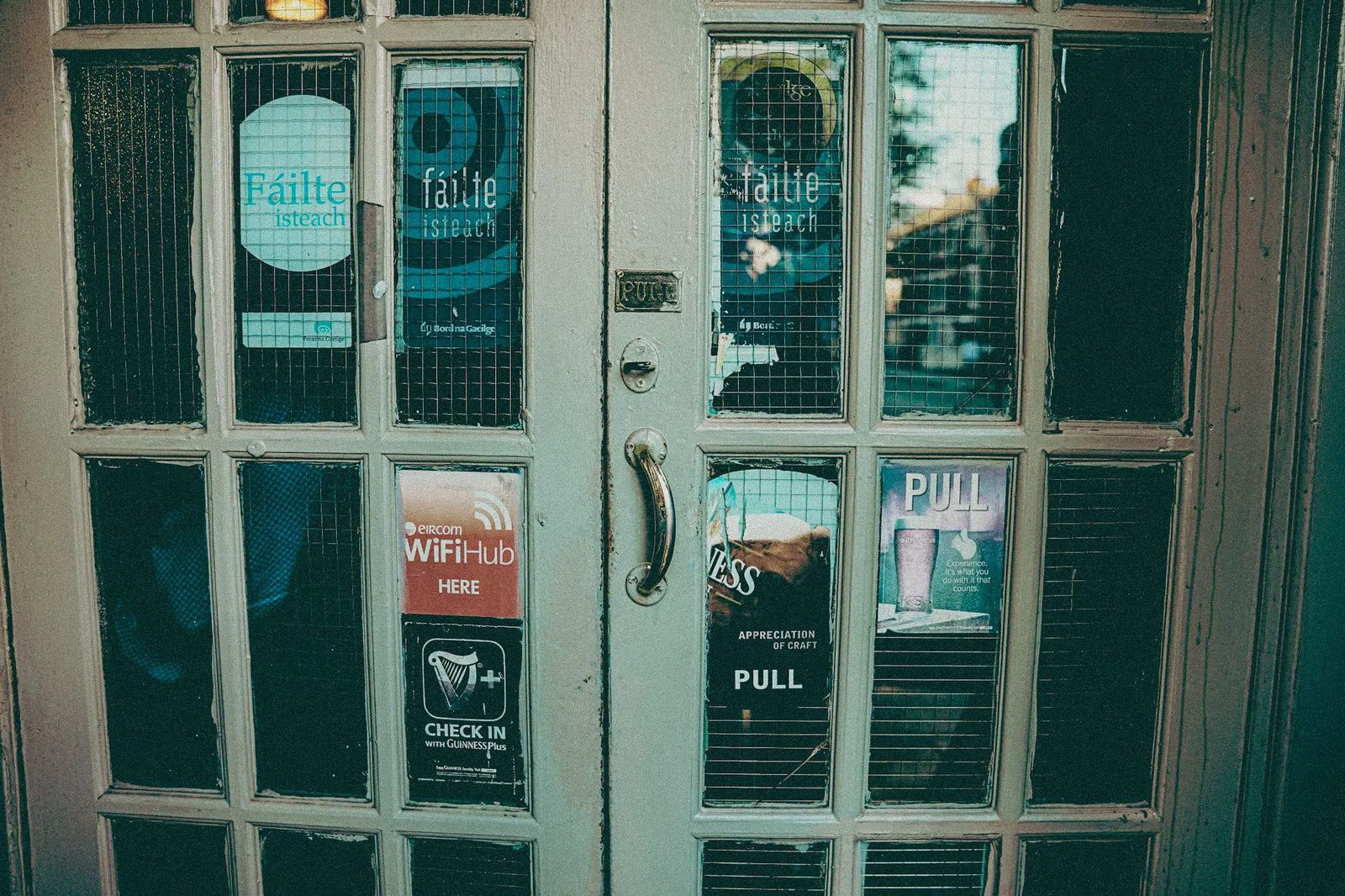
A Dublin pub is never just a pub. It's a parliament where the day gets thrashed out over a slow-settling pint, a living room warmer than the one you left at home, a confessional where nobody's counting your sins — only your rounds. I've drunk in every room in this guide: front-bar sessions, grocer's snugs, Victorian saloons that haven't been redecorated since Parnell's day, one rooftop and one graveyard bar. No secondhand tips, no places I've only walked past, nothing recommended on a press release. If it's here, I've stood at the bar and waited for the pint. Here's where to go, when to walk in, what it costs, and which spots will actually get your group through the door.
Where the music is real
Trad in Dublin runs the full range, from the genuine article to a fiddle player hired to soundtrack your selfie. The difference is easy to hear once you know it: a real session is musicians playing to each other, not to the room, with tunes that stop and start on their own logic and no set list. If you only do one music night, do it properly and start with the real thing. And a rule that never fails — the better the music, the less anyone is filming it.
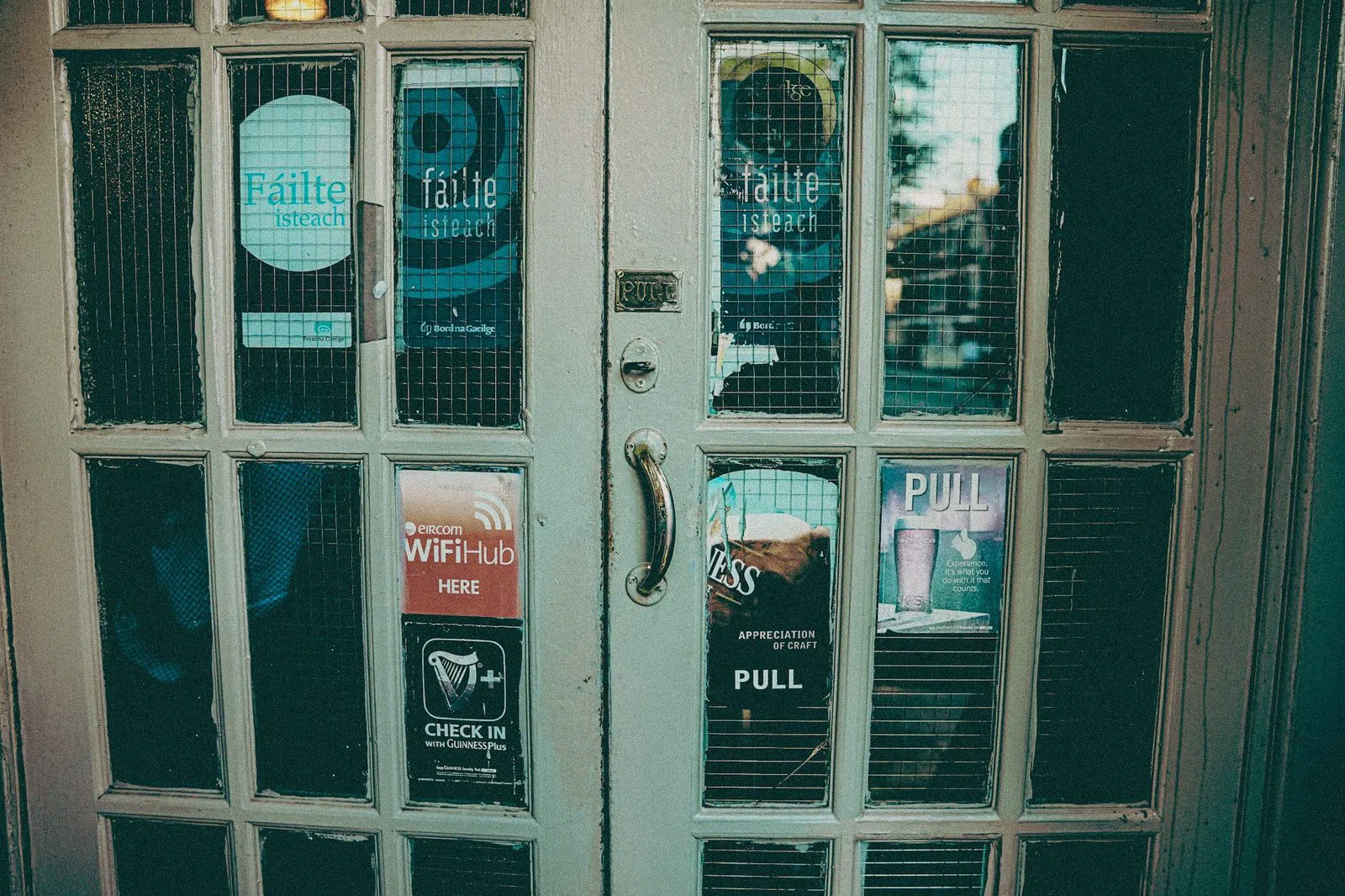
The Cobblestone (Smithfield) is the city's most honest trad room, and it isn't close. Sessions seven nights a week, and the front-bar table is sacrosanct — that's the musicians' table, so keep your pints off it and don't talk over the tunes. Pints run about €6.50–7.50, and the front-room sessions are free. It's small and informal; a couple or a handful of friends will slot in fine. Bigger parties should aim for the back "Balcony" room, which hosts booked gigs and takes larger groups — book ahead rather than turning up mob-handed. This is the pub locals fought to save from demolition in 2021, and it's still the real thing, not a facsimile. Respect the room and it'll hand you the best night of the trip.
O'Donoghue's (Merrion Row) is where The Dubliners cut their teeth as the house band, and it's still the safe bet for a first-night session. Central, 18th-century, reliably lively. Pints land around €7–8. There are no session reservations, and by nine it's shoulder-to-shoulder, so arrive early if you want to sit down. Groups are welcome but you'll likely be standing — embrace it and get a round in.
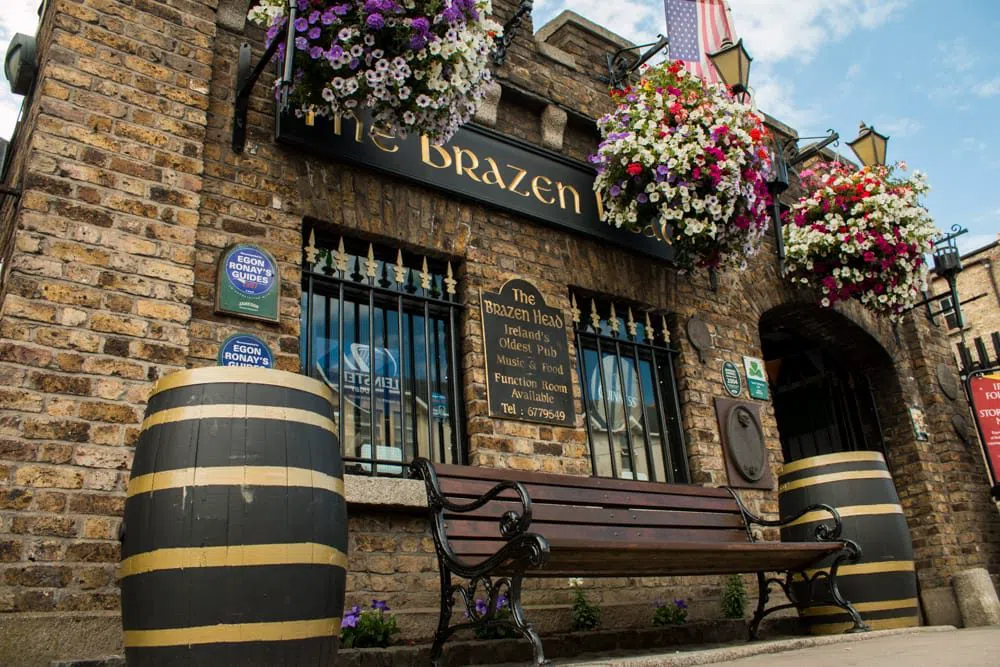
The Brazen Head (Merchant's Quay) claims a tavern on the site since 1198, which by its own reckoning makes it Ireland's oldest pub. Yes, it's touristy. It's also genuinely atmospheric, with music every night and a courtyard that swallows big parties whole. Pints €7–8, food and the dinner-show extra. For tour groups it runs bookable "Irish Folklore & Fairies" storytelling dinners — corny on paper, good fun in the room, and worth booking well ahead because they fill.
Plan your Dublin trip
Live prices from our booking partners.
Free cancellation on many rooms. We may earn a commission when you book.
The Victorian saloons — go for the room
Some Dublin pubs earn the visit on the joinery alone: mahogany, etched glass, mirrors advertising long-dead whiskeys, snugs from the gaslight era built so a lady or a priest could drink unseen. These rooms are the "confessional" of the title — small, private, made for the quiet word. Go slow, order a pint, let it settle the full two-part pour, and look up. None of these do table service; you go to the bar, you learn the barman's name, you're set for the night.
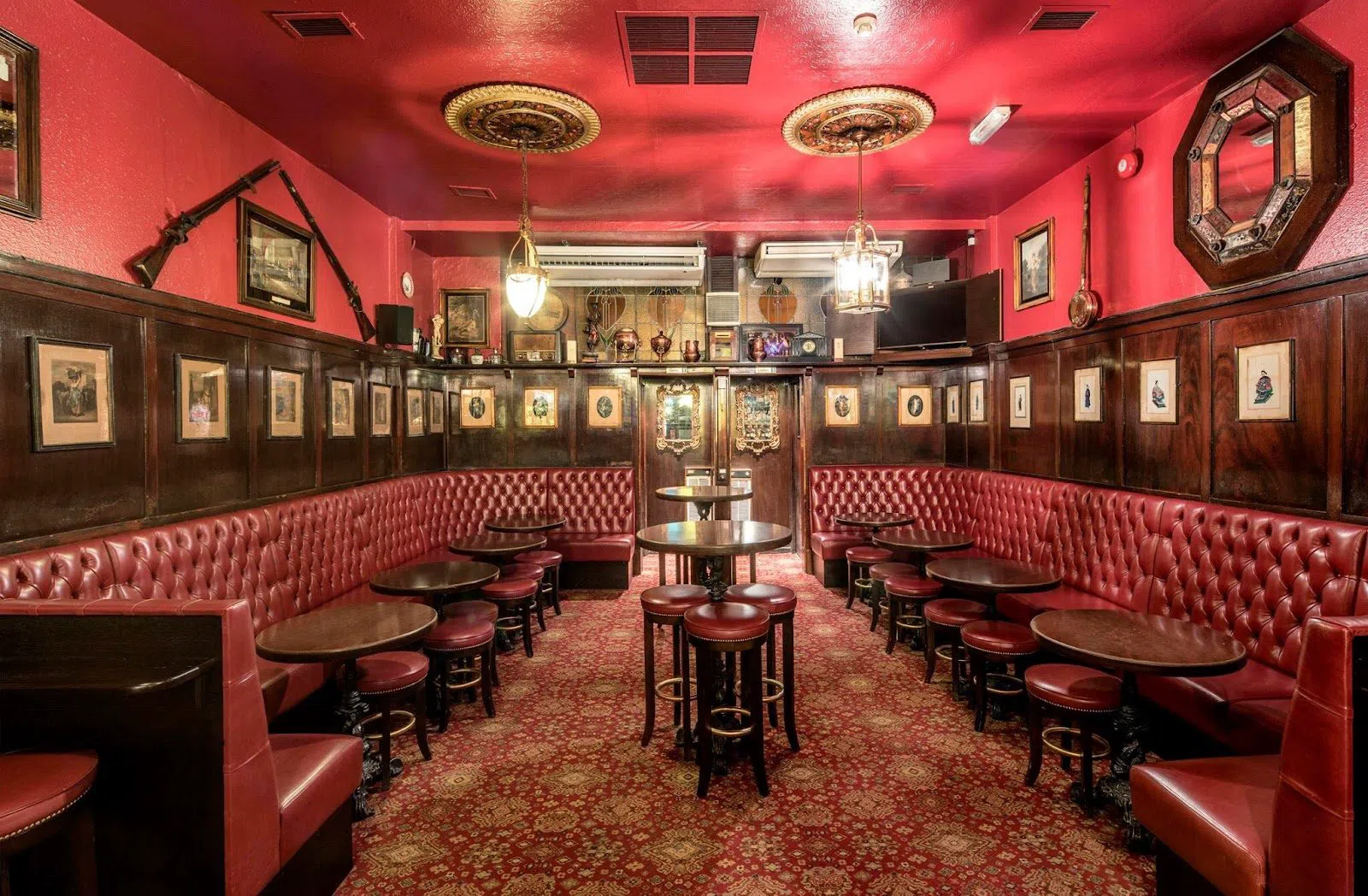
The Long Hall (South Great George's Street) holds one of the most beautiful preserved Victorian interiors in the city — chandeliers, deep red walls, a clock older than most modern constitutions. No reservations, and it's compact. Perfect for two or a small few; awkward for a stag party at peak. No music — this is a conversation pub. Pints €7–8. Come for the room and a pint poured with patience.
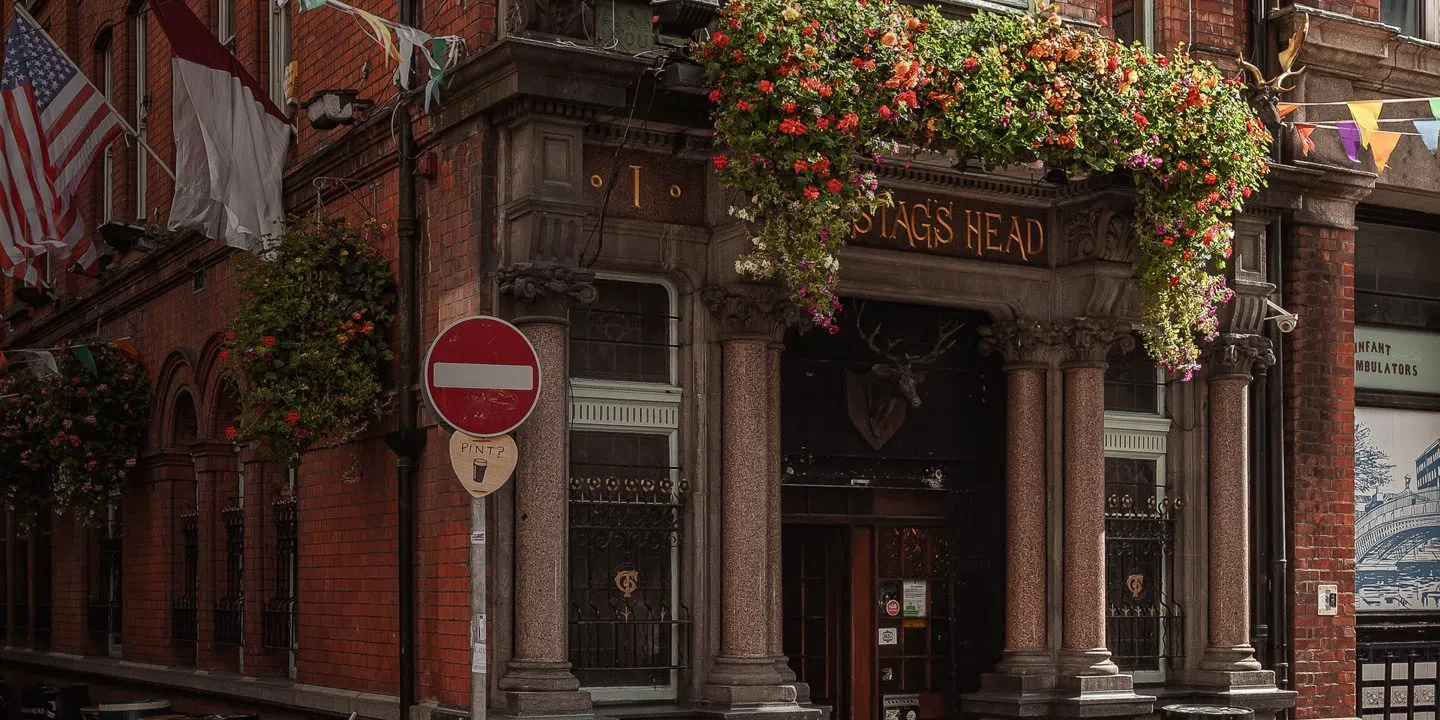
The Stag's Head (Dame Court) is arguably the best-preserved Victorian pub in Dublin, every fitting authentic and intact. It sits just off Dame Street but down an alley, so it always feels like a find. Groups work fine here — there's an upstairs room and the staff are used to spillover crowds. Pints €7–8. Photogenic without tipping into museum, and the toasties and stew hold up if you want to line the stomach before the next round.
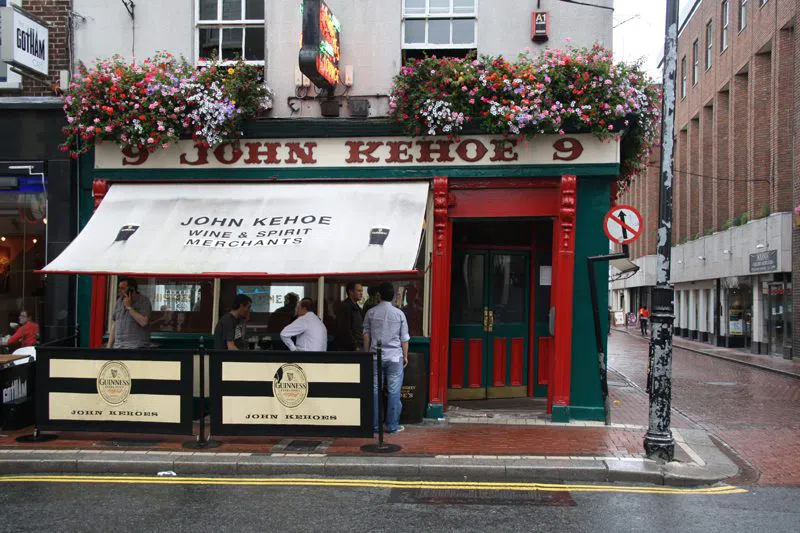
Kehoe's (South Anne Street) is a minute from Grafton Street and still keeps its intact grocer's snugs. Those little wooden booths suit a small group perfectly; for a bigger party, climb to the lounge upstairs — literally the old publican's former living quarters. Pints €7–8. Locals and visitors, elbow to elbow, exactly as quintessential old Dublin should be.
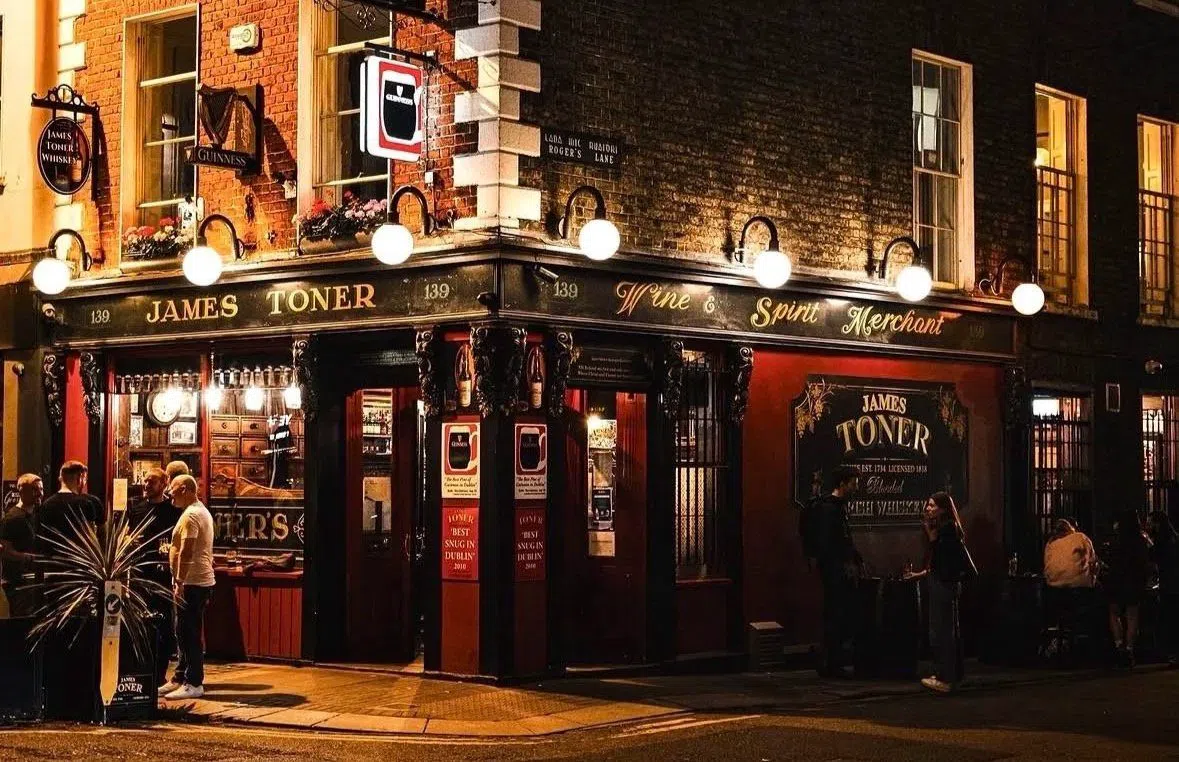
Toner's (Lower Baggot Street) is the most group-friendly of the old guard. The front bar is museum-piece Victorian — flagstones, a snug you can book — but the big back beer garden and upstairs space absorb large parties without spoiling the place for the regulars. Pints €7–8. W.B. Yeats is said to have drunk here; if there's any sun at all, this is your warm-weather headquarters.
The perfect pint — Guinness pilgrimages
Every Dubliner has a firm opinion on where the best Guinness is poured, and will defend it to the last breath. It comes down to turnover, clean lines, a cool cellar and a barman who won't rush the pour — the pint rests, then gets topped, and if someone hands it to you in one go, be suspicious. Two houses are non-negotiable.
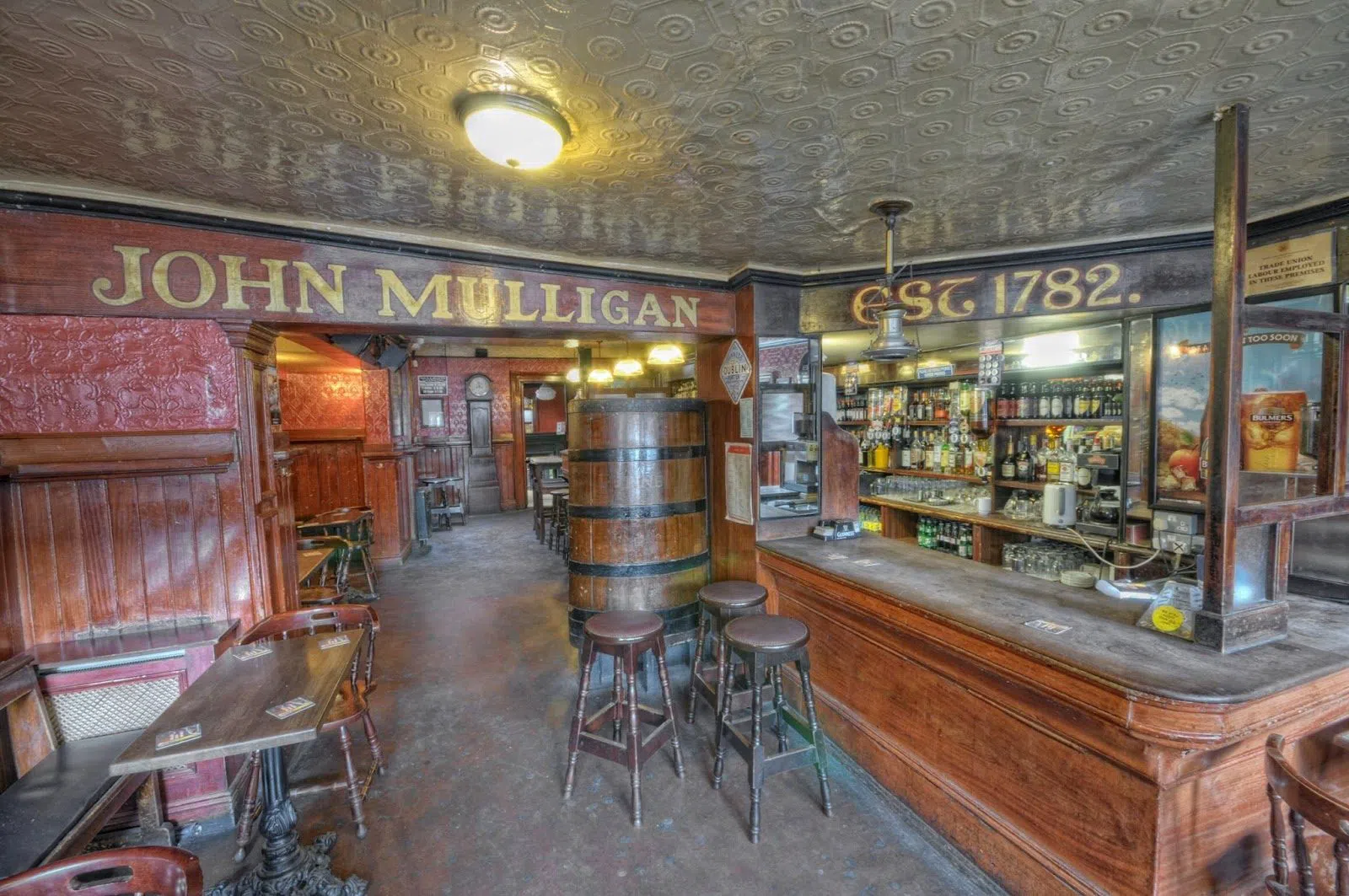
Mulligan's (Poolbeg Street) has traded since 1782 and is revered for one of the finest pints of Guinness in the city. Joyce drank here; so did Heaney; so, the story goes, did JFK. It's small and characterful — a standing-room group fits fine, a big booking doesn't. Pints €6.50–7.50. Come for the pint and the patina, not for a table of twelve. Weekday early evenings are the sweet spot; by Friday night the after-work crowd has it wedged to the door.
John Kavanagh — The Gravediggers (Glasnevin) is a genuine pilgrimage, and worth the short trip out of the centre. Same family since 1833, right beside Glasnevin Cemetery. The old bar is no-frills, quiet and traditional — and cash only, so bring notes. Pints €6–7. The adjoining lounge does tapas and seats groups, but the original bar stays hushed by design. Pair it with the cemetery museum next door and you've got the best afternoon in Dublin the guidebooks tend to skip.
Writers, whiskey and conversation
Some pubs are for talking, arguing, and the odd literary ghost. Leave the playlist at the door.
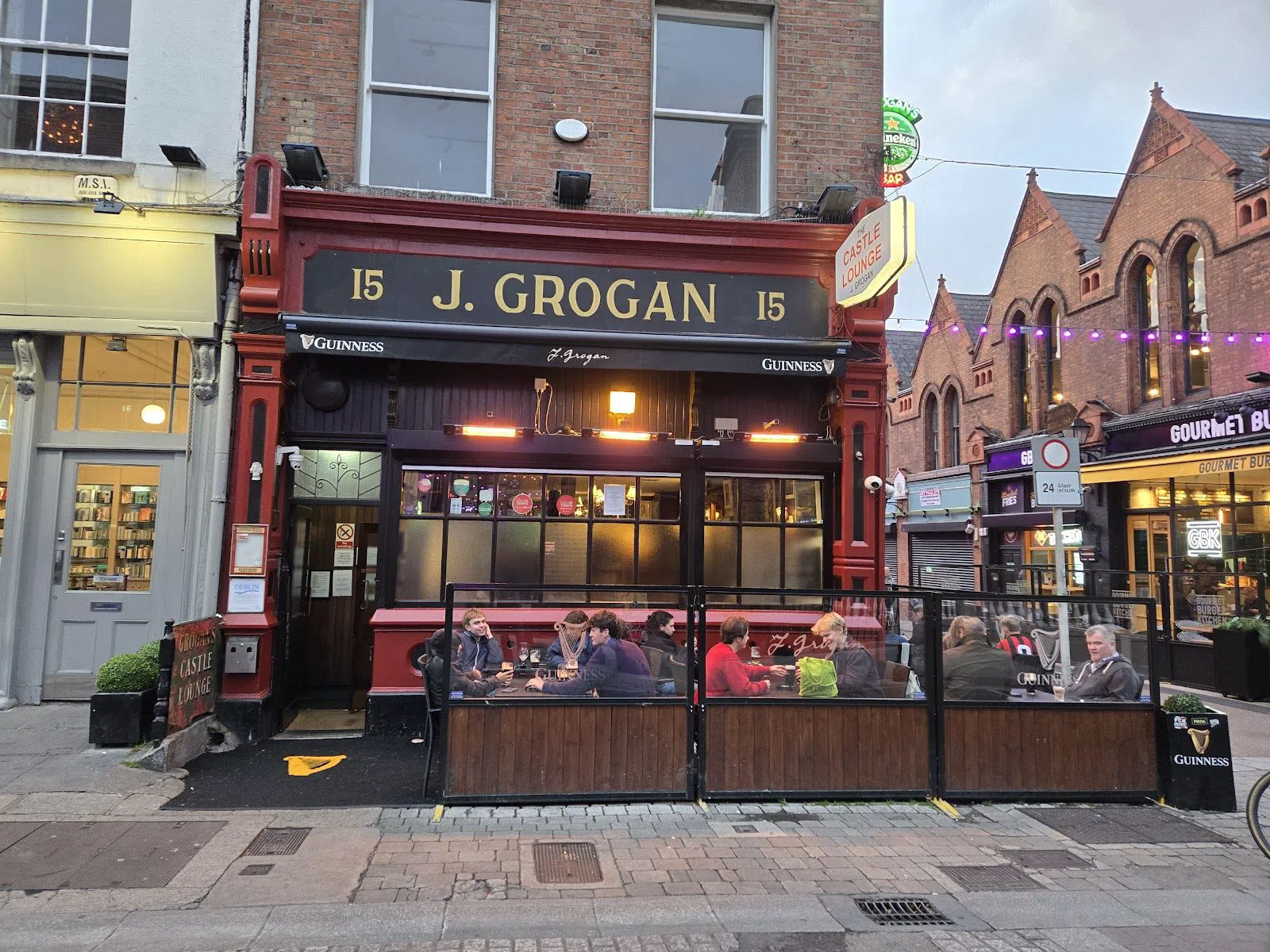
Grogan's — The Castle Lounge (South William Street) is a bohemian institution: no music, no reservations, walls hung with rotating art that's genuinely for sale. Writers and painters have propped up this bar for decades. In fine weather the crowd spills onto the pavement tables. Pints €6.50–7.50, and the famous toasted special is cheap and honestly one of the best things you'll eat standing up in this city. Come for the conversation; leave the party of twenty at home.
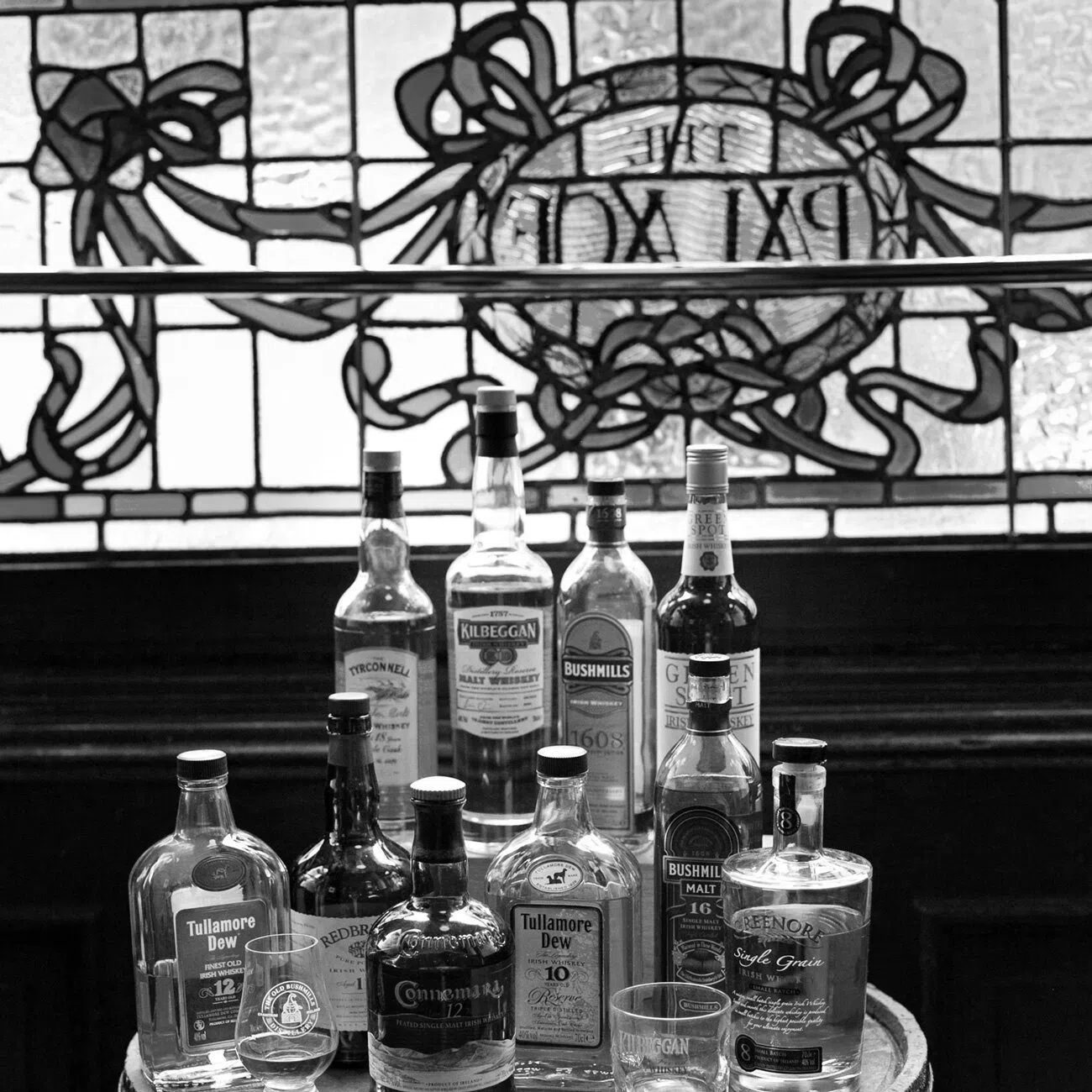
The Palace Bar (Fleet Street) has barely changed since 1823 and was the historic haunt of Dublin's journalists and writers. The downstairs is narrow — fine for a pair, tight for a crowd — but the upstairs whiskey bar takes bookings and is built for a tasting. Pints €7–8, whiskey flights extra. If your group wants Irish whiskey done properly rather than a blur of pints, book the room upstairs in advance.
When you want a crowd and a late one
Not every night is a quiet pint by the fire. This is the "parliament" end of the spectrum — loud, packed, everyone talking at once. When you want bands, floors and a proper buzz, and when you're a group who'd wreck the mood of a snug, these are the rooms that want you.
Whelan's (Wexford Street) is Dublin's most storied small live-music venue — you've seen it in the film "PS I Love You." Multiple rooms, gig and area bookings across the building, and it's built for crowds. Stag and hen groups are welcome. Pints €7–8, gig tickets on top, and it's worth checking the listings before you commit your night. This is for a band and a late one, not for pure trad.
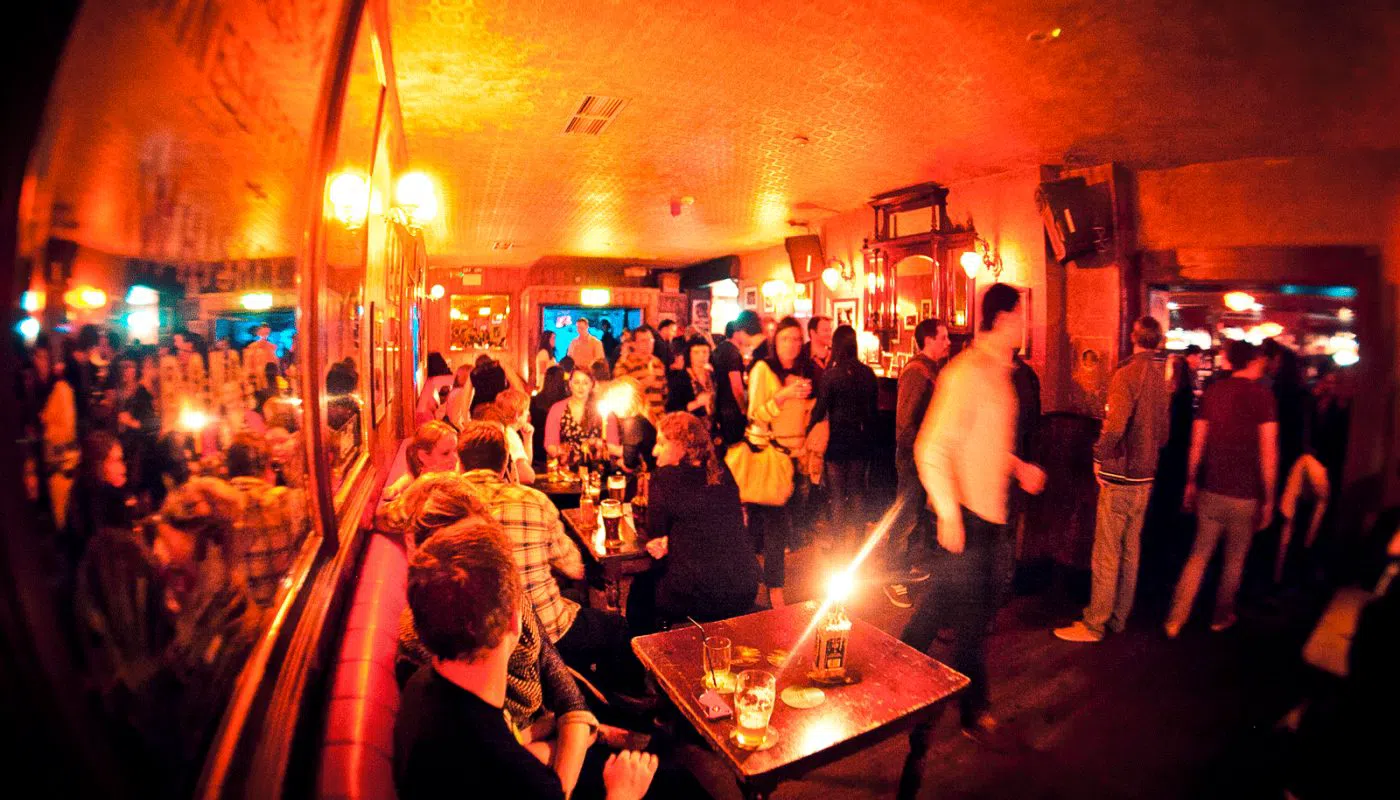
The Porterhouse Temple Bar (Parliament Street) is the antidote to a Guinness-only round: Dublin's original brewpub since 1996, pouring its own stouts and ales. Several floors, an outdoor terrace, live music every night. Craft pints €7–8.50. It's excellent for large groups, and it's one of the very few Temple Bar spots locals still rate — which, in that neighbourhood, is high praise indeed.
The rooftop rite of passage
Gravity Bar at the Guinness Storehouse (St James's Gate, The Liberties) isn't a pub and I won't pretend it is — it's the top of a ticketed brewery experience, roughly €30-plus including one drink, and you go through with your group as part of the tour. But that 360-degree rooftop pint over the whole city is a Dublin rite of passage, and the bar can be hired privately for events. Build a group afternoon around it, then head back into town properly thirsty for a real pub.
Planning your crawl — the practical bit
- Getting around. The old-city pubs — Long Hall, Stag's Head, Kehoe's, Grogan's, Palace Bar, Porterhouse — all sit within a fifteen-minute walk of Grafton Street. The Cobblestone is across the river in Smithfield (red Luas line, or a twenty-minute walk). The Gravediggers is out in Glasnevin — a Dublin Bus or a short taxi, and worth it.
- Cash. Nearly every pub takes cards now, but the Gravediggers' old bar is cash only, and it never hurts to carry €20–30 in notes for a session.
- Timing. Trad sessions warm up around 9pm, so walk into O'Donoghue's or the Cobblestone by 8 if you want a seat. Closing tightens at weekends, and door staff at the busier spots will turn away large, loud groups late on — front-load a big night rather than leaving the crowd until midnight.
- Budget. Reckon on €7–8 a pint across the centre, a little less in the older Guinness houses, more for craft and for the Storehouse ticket. A steady session night runs €50–70 a head without going overboard.
- Groups versus couples. For two, the snugs and saloons win: Long Hall, Kehoe's, Mulligan's, Grogan's. For a crowd, book ahead at Toner's, Whelan's, the Porterhouse, or the Brazen Head's courtyard, and you'll never be left standing on the pavement.
For everything beyond the bar — food, sights, neighbourhoods — see the Dublin guide. And sort your bed before your barstool with a Dublin hotel search: stay in the old-city core and every pub here is within staggering distance of last orders.
Before you go
Where is the best pint of Guinness in Dublin?
Mulligan's on Poolbeg Street, trading since 1782, is the classic answer and pours around 6.50-7.50 euro. For a quieter pilgrimage, John Kavanagh 'The Gravediggers' in Glasnevin (from about 6-7 euro, cash only in the old bar) is worth the short trip out. Both live or die on a slow, two-part pour.
Where can I hear genuine traditional Irish music in Dublin?
The Cobblestone in Smithfield is the most authentic pure-trad room, with free front-bar sessions seven nights a week - keep off the musicians' table. O'Donoghue's on Merrion Row and The Brazen Head on Merchant's Quay also run reliable nightly music; arrive by 8pm to get a seat before it fills.
Which Dublin pubs are good for big groups or a stag or hen party?
Toner's has a large back beer garden, Whelan's is built for crowds with multiple rooms and gig bookings, and The Porterhouse Temple Bar spreads over several floors. The Brazen Head's courtyard takes big parties too. Book ahead, and note that door staff at busy spots turn away large, loud groups late at night.
Do Dublin pubs take card or do I need cash?
Nearly every pub takes cards now, but the old bar at The Gravediggers in Glasnevin is cash only. Carry 20-30 euro in notes for a session night to be safe.
How much does a pint cost in Dublin in 2026?
Expect roughly 6.50-7.50 euro in the older Guinness houses like Mulligan's, Grogan's and the Cobblestone, and 7-8 euro across most city-centre pubs. Craft pints at the Porterhouse run to about 8.50 euro, and the Gravity Bar is accessed via a Guinness Storehouse ticket from around 30 euro including one drink.